This is a Vandoren Traditional reeds review you can actually trust. If you are a classical player skeptical about dropping $31 on a box of reeds, the honest verdict is yes, they are worth it for the consistency alone. You’ll get more usable reeds per box than any student brand, and the tone is exactly what classical auditions demand.
Exceptional customer ratings and consistent performance justify its premium pricing and solid value.
Price vs. rivals
Pricier
CheaperTypicalPricier
This Vandoren CR103 reed box is priced above typical entry-level or house-brand reeds, reflecting its premium reputation and high user rating, though it remains within the range of other professional-grade alternatives.
Ease of use
Excellent 90/100
These reeds are easy to attach to a clarinet mouthpiece and produce sound with minimal effort, though beginners may need slight adjustment.
Overview — The Vandoren Traditional Reeds Standard
The Vandoren CR103 Traditional reeds are the standard against which other classical reeds are measured. They solve the specific annoyance of inconsistent reed quality, giving you a predictable playing experience. This box of ten is meant for players who have moved beyond the soft, forgiving student reeds and need something that responds to nuanced air support and embouchure control.
They aren’t the brightest reeds, and they aren’t the darkest. They sit in a sweet spot that makes them work for a huge range of mouthpieces. Walk into any clarinet studio and you’ll find these in most cases, and that’s not an accident.
Key Features
Here is what you are paying for when you buy the Vandoren CR103.
French cane, Traditional cut – This cut favors a dark, focused sound. It projects well in an ensemble without sounding thin or bright. Perfect for classical work.
Strength 3 – The standard medium. It gives enough resistance to build your chops without choking your sound. Most intermediate players land here, and it works well on a variety of mouthpieces.
Box of 10 – You get enough reeds to find 4 or 5 solid players right away, plus more after a brief break-in. The consistency across the box is the main reason people buy these over cheaper options.
Aged cane – Vandoren ages their cane longer than many manufacturers. This makes the reeds more stable over weeks of playing compared to brands that sell you wood that hasn’t fully cured.
Standard sizing – They fit standard mouthpiece facings without the tip lifting or the heel rocking. Minimal adjustment is needed out of the box.
Fit for You
You play classical clarinet and need a reed that can handle a soft piano without a breathy, unfocused sound.
You are tired of playing the reed lottery with cheaper boxes. You want a box where at least half the reeds are playable with minimal adjustment.
You play in wind band or orchestra and need to blend with the section. The Vandoren Traditional cuts through without sticking out.
You do auditions and need reliable reeds that won’t die halfway through a scale or an excerpt.
You are willing to pay a premium for predictability. You value your practice time and don’t want to spend it fussing with gear.
Uses
These reeds shine brightest when nuance matters. Solo repertoire, orchestral excerpts, chamber music. The V12 has a thicker spine for more resistance and a slightly darker sound, but the Traditional is the natural choice for a Mozart concerto or a Brahms intermezzo. It responds exactly how a classical player expects a reed to respond.
They are widely considered among the best Bb clarinet reeds for classical music. The sound is what college professors and audition panels expect. Dark, clear, and centered. If you play in a pit for a musical, they still work fine in quieter sections. Just be aware that if you need raw, bright projection, the Vandoren V16 or Rue Lepic cuts are better suited.
Experience Playing Vandoren Traditional Reeds
Living with the Vandoren Traditional reeds is mostly a good experience. The daily ritual is simple: pull one out, check the flatness of the back, give it a minute to soak, and play. The first few minutes can feel a little stiff as the fibers fully absorb moisture, but it settles in quickly.
The biggest annoyance is the price. You feel bad binning a reed that isn’t working because you paid for it. But playing on a bad reed to save money builds bad habits. Another small thing: the vamp cut can be a little inconsistent. One reed might have a slightly thicker tip than another from the same box. It is a natural product, so individual reeds have their own character.
Owners tend to mention that the back of the reed can be rough. A ten-second pass on fine sandpaper fixes it, but it is an extra step you shouldn’t strictly need on a premium reed. Humidity also changes how they feel. This is true of all cane reeds, but it is worth knowing.
Pros and Cons
Pros
Reliable box consistency. You get more good reeds per box than any other brand at this price. The ratio of keepers to duds is very favorable.
Classical tone reference. The dark, centered sound is the benchmark for orchestral and solo playing. It blends perfectly without getting lost.
Responsive articulation. The Traditional cut allows for clean, fast tonguing. It won’t die on you during rapid passages.
Good longevity. If you rotate a set of 4 or 5, each reed can last several weeks. The cane doesn’t go dead quickly with proper care.
Widely available. You can find these at almost any music store. No need for special orders or long shipping wait times.
Cons
High cost per reed. At roughly $3.10 each, they are expensive. A box that doesn’t perfectly suit your mouthpiece is an expensive experiment.
Fragile. A drop on a hard floor is usually the end. The tip chips easily, so handle them carefully.
Not for jazz. If you play big band or commercial music, these are too dark. The Java or V16 cuts offer the brightness you need.
Occasional setup needed. A few reeds per box will need a light touch on a reed rush or sandpaper to reach their full potential.
Subtle strength variance. Even in the same box, a 3.0 can feel like a 2.75 or a 3.25. It’s better than almost any competitor, but it isn’t perfect.
Advantages
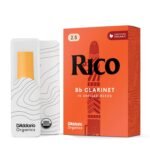
Let’s look at how the Vandoren CR103 stacks up against its main competitors. A Vandoren CR103 vs Rico Royal reeds comparison is a common dilemma for growing players. The Rico Royal is cheaper, and it is a fine reed for casual playing. The problem is the inconsistency. You might get a box of ten where two are great, three are ok, and the rest are duds. With the Vandoren Traditional, you are paying for a much higher floor. Almost every reed is at least playable, and 4 or 5 will be excellent.
Compared to the D’Addario Reserve Classic, the Vandoren is slightly brighter and more focused. The Reserve is warmer but can sound a little dead on some setups. The Vandoren Traditional works on a wider range of mouthpieces without losing its core sound. It is the safer, more versatile bet for a classical player building their setup.
Who Should Buy
Intermediate students. If your teacher tells you to upgrade from student reeds, the Vandoren CR103 for intermediate clarinetists is the logical next step. It will immediately improve the core of your sound.
High school all-state auditionees. These reeds give you the reliable, controlled sound that judges listen for. Less risk of a reed failing in a stressful moment.
Adult hobbyists. You deserve a reed that doesn’t fight you. The price feels justified when it makes practice sessions genuinely enjoyable.
College music majors. This is the default reed for a reason. It is the standard expectation in most university applied lessons.
Skip them if: You are a beginner on a very open mouthpiece and need a 2.0 or 2.5. Or you only play jazz and rock and need a bright, cutting edge. The Rue Lepic or V16 are better suited to that work.
FAQ
Is the Vandoren Traditional reed worth it?
Yes, for most intermediate and advanced classical players. The consistency, tone, and longevity justify the higher cost compared to student reeds. The main trade-off is the price per reed.
How long does a Vandoren strength 3 clarinet reed last?
With a proper rotation of 4 to 5 reeds, a single reed can last 2 to 4 weeks of daily practice. The tip will show wear and the sound will lose its clarity eventually.
What strength should a beginner use?
A Strength 2.5 is usually the right starting point on a standard student mouthpiece. Strength 3 is ideal once your embouchure and air support are consistent.
Are Vandoren Traditional reeds good for intermediate players?
Yes. The Vandoren CR103 is a perfect step up. It forces better breath support and provides a more refined tone than entry-level reeds like the Rico Royal.
How does the Vandoren CR103 compare to synthetic reeds?
Natural cane offers a warmer, more complex tone. Synthetic reeds last longer and are more durable, but they often lack the subtle response and feel of cane.
Do Vandoren reeds need to be wet before playing?
Absolutely. Soak the reed for a minute or two in water or use a reed humidifier. Playing a dry reed will make it feel dead and can damage the tip.
Final Verdict for This Vandoren Traditional Reeds Review
The Vandoren CR103 Traditional reeds are the textbook example of getting what you pay for. If you are a classical clarinetist serious about having a reliable, great-sounding setup, this is the box to buy. The consistency, response, and tone quality are the standard in the industry for good reason.
Just remember they are natural cane. They need care, rotation, and a light touch of adjustment now and then. If you are willing to do that, they will reward you with a playing experience that cheap reeds simply cannot match. This Vandoren Traditional reeds review gives them a clear recommendation for any intermediate or advanced classical player.
Vandoren CR103 Traditional Reeds vs the Best Bb Clarinet Alternatives of 2026
An intermediate clarinetist often meets the Vandoren CR103 as the first box of reeds that feels genuinely reliable. The Vandoren CR103 for intermediate clarinetists is a classic upgrade because you get a warmer, more consistent tone than budget reeds without needing a lesson in reed adjustment. This Vandoren Traditional reeds review keeps returning to a simple point: the CR103 is the sensible default. It’s not the cheapest, and it’s not the flashiest, but a Strength 3 box of 10 for $31.00 carries a 4.8-star rating because it sounds musical in lessons, recitals, and practice rooms without demanding a full reed ritual first. That’s the position it holds against the field: a mid-priced cane reed that intermediate and advanced players treat as the baseline.
Product
Price Range
Key Strength
Key Weakness
Best For
Vandoren CR103 Bb Clarinet Traditional Reeds (Strength 3)
$31.00 per box of 10
Warm, even response and consistent quality across a box
Cane still needs humidity control and a short break-in
Intermediate and advanced clarinetists who want a reliable everyday classical reed
Vandoren V12 (Strength 3)
Mid-priced, a little above the CR103
Thicker blank; darker, centered orchestral sound
More resistant; picky about mouthpiece setup
Players who want focused projection and don’t mind reed prep
Rico Royal (Strength 3)
Budget-friendly, well under the CR103
Blows free and sits easy on the embouchure
Less consistent and quick to wear out
Beginners and casual players who need a cheap working reed
D’Addario Reserve Classic (Strength 3)
Mid-to-premium, close to the CR103
Very few dud reeds in a box; even response across registers
A touch less character than the Traditional line
Players who want controlled, dependable orchestral response
Legere European Signature (Strength 3)
Premium; one synthetic reed costs near a box of the CR103
Durable and unaffected by humidity; playable right out of the pack
Feels harder than cane and can sound buzzy on some mouthpieces
Pit orchestras, outdoor gigs, and players tired of warped reeds
Vandoren CR103 Traditional Reeds vs Vandoren V12
If you’re weighing Vandoren strength 3 clarinet reeds, the CR103 and the V12 feel different within the first ten minutes. The V12 is built on a thicker blank, so it has more resistance and a darker, more centered tone. Once it’s adjusted, an orchestral player can push into the altissimo and get a round, projecting sound without the tone turning shrill. The catch is that the V12 is pickier about mouthpiece, ligature, and humidity. A Vandoren Traditional strength 3, by contrast, starts responding almost as soon as you wet it, and its tone sits close to that standard “classical clarinet” sound that most teachers expect. For the best Bb clarinet reeds for classical music without a lot of fuss, the CR103 wins. If you want a bigger, darker canvas and you’re willing to prepare each reed, the V12 is the alternative that delivers it.
Vandoren CR103 Traditional Reeds vs Rico Royal reeds
This is a Vandoren CR103 vs Rico Royal reeds comparison that mostly comes down to price and patience. Rico Royal is the budget-friendly D’Addario line; it blows free, sounds bright, and sits easily on a student setup. It also wears out faster and shows up with more warped reeds per box. If you’re a beginner who just needs something that works for band class, the Rico Royal is a decent way to save money. But if you’re an intermediate player trying to develop a controlled tone, the CR103 is worth the jump. You don’t get the same depth of sound or the same consistency from the Rico Royal, and you’ll likely replace it more often anyway. The cost difference matters if your budget is tight, but for tone, the CR103 is the better pick.
Vandoren CR103 Traditional Reeds vs Legere European Signature
Legere European Signature is the synthetic option, which solves two real problems: humidity and sudden death. A clarinetist in a pit orchestra or doing outdoor gigs can play the same Legere for weeks, and it won’t warp in the middle of a show. The trade-off is upfront cost and feel: one Legere costs more than a whole box of the CR103, and its response is noticeably harder than cane. On some mouthpieces it can sound slightly buzzy, and you can’t scrape it the way you’d adjust a cane reed. The CR103 is the more expressive reed when it’s fresh, with that soft, woody attack that makes a clarinet sound like a clarinet. If you want the flexibility and tone of cane, pick the Traditional. If reliability matters more than the last little bit of tonal beauty, Legere is a strong alternative.
So is Vandoren Traditional reed worth it? For an intermediate clarinetist who wants a consistent upgrade from budget reeds, yes. The CR103 combines that classic French tone with a reasonable price and better quality control than the cheap alternatives. It’s not the darkest reed, the cheapest reed, or the most weatherproof reed, so if you specifically need one of those, choose the V12, the Rico Royal, or the Legere European Signature. If you’re still comparing, the D’Addario Reserve Classic is a solid Vandoren Traditional alternative for players who want a clean-cut, controlled reed with less personality. But the CR103 earns a spot among the best Bb clarinet reeds for classical music in 2026 for players who simply want their reed to get out of the way and let them play.
Ready to decide on the Vandoren CR103 Traditional Reeds?
See today’s price, stock and delivery options on Amazon.