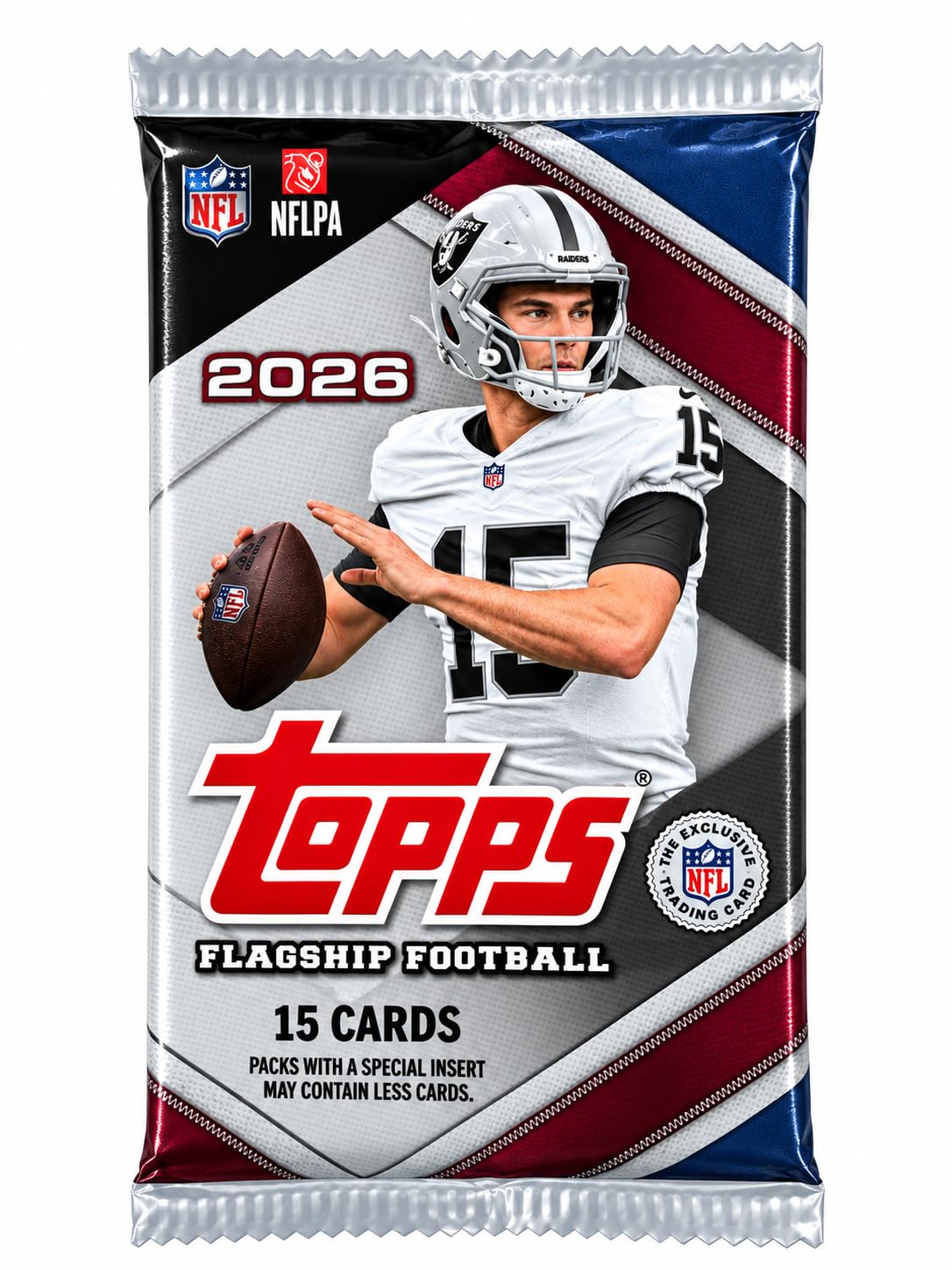
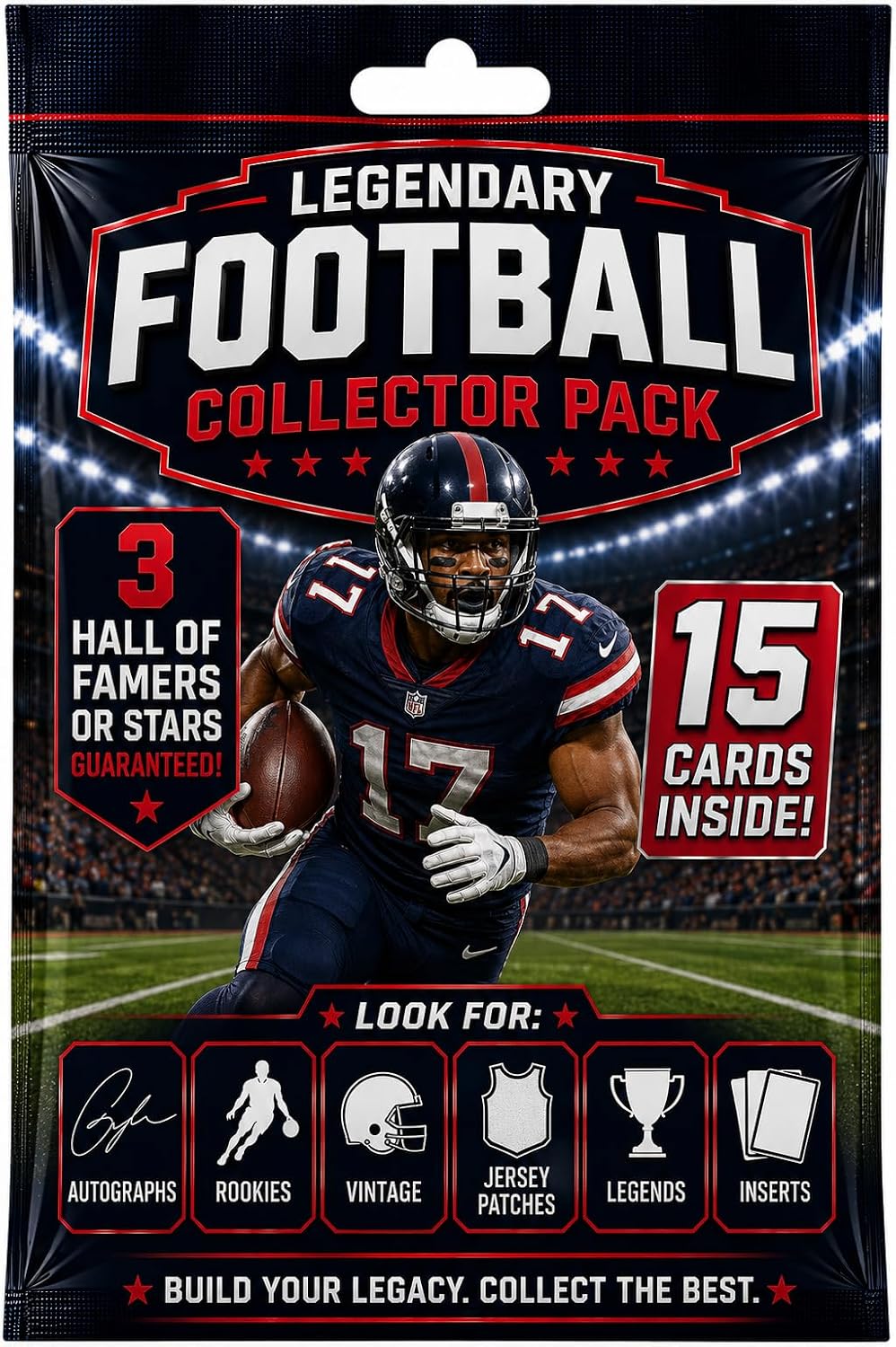
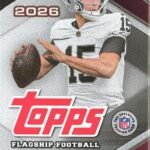
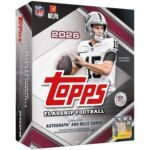
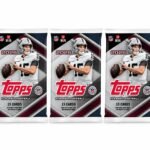
Priced accessibly for casual collectors while providing a substantial number of cards per pack.
Price vs. rivals
Pricier
CheaperTypicalPricier
This pack is priced above entry-level options but below premium hobby boxes, placing it in the higher end of the mid-range for similar football trading card products.
Ease of use
Excellent 95/100
Opening a sealed pack is straightforward with no complex steps, making it very easy for most people.
Overview
The Topps Football Mega Pack review you’re looking for starts right here. At $9.99 for 15 cards, this pack sits at a sweet spot—cheaper than a blaster, pricier than a single loose pack. It solves the problem of wanting a decent shot at a rookie auto or a numbered parallel without dropping thirty bucks on a box that might be duds. It’s for the collector who’s past the “buy every pack” phase but still gets a kick from opening something that feels like a real chance.
Topps has been the baseball card king forever, but their football stuff? It’s good, but it’s not Panini. That matters if you’re chasing the biggest names—Panini still has the NFL license for uniforms and logos. Topps uses player names and team city references (think “Dallas” instead of a star), which bugs some people. If you’re okay with that, this pack is a solid way to dip into the 2026 rookie class without a big commitment.
Key Features
15 cards per pack – That’s enough to get a few base cards, a couple of inserts, and maybe a parallel. You’re not left with a single pack that’s just commons.
Rookie card focus – The 2026 checklist is loaded with first-year players from the last draft. Topps typically packs in more rookies per pack than Panini’s equivalent products, so if you’re speculating on the next star, this is your lane.
Chrome-style parallels – Expect refractors, X-fractors, and colored borders. The shiny ones don’t guarantee value, but they’re fun to pull and look sharp in a top-loader.
Autograph and relic odds – Not every pack has a hit. Maybe one in every six to eight packs has a signed card or a jersey swatch. That’s typical for a Mega Pack—you’re paying for volume and a chance, not a guarantee.
No sticker shock – At $9.99, it’s cheaper than a hobby pack (which runs $15–$20) but still gives you retail-level parallels you won’t find in a standard $4 blaster pack.
Fit for You
You’re a collector on a budget who still wants the thrill of opening fresh product instead of buying singles.
You’re building a 2026 Topps football set and need base cards plus short-prints to fill the binder.
You’re a parent looking for a gift that costs ten bucks and lasts longer than a candy bar—kids love the refractors.
You’re curious how the Topps vs Panini football cards debate shakes out in 2026, and this pack is a low-risk way to compare print quality and design.
You’re into flipping cards and want to test a small lot before committing to a whole case.
You’re a long-time collector who misses the old Topps designs—this year’s set has a throwback border that nods to the late ’80s.
Uses
Open one on a Sunday afternoon while you’ve got a game on in the background. That’s the ideal. Fifteen cards is enough to sort through, look for surface scratches, and check the parallel odds without rushing. You’ll probably spend ten minutes per pack if you’re actually reading the backs.
It works as a stocking stuffer or a small birthday add-on. The pack isn’t fragile—no foil that tears easily—so you can toss it in a bag. Just don’t leave it in a hot car because the chrome coating can get gummy.
If you’re comparing Topps vs Panini football cards, buy one of each. Open them side by side. You’ll notice Topps card stock feels slightly thinner and glossier, while Panini has thicker, matte-finish base cards. That difference matters for long-term storage—thin cards can warp if not kept in a dry environment.
Experience
Let’s be honest about the first pack you open. You’ll slide the cardboard wrapper off—no annoying plastic clamshell—and the cards are packed tightly. Fanning them out takes a little effort. The surface finish is high-gloss, which means fingerprints show instantly. Keep a microfiber cloth nearby if that bugs you.
The design for 2026 is clean. Topps went with a white border, team name in a subtle script, and a full-bleed player photo. It’s modern but not busy. The backs have stats and a short blurb that reads less like a press release than Panini’s do. Small win.
The catch is collation. Owners tend to mention that you’ll pull the same base cards across multiple packs if you buy a whole box. That’s fine for set-building, annoying if you’re after variety. Also, the pack doesn’t guarantee a “hit” (auto or relic). About one in seven packs has something that’ll make you smile. The rest are base with a parallel or two.
Storage is easy. The pack fits inside a standard 800-count cardboard box. You can toss it in a drawer. No humidity sensitivity beyond normal card care. Cleaning is just keeping the gloss free of skin oil—again, cloth. Noise? You can’t hear it. It’s a pack of cards.
Pros and Cons
Pros
Affordable entry point – For ten bucks you get a real product, not a repackaged mystery bag. The price per card works out to about 66 cents, which is fair for retail licensed football.
Solid rookie class – The 2026 draft had several QBs and skill players who are already generating buzz. Topps includes them heavily in the base set, so you’re building inventory early.
Chrome parallels look great – Refractors and colored borders pop under light. They don’t feel cheap. The red parallel in particular is a fan favorite.
Easy to find – On Amazon it’s in stock often. No camping a website at 3 AM like hobby boxes.
Fun for casual collectors – If you don’t care about NFL logos or chasing the next Mahomes, the design and sheer number of cards per dollar make it an enjoyable rip.
Cons
No NFL team logos – Topps can’t use actual helmets or uniforms. Helmets are generic, jerseys are solid colors. That kills the visual appeal for some and lowers resale value compared to Panini.
Thin card stock – The base cards are noticeably flimsier than Panini’s. They’ll bend if you’re not careful. Corners ding easily in a toploader if it’s too snug.
High duplication rate – Buy two packs and expect to see at least three of the same base card. That’s not a defect—it’s how Topps prints retail. Frustrating if you want variety.
Hit odds are low – You might buy six packs and get nothing but a common parallel. That “is Topps Football Mega Pack worth it” question really depends on your appetite for risk. It’s a lottery, not a sure thing.
Not great for strict investors – Most base cards from Topps football retail sets don’t hold value long-term. Even rookies from the first year of a new design tend to plateau unless they’re short-printed or autos.
Advantages
Where this pack beats alternatives is the combination of price, card count, and rookie density. A Panini blaster box costs $25–$30 and gives you fewer cards. The Topps 2026 football cards checklist includes 350 cards, and a Mega Pack covers about 4% of the base set. That’s efficient progress for set builders. Also, the chrome finish looks better than standard paper stock—you can see the difference when you put a Topps Chrome parallel next to a Panini base card. The glossy surface gives a premium feel without the premium price. If you’re hunting for the best football cards for collectors 2026, this pack is a strong contender for the budget-conscious.
Who Should Buy
Buy it if: You’re a casual collector who likes the thrill of opening packs without blowing your budget. You’re fine with no guaranteed autograph and you value card condition over logos.
Skip it if: You insist on official NFL branding for your PC. Go Panini Donruss or Mosaic instead. Also skip if you’re looking for a high-ROI flip—the singles market for retail Topps football is thin.
Look elsewhere if: You’re a player collector after a specific star. Singles on eBay will be cheaper than ripping five packs hoping for that one card.
FAQ
Is the Topps Football Mega Pack worth it?
Yes, if you want a fun, low-risk pack with good rookie content and Chrome parallels for $9.99. The Topps Football Mega Pack price is fair compared to alternatives, but you won’t hit big money cards often.
How many cards are in a Topps Football Mega Pack?
15 cards. That’s consistent with retail Mega Packs from Topps—more than a blister pack (5–7 cards) but fewer than a blaster (which usually has 6–8 packs inside, so 40+ cards total).
Does the Topps Football Mega Pack have autographs?
Some do. The odds aren’t published per pack, but hobby breakers report that roughly one in every seven to eight retail Mega Packs contains a signed card. Relics are similarly rare.
What is the 2026 Topps football checklist?
The base set has 350 cards covering rookies, veterans, and retired stars. Chrome parallels add refractors, X-fractors, and colored borders numbered to 299 or less. You can find the full checklist on Topps’ official site, but expect heavy rookie representation.
How does it compare to Panini football cards?
The Topps vs Panini football cards debate comes down to licensing: Panini has NFL team logos, Topps doesn’t. Topps cards are glossier and thinner. Panini’s are thicker with more texture. For pure design, Panini wins for realism; Topps wins for throwback aesthetics and shiny parallels.
Is the Topps Football Mega Pack a good gift?
Yes, for a young collector or a casual fan. It’s inexpensive, easy to wrap, and the Chrome parallels create a wow moment. Just know that most packs won’t have a hit, so temper expectations for a kid who might be disappointed by 15 base cards.
Final Verdict
The Topps Football Mega Pack review bottom line: It’s a solid ten-dollar pack that delivers exactly what it promises—15 cards, Chrome shine, and a shot at a rookie auto. It doesn’t try to be a hobby box, and it’s honest about its limitations (no NFL logos, thin stock, duplication).
Buy it if you enjoy the ritual of opening cards and don’t mind the trade-offs. For set builders and rookie chasers on a budget, this is one of the best football cards for collectors 2026 at this price point. Just keep your expectations tight—you’re paying for fun, not retirement.
Topps Football Mega Pack vs the Competition in 2026
If you’re hunting for the best football cards for collectors 2026, the Topps Football Mega Pack sits in a curious spot. At $9.99 for 15 cards, it’s the cheapest entry point into licensed NFL cardboard this year — but cheap doesn’t always mean simple. With Topps holding the exclusive NFL license and Panini reduced to unlicensed sets, the landscape shifted hard. This comparison treats that shift as real, not theoretical. Here’s how the Mega Pack stacks up against what else is on shelves.
Product
Price Range
Key Strength
Key Weakness
Best For
Topps Football Mega Pack
$9.99
Official NFL license; clean, classic design; reliable rookie checklist
No guaranteed autograph or relic per pack; limited parallel variety
Budget collectors wanting licensed rookies without gambling on blasters
Panini Contenders Blaster Box
~$25–$30
Ticket-style autograph inserts; higher hit frequency
Unlicensed; no team logos or helmet decals; smaller base rookie crop
Autograph chasers who can overlook missing NFL branding
Donruss Optic Mega Box
~$35–$45
Flashy holofoils; tons of color parallels; strong resale on numbered cards
Unlicensed; overproduced base cards; can feel like a parallel casino
Parallel hunters and budget flippers who care about refractor-adjacent shine
Panini Prizm Mega Box
~$50–$65
Highest secondary market demand; iconic design for big rookies
Unlicensed; brutally expensive per card; base cards hold almost no value
Investors looking for the one big rookie to grade and flip
Topps Football Mega Pack vs Panini Contenders Blaster Box
Let’s get the elephant out of the room: Topps has the NFL license, Panini doesn’t. That means a 2026 Panini Contenders card shows a player in a generic red, white, and blue jersey with the team name typed out in a basic font. It looks like a custom card a cousin made for your birthday. The Topps Football Mega Pack gives you actual team uniforms, actual logos, actual wordmarks — and for a collector who started with 1980s Topps, that alone is worth the $9.99. But Contenders has something Topps doesn’t: a guaranteed autograph in every blaster. If you’re the type who’d rather scratch a lottery ticket than buy a sandwich, the hit-chase might pull you toward Panini. You’ll get an autograph, but you’ll also get a card that can’t show which team the guy plays for. That trade-off bothers some people a lot. For me, a rookie card without a team logo isn’t a rookie card — it’s a print of a guy standing on grass. The Topps 2026 football cards checklist includes the full rookie class with proper uniforms, and the Mega Pack lets you grab those for less than the cost of a fast-food meal. If licensing matters to you at all, this isn’t a close call.
Topps Football Mega Pack vs Donruss Optic Mega Box
Donruss Optic is the shiny one. The holofoil finish, the rainbow of parallels, the chase for a #/1 Black Velocity — it’s built for people who sort their collection by color first and player second. The Topps Football Mega Pack is almost defiantly plain in comparison: standard paper stock, a simple border, no refractor gimmicks. That’s either boring or refreshing, depending on what you want. Here’s what matters more: Optic costs three to four times as much per box, and you’re still getting unlicensed cards. The shine doesn’t hide the blank helmet. For $9.99, the Topps Mega Pack gives you 15 cards that look like actual NFL cards. If you care about the Topps Mega Pack card value, the return comes from landing the right rookie — Caleb Williams, Marvin Harrison Jr., whoever the 2026 class produces — in a licensed base card that will actually hold its floor price. Optic’s base cards crater to pennies within weeks because the market assumes unlicensed rookies are speculative at best. The Topps Football Mega Pack price makes it an easy entry point to stockpile commons and chases without feeling ripped off. If you’re a set builder or a rookie collector, Topps wins. If you want a mirror-like Jackson Powers-Johnson parallel to stare at, go Optic.
Topps Football Mega Pack vs Panini Prizm Mega Box
Here’s the elephant that won’t leave the room: Prizm is the king of resale. A 2026 Prizm Silver rookie of a top QB can sell for triple what his Topps base card does, even with the missing NFL branding. That’s just how the market works. But a Prizm Mega Box costs around $50 to $65, and you’re gambling on pulling that Silver. The base stuff is almost worthless — unlicensed paper that looks like a generic sticker album. The Topps Football Mega Pack doesn’t pretend to be an investment vehicle. It’s a cheap, reliable way to get the rookies you want, in licensed form, for the price of two coffees. Is Topps Football Mega Pack worth it if you’re trying to flip? Probably not. The ceiling is lower. But if you’re building a rookie collection for your own binders, or you want to hand a pack to a kid without worrying about losing value, it’s the smarter buy. The best football cards for collectors 2026 conversation comes down to a question: do you collect for money or for the sport? If it’s the latter, the Topps Football Mega Pack is the easiest recommendation I can make in this category.
Pick the Topps Football Mega Pack if you want officially licensed NFL rookies at a price that doesn’t sting. Pick it if you’re introducing someone to the hobby — it’s safe, it’s fun, and it’s cheap enough to buy multiple packs. Don’t pick it if you need autographs from your $10, or if you’re chasing six-figure resale scores. For those goals, you’ll want Panini Contenders for the hit or Donruss Optic or Prizm for the parallel gamble. But for a solid, honest, licensed football card experience? The Topps Football Mega Pack review writes itself: it’s the pack that does what it says on the wrapper.
Ready to decide on the Topps Football Mega Pack?
See today’s price, stock and delivery options on Amazon.