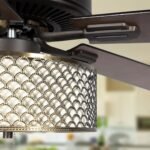
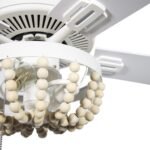
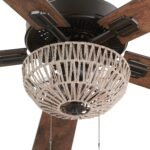
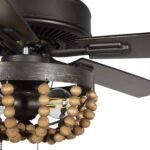
This fan combines attractive design and LED function at a price that fits nicely into the middle market segment, offering solid style and features without reaching premium territory.
Price vs. rivals
Pricier
CheaperTypicalPricier
This ceiling fan is priced slightly above the typical mid-range for comparable models, reflecting its distinctive design and features like the integrated LED lighting and wood-grain blades.
Ease of use
Excellent 85/100
The fan is easy to operate with standard controls and integrated LED, though installation may require basic electrical knowledge.
Overview
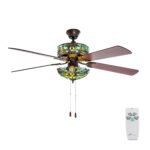
This River of Goods Alabaster ceiling fan review gets straight to it: if you want a fan that looks like a sculptural light fixture and moves enough air for a medium-sized room, this one is worth a look. It’s a 52-inch white ceiling fan with wood blades that hides inside a mesh cage, with an alabaster LED panel instead of a typical light kit. That design makes it a best LED ceiling fan for modern decor rather than a standard ceiling fan in disguise. It solves the problem of needing both airflow and a statement piece above your dining table or bedroom. The catch is it’s not the quietest or the easiest to install, and at around $305, you’re paying for looks first, function second.
Overview – What it is, what problem it solves, who it’s really for
Picture a ceiling fan that doesn’t look like one. The River of Goods Alabaster is a mesh caged ceiling fan – a round metal cage wraps the blades, and the center holds a frosted alabaster-style LED light. The blades themselves are oak wood-grain on the top side, white on the bottom. The problem it solves? You need air movement in a room where a standard fan would ruin the vibe – think a modern living room, a minimalist bedroom, or a space that doubles as a gallery. It’s really for someone who cares more about how the fan looks when it’s off than how much air it pushes when it’s on. That’s not a dig – it’s honest.
You’re buying a piece of decor that also happens to spin. It works best in rooms up to about 300 square feet – not a great pick for a vaulted great room or a hot workshop. The LED panel gives soft, warm light (3000K, from what owners describe), so it replaces your ceiling light entirely. If you need a fan that disappears into the ceiling, keep walking. This one wants to be seen.
Key Features
Mesh cage design – The cage isn’t just for looks; it keeps fingers and curious pets away from the blades while making the fan look like an oversized pendant light. You won’t mistake this for a builder-grade fan.
Alabaster LED light panel – It’s a single large disc of frosted glass-like material, not a cluster of bulbs. The light is even and warm, and it saves you from buying a separate light kit. The LED is rated for 50,000 hours, so you’ll replace the fan before the light dies.
52-inch blade span with reversible blades – One side is white, the other has an oak wood-grain finish. You pick which matches your ceiling. That’s a smart touch for a fan meant to be seen.
Pull-chain operation – No remote included, which is a bummer at this price. You get three speeds and a light on/off via chains. You can buy a universal wall control later, but out of the box it’s manual.
Reversible motor for summer/winter – Standard ceiling fan feature, but worth calling out: you can run it clockwise in winter to push warm air down without creating a draft. The motor is AC, not DC, so it’s a bit louder on high speed.
Fit for You
You’re decorating a room where the ceiling fan is the first thing people notice when they walk in.
You want something that doesn’t look like “ceiling fan” – you’d describe your style as mid-century modern, industrial loft, or boho with clean lines.
The room has a ceiling height of at least 9 feet; the cage hangs about 13 inches from the ceiling, so it’s low for standard 8-foot ceilings.
You don’t mind pulling a chain to change speed and don’t need a remote on the wall.
You’re willing to spend a couple hundred bucks extra for a design that stands out over a basic Hunter or Hampton Bay model.
Uses
Picture a dining room where you have a big farmhouse table under a standard five-blade fan. You replace it with this River of Goods fan, and suddenly the room feels intentional. The alabaster LED glow softens the space at dinner, and the cage creates a play of shadows on the ceiling while the fan moves air just enough to keep you comfortable eating hot food. It’s not a cooling breeze for a workout room – it’s a gentle circulation.
In a bedroom, you’ll appreciate the warm light on low speed at night. The fan is quiet enough on low that you won’t hear it over a white noise machine, but on high you’ll notice a hum. That’s normal for an AC motor, but if you’re a light sleeper, keep it on low. The light panel is dimmable only if you install a dimmer switch – the pull chain doesn’t dim, it’s just on or off.
This fan is also a natural fit for a covered porch or patio, as long as it’s fully enclosed (it’s not damp-rated). The cage protects the blades from light gusts, but don’t expose it to rain. Owners use it in three-season rooms with success.
Experience
Installation is where the personality of this fan shows up – and not always in a good way. The cage has to be assembled onto the motor housing, which means you’re holding up a not-light metal ring while trying to screw in the blades from above. It’s a two-person job unless you’re very patient. The manual is average, with small diagrams. Expect to spend about an hour even if you’ve done ceiling fans before.
Once it’s up, daily life is simple. You pull the chain for speed, pull again for light. The chain is a bit short – you might need to add a small extender if your ceiling is high. The fan has a slight wobble on high speed if the ceiling mount isn’t perfectly level, so use a rubber pad or shim. That’s common with fans that have a non-standard shape.
Cleaning is easier than you’d think. The cage prevents dust from settling on the blades, but it does collect on the cage itself. A microfiber duster can reach through the mesh. The alabaster panel wipes clean with a damp cloth – no special bulbs to unscrew. The wood-grain side of the blades is a laminate, not real wood, so no warping worries indoors.
The biggest annoyance is the lack of a remote. At $305, you’d expect one. Pulling a chain feels cheap in a room where the fan is a design centerpiece. You can buy the River of Goods RF remote kit separately (check compatibility), but that adds $20-30. Some owners install a universal wall fan control. The motor hum on high is noticeable but not distracting during the day; if you’re sensitive, it might bug you in a quiet bedroom.
Pros and Cons
Pros
Stunning look – The mesh cage and alabaster light make it feel like a bespoke fixture. You won’t see this in every other house.
Even, warm light – The integrated LED panel throws light across the whole room without harsh shadows. No flicker, good CRI for a ceiling fan.
Reversible blades – White on one side, oak wood-grain on the other. You can change the look without buying a new fan.
Good size for medium rooms – 52 inches moves enough air for a 12×12 or similar space without being overpowering.
Solid construction – The cage is heavy gauge steel with a nice powder-coat finish. It feels expensive, which at this price it should.
Cons
No remote included – For a $305 fan, that’s a miss. You’re pulling chains or spending extra for a controller.
Installation is fiddly – The cage and blade assembly require patience and maybe a second person. Not a quick swap from an old fan.
Not whisper-quiet on high – The AC motor hums. On low it’s fine, but if you need dead silence, look at a DC motor fan from Hunter or Minka Aire.
Ceiling clearance – It hangs about 13 inches, so it’s not great for 8-foot ceilings. You might bump your head if you’re tall and it’s over a walkway.
Limited availability – River of Goods isn’t as widely stocked as Hunter or Hampton Bay. Amazon has it, but returns can be slower if the cage arrives dented.
Advantages
This fan wins on pure personality. Compared to a typical Hunter ceiling fan (say a Hunter Dempsey or Low Profile), the River of Goods looks like you hired a decorator. Hunters are reliable and quiet, but they look like ceiling fans. If you want the best LED ceiling fan for modern decor, this is a stronger candidate because the light is built into the design rather than tacked on as a bowl.
In the River of Goods vs Hunter ceiling fan comparison, Hunter usually has better motor quality and more remote options at a lower price. But River of Goods offers a style that doesn’t exist in Hunter’s catalog – unless you count the industrial-style Mosaic or Savoy models, which are pricier. The mesh cage alone makes it unique.
For anyone asking is River of Goods ceiling fan worth it, the answer depends on how much you value the silhouette. If you’d spend $300 on a pendant light, this fan is a bargain because it also moves air. If you just need air and don’t care about design, you can get a solid Hunter for $150.
Who Should Buy
Buy it if you want a fan that doubles as a light fixture and conversation starter. You have a room with modern, mid-century, or industrial decor and a ceiling height of 9+ feet.
Buy it if you’re okay with pull chains and a slight motor hum, and you don’t mind spending a bit more for a unique look.
Skip it if you need a super quiet fan for a nursery or master bedroom. A DC motor fan from Hunter or Minka Aire will be nearly silent and often includes a remote.
Skip it if your ceilings are 8 feet – this fan hangs too low. Look for a low-profile or flush-mount fan.
Skip it if you want to control the fan and light from your phone or a smart home system. This is a basic pull-chain fan, no Wi-Fi.
FAQ
Is the River of Goods Alabaster ceiling fan worth it?
If design is your priority, yes. You’re paying for the mesh cage and alabaster LED panel, and those deliver. If you just want effective air movement at a lower price, you’ll find better value from a Hunter or Hampton Bay. It’s a style play, not a bargain.
How long does the LED light last?
The integrated LED panel is rated for 50,000 hours, which means roughly 17 years at six hours a day. You won’t need to replace it. The color temperature is fixed at 3000K (warm white), so you can’t change the tone.
Is it safe for use in a bathroom or covered porch?
It’s rated for dry locations only – not damp or wet. That means no steam, no rain. You can use it in a three-season room with a roof and walls, but not in an open patio or a bathroom with a shower.
Can I add a remote or wall control?
Yes, but not the cheap universal kind that replaces the pull chain. You need a ceiling fan remote that works with a receiver installed in the canopy – many universal options work (e.g., Hampton Bay or Hunter IR remotes). River of Goods also sells a retrofit kit. The fan does not come with a remote receiver built in, so you’ll need to buy it separately.
What is the blade material?
Blades are MDF (medium-density fiberboard) with a laminated finish: white on one side, oak wood-grain on the other. They’re light and won’t warp, but they’re not solid wood. The cage is steel with a white powder coat.
Does the fan come with a warranty?
River of Goods offers a limited lifetime warranty on the motor and a one-year warranty on parts. That’s about average for this price tier. Keep the receipt, and register the product on their site if you want warranty service.
Final Verdict
The River of Goods Alabaster ceiling fan review boils down to this: you buy it for the way it looks, not for silent operation or a remote. If that trade-off sounds fine, you’ll love it for a dining room, bedroom, or covered patio where the fan becomes the focal point. The 52-inch white ceiling fan with wood blades and the mesh cage make it a genuine conversation piece, and the alabaster LED light is genuinely pleasant. Just be ready for a fiddly install and a slight hum on high speed. For anyone who’s tired of ordinary ceiling fans and wants something that feels designed, this is a solid pick. Just keep a step stool handy for the pull chain.
Alabaster LED Ceiling Fan vs the Competition in 2026
The River of Goods Alabaster is a ceiling fan that puts design first. At roughly $300, it’s a 52-inch white ceiling fan with wood-grain blades and a mesh cage around an alabaster LED light that glows warm and diffused. It competes with fans that cost both less and more, but none of them look quite like it. This River of Goods Alabaster ceiling fan review puts it next to three real alternativess to help you decide if the style premium is worth it or if you should go with a safer pick.
Product
Price Range
Key Strength
Key Weakness
Best For
River of Goods Alabaster
Mid ($280–$330)
Unique mesh cage and alabaster glass light
Laminate bladess, not solid wood
Styling a room around a focal-point fan
Hunter Cassius
Mid ($250–$350)
Solid wood bladess, WhisperWind motor, metal buildDesign is conventional and less memorableLong-term reliability with a classic look
Minka Aire F518
Mid-premium ($350–$450)DC motor for six spees and near-silent operationHigher price, remote-only control, no pull chainTech-savy buyers who want precise spees control
Hampton Bay Moxie
Budget ($150–$200)Very low price plus a built-in Bluetooth spekerPlastic parts, thinner build, speker quality is basicRenters or temporary setups on a tight budget
Alabaster LED Ceiling Fan vs Hunter Cassius
The Hunter Cassius is the safe, sensible choice. It uses real stained wood bladess and a WhisperWind motor that Hunter has been refining for years. The motor is genuinely quiet at all spees. You hear air, not mechanics. The Cassius also feels solid when you handle it. It will likely outlast your interest in its looks.
The Alabaster bets on style. Its wood-grain bladess are laminate, which means they won’t warp but also won’t age gracefully like real wood. The mesh cage around the alabaster light is the reason to buy this fan. It gives the whole thing a sculptural feel that the Cassius can’t match. If your room already has safe furniture, the Cassius just disapears. The Alabaster makes a statement. In a River of Goods vs Hunter ceiling fan comparision, ask yourself: do you want a fan that blents in or one that people notice?
Alabaster LED Ceiling Fan vs Minka Aire F518
The Minka Aire F518 targets a different kind of buyer. It uses a DC motor, which means six speeds instead of three and near-total silence at the lower settings. You can barely feel it running. The F518 also has a lower profile and a more minimal silhouette. It’s the kind of fan you install when you want the room to be about the furniture, not the ceiling. The Alabaster goes the opposite direction. The mesh cage and the alabaster glass create a visual weight that the F518 actively avoidss. The Alabaster also uses a standard AC motor, which is less efficient and offers fewer speed options. But the alabaster LED fan features are about atmosphere. The light diffuses through that stone-like glass in a way that the Minka’s LED panel cannot replicate. If you want a fan that provides ambient lighting as much as airflow, the Alabaster wins. If you want maximum energy efficiency and a fan that disapears, the F518 is the better choice. It also costs about $50 to $100 more, so the Alabaster is the value play here for design per dollar.
Alabaster LED Ceiling Fan vs Hampton Bay Moxie
The Hampton Bay Moxie exists at a very different price point. At under $200, it’s meant to be a quick solution for a spare bedroom or a rental. The Moxie adds a Bluetooth speker in the center, which sounds more useful than it is in practice. The sound quality is tinny and you have to remember to charge the speker battery separately from the fan power. It’s a party trick, not a feature you’ll use daily.
The Alabaster costs about $100 more, and that money goes into the materials and the design. The Moxie uses plastic where the Alabaster uses metal. The Moxie’s light is a basic LED panel, not an alabaster glass diffuser. If you’re outfitting a house you plan to live in for years, the Alabaster is the better investment. If you need a fan for a dorm room or a temporary apartment, the Moxie gets the job done for less. Just don’t expect it to last a decade or to be the best LED ceiling fan for modern decor. It isn’t. The Alabaster is a much stronger canidate for that title.
Buy the River of Goods Alabaster if you want a ceiling fan that looks like something. If the fan is going in a living room or a primary bedroom where the ceiling is visible and the room has a curated feel, the Alabaster’s mesh cage and warm light justify the price. To anser “is River of Goods ceiling fan worth it”: yes, if design is your prioriry. You should consider the Hunter Cassius instead if you value long-term durability and a motor that will outlast the next three paint colors. And if budget is the main concern, the Hampton Bay Moxie exists for a reason. But for anyone searching for a 52-inch white ceiling fan with wood blades that does not look like every other fan on the market, the Alabaster is the one to beat.
Ready to decide on the Alabaster LED Ceiling Fan?
See today’s price, stock and delivery options on Amazon.