Combines a competitive price point with exceptional user reviews, making it a reliable choice for a first birthday gift.
Price vs. rivals
Typical
CheaperTypicalPricier
Slightly above entry-level prices, but well within the typical mid-range for balance bikes of this quality and rating.
Ease of use
Excellent 95/100
The balance bike is designed for simple push-and-ride use by toddlers, making it very easy for both the child and parent to handle.
Overview – The SEREED Baby Balance Bike Review
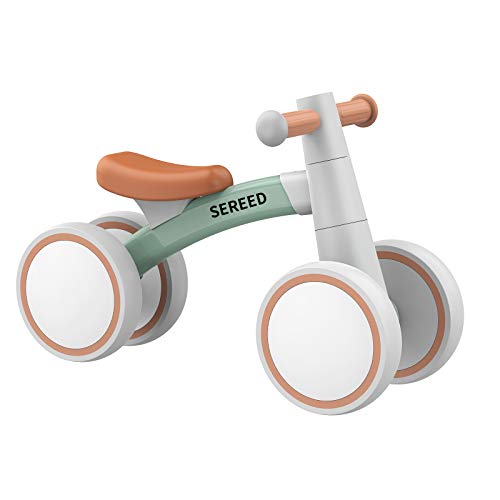
The SEREED baby balance bike review you’re looking for starts with a direct answer: at $31.99, it’s worth buying. This lightweight balance bike for 1 year old toddlers solves the problem of a kid who wants to move but can’t pedal yet. Simple, affordable, and built for the smallest riders.
It’s a two-wheeled balance bike, no pedals, no training wheels. The idea is that your child learns to steer and balance while pushing with their feet, then eventually glides. At this price point, it competes with bikes that cost three times as much. The catch is that it’s made for a very specific age range — roughly 12 to 24 months — so you’re getting a smaller bike with a shorter lifespan than something adjustable like a Strider. But for that first year of walking, it hits exactly what most parents need.
Key Features That Actually Matter
Weight – 3.3 pounds That’s light enough that a one-year-old can pick it up after tipping over, and you can carry it one-handed while wrangling a toddler and a grocery bag. It matters more than almost any other spec.
Seat height – 11 to 13 inches The lowest setting is genuinely low enough for a 12-month-old with short legs. Many balance bikes claim they work for one-year-olds but the seat won’t go low enough. This one does.
Tires – EVA foam, no air No punctures, no pumping, no maintenance. The trade-off is a slightly harder ride on pavement, but for indoor or sidewalk use it’s totally fine. You’ll feel every pebble, but your kid won’t care.
Frame – carbon steel with a padded top tube It’s sturdy enough to survive drops, tumbles, and the occasional throw. The padding on the top tube means less whacking when a kid inevitably faceplants over the handlebars.
Handlebars – 360-degree rotation This sounds like a problem — “wait, they turn all the way around?” — but it actually prevents a common injury. If the bars hit the ground during a fall, they spin instead of stopping the bike cold and flipping the kid forward. Smart design.
Assembly – Allen key included, 5 minutes Four bolts, two for the handlebar post, two for the seat post. No confusing instructions. You’ll spend more time peeling off the protective plastic than assembling it.
Fit for You – When This Bike Makes Sense
Your child is 12 to 18 months old, walking confidently, and wants to move faster than their legs allow.
You want a lightweight balance bike for 1 year old that doesn’t cost more than the kid’s entire wardrobe.
You need a SEREED first birthday gift bike that arrives assembled in five minutes, looks good in photos, and won’t frustrate the birthday kid or the parents.
You live in a small space and need something that tucks under a couch or leans against a wall without taking over the room.
You’re buying for a grandkid or a friend’s child and don’t want to overspend on something they’ll outgrow in a year.
Uses – Where It Earns Its Keep
The best use case is indoors on a hard floor or outdoors on a smooth sidewalk. A one-year-old isn’t going off-road. They’re shuffling down a hallway, across the kitchen, or along the driveway while you walk next to them. The SEREED handles that beautifully — the foam tires track straight, the seat stays put, and the whole thing is low enough that a tumble is just a roll onto their diaper.
It also works on packed dirt or short grass, but loose gravel or thick mulch will stop it cold. The tires don’t have tread, so anything that lets a foot sink will make the bike drag. Stick to flat, hard surfaces and you’re golden.
Another realistic moment: after a meal, when the kid wants to “ride” around the living room while you clean up. The SEREED is quiet enough that it won’t drive you insane — no squeaks, no plastic rattling against the floor. Just a soft hum of foam on wood.
Experience – Living With the SEREED Balance Bike
Assembly takes about five minutes if you’re slow, three if you’re paying attention. The Allen key is included and actually fits the bolts — a small thing, but annoying when it doesn’t. You attach the handlebar post, clamp it, attach the seat post, clamp it. That’s it. The padding on the frame is already on, the handlebar grips are already installed. No wrestling with rubber grips or fighting with a stubborn cap.
The first thing you’ll notice is the weight. At 3.3 pounds, it’s noticeably lighter than most metal balance bikes in this price range. Your kid will be able to lift it themselves within a few days. That also means less damage to your shins when they swing it around.
The seat adjusts with a simple bolt and a sliding clamp. No quick-release lever, but also nothing that slips. You’ll need the Allen key to change height, which is mildly annoying if you have two kids sharing it. But for most families, you set it once and don’t touch it again.
The handlebars have a foam grip that’s comfortable for small hands, though it will pick up dirt and grime over time. A damp cloth wipes it clean easily enough. The paint on the frame is decent — some families report minor scratches after a few months of daily use, but nothing that rusts or chips badly.
The one real annoyance: the seat padding is thin. Not uncomfortable, but don’t expect a cushy ride. For short sessions of 10–20 minutes, it’s fine. If your kid wants to ride for an hour straight, they’ll probably slide off or complain. That’s typical for this price range, but worth knowing.
Storage is easy. It leans against a wall, tucks under a low coffee table, or hangs from a hook by the handlebars. The 360-degree handlebars mean you can’t fold them flat for storage, but the bike is small enough that it doesn’t matter.
Noise level is low. Foam tires on hardwood make a soft humming sound. On carpet, it’s nearly silent. No squeaking from the frame or handlebars out of the box. Some families mention a slight creak after heavy use, but tightening the bolts solves it.
Pros and Cons
Pros
Very light at 3.3 pounds A 12-month-old can pick it up, and you can carry it with your pinky. Makes a real difference in how often the kid actually uses it.
Seat goes genuinely low The 11-inch minimum height means short-legged toddlers can reach the ground flat-footed. Many cheap balance bikes claim this but don’t deliver. This one does.
360-degree handlebar rotation A safety feature that also prevents handlebar-related faceplants. Your kid will crash. This design makes the crash less bad.
No maintenance tires EVA foam means no pumps, no patches, no flats. You’ll never think about them again. The trade-off is a slightly harder ride, but for this age group that’s a non-issue.
Price is hard to argue with At $31.99, it undercuts the competition by a wide margin while still using a steel frame and padded top tube. You’re not getting cheap plastic that’ll crack in a month.
Simple, fast assembly Three to five minutes, one tool, no confusing diagrams. If you’ve ever assembled kid furniture that took an hour, this is a relief.
Cons
Short useful lifespan The seat maxes out at 13 inches. Most kids will outgrow this bike between 18 and 24 months. If you want something that lasts until age 3 or 4, look at an adjustable model like the Strider.
Seat padding is thin Not painful, but not plush. For short rides it’s fine. Expect your kid to slide off after 15–20 minutes on longer sessions.
No hand brake At this age, kids don’t need one — they use their feet — but it means the bike has no stopping mechanism beyond their shoes. Not a con for the intended age, but a limitation if you’re hoping for future growth.
Foam tires don’t handle rough surfaces Loose gravel, thick grass, or uneven pavement will bog it down. Stick to smooth paths, sidewalks, and indoor floors. It’s not an off-road bike.
Seat height adjustment needs a tool No quick-release lever. If two kids share it, you’ll need the Allen key every time. Minor, but worth mentioning.
Advantages Over the Competition
Compared to other budget balance bikes, the SEREED wins on weight and seat height range. A lot of bikes in the $25–$40 range use plastic frames that are heavier or less durable. The SEREED uses carbon steel, which is both lighter than plastic and stronger. The seat goes lower than most competitors, which is crucial for a true one-year-old fit.
When you get into the SEREED vs Strider balance bike comparison, the difference is clear: the Strider has a longer adjustment range (seat goes higher, handlebars adjust too), and it uses air tires on some models. But it also costs $70–$100. The SEREED costs $31.99 and works for the exact age when most kids first start riding. If you want one bike that lasts from age 1 to age 4, get the Strider. If you want a bike for the first year or two that costs half as much, the SEREED is the smarter buy.
Who Should Buy the SEREED Balance Bike
Buy it if: You have a child between 12 and 18 months who is walking well and showing interest in moving faster. You want a SEREED balance bike for toddlers that’s light, safe, and cheap enough that you won’t mind replacing it when they outgrow it.
Buy it if: You need a gift for a first birthday and don’t want to overspend. The SEREED first birthday gift bike fits the occasion perfectly — it’s the right size, the right price, and it looks like a real bike, not a toy.
Skip it if: Your child is already 20 months or older and has long legs. They’ll outgrow the seat height within a few months. Get a Strider or a bike with a taller adjustment range instead.
Skip it if: You need something that handles grass, gravel, or uneven terrain. The foam tires are great for pavement and indoors, but they won’t perform on loose or bumpy surfaces. Look for an air-tire model.
Skip it if: You want a single bike that lasts from age 1 to age 4. This one maxes out around age 2. You’ll need a larger bike later anyway, but if you want one and done, spend more upfront.
FAQ – What Parents Actually Ask
Is the SEREED Baby Balance Bike worth it?
Yes, for the intended age range. At $31.99, it’s one of the cheapest balance bikes that actually works for a one-year-old. The seat goes low enough, the bike is light enough, and the build quality is solid. You’ll get 6 to 12 months of use, which works out to about 8 cents a day.
Is the SEREED Baby Balance Bike safe for a 1-year-old?
It is, with the usual caveats. The bike is low to the ground, the 360-degree handlebars prevent a common injury during falls, and the frame has padded top tube protection. No small parts that come off. Always supervise, and make sure your child wears a helmet once they start gliding.
How long does the SEREED balance bike last?
Most families get 6 to 12 months of regular use, depending on how quickly their child grows. The seat adjusts from 11 to 13 inches, so a tall 18-month-old might outgrow it faster. The frame itself is durable enough to last through a second child, assuming you store it indoors.
Is the SEREED balance bike easy to assemble?
Very. Four bolts, two for the handlebar post and two for the seat post. An Allen key is included. Most people finish in under 5 minutes. The grips and padding come already installed. Just attach the two posts and you’re done.
Can a 2-year-old ride the SEREED balance bike?
It depends on the child’s height. The seat maxes out at 13 inches from the ground, so a typical 2-year-old with a 12-inch inseam will fit. But many 2-year-olds have longer legs than that. If your child is average or tall for their age, you’ll likely need a larger bike by their second birthday.
What’s the difference between the SEREED and the Strider balance bike?
The Strider is more adjustable (seat goes higher, handlebars adjust), has air tire options, and lasts longer — up to age 4 or 5. But it costs $70–$100. The SEREED is cheaper, lighter, and designed for the 1-to-2-year-old range. If you only need a first bike, the SEREED is the better value. If you want one bike for the long haul, go Strider.
Final Verdict – SEREED Baby Balance Bike Review Summary
This is the bike you buy when you want something that actually fits a one-year-old, doesn’t cost a fortune, and doesn’t require a PhD in assembly. The SEREED baby balance bike review bottom line is simple: if your kid is 12 to 18 months old, buy it. If they’re older or you need a bike that grows with them for three years, look at the Strider. But for the first bike, the first birthday gift, the lightweight option that a tiny human can actually lift and steer — this is it.
The one thing to keep in mind: it’s temporary. You’ll get a year of use, maybe a bit more if your kid is petite. That’s the trade-off for the low price and the perfect fit for a one-year-old. Treat it like what it is — a fantastic first bike that you won’t feel bad retiring when they outgrow it.
SEREED Baby Balance Bike vs the Competition in 2026
The SEREED Baby Balance Bike is the cheapest lightweight option you’ll find that actually works for a one-year-old. At $31.99, it undercuts pretty much everyone while keeping the weight down to 3.3 pounds—light enough that a wobbly toddler can actually lift it after a tumble. The seat goes lower than most rivals, too. But you are giving up adjustability, a handbrake, and any kind of heirloom build quality. If your kid is tiny and you want a no-regret first bike that won’t break the bank, it is the obvious pick. But if your child is already pushing 18 months or you want a bike that will last three years, the math changes. Here is how it stacks up against three real alternatives.
No handbrake, minimal adjustability, basic plastic parts
First bike for a 1-year-old on a budget, especially as a first birthday gift
Strider 12 Sport
Premium (~$110–$130)
Tough steel frame, real handbrake option, grows with kid (seat from 14–19 in)
Heavier (6.9 lbs), higher starting seat limits the very youngest toddlers
Active 18-month-olds who need a bike that survives the backyard beating
KaZAM Balance Bike (No-Pedal)
Mid (~$70–$90)
Unique no-pedal conversion for later, smooth footrest platform for gliding
Weight around 7 lbs, footrest can trip up short legs, bulkier frame
Kids who outgrow the SEREED quickly and want a single bike to transition to pedals later
Wishbone 3-in-1 Balance Bike
Premium (~$120–$140)
Wooden frame, converts from trike to balance bike to run bike, eco-friendly
Assembly is fiddly, no handbrake, heavier than SEREED (5.5 lbs in balance mode)
Design-conscious families who want one toy that lasts from age 1 to 5
SEREED Baby Balance Bike vs Strider 12 Sport
The Strider is the gold standard for a reason: its steel frame takes abuse, the seat and handlebar adjust by inches (not fractions), and you can add a real handbrake later. Your kid will outgrow the SEREED’s seat height around age 2.5 unless they are small for their age. The Strider will keep them riding comfortably until kindergarten. But the Strider costs three to four times as much, and it weighs nearly 7 pounds—double the SEREED. For a barely-walking one-year-old, that extra weight is a real hurdle. If you have the cash and your child is already 18 months plus, the Strider is the better long-term buy. But for a 12-month-old, the SEREED’s lighter frame and lower seat make learning easier from the start. The SEREED Baby Balance Bike vs Strider 12 Sport boils down to this: immediate ease for tiny legs versus durability that lasts years.
SEREED Baby Balance Bike vs KaZAM Balance Bike
The KaZAM is interesting because it skips the “pedal conversion” gimmick and instead gives you a wide footrest platform. Your kid rests their feet there when gliding, which sounds good on paper. In practice, though, those platforms sit exactly where short legs want to dangle, and some toddlers trip over them. The KaZAM also weighs about 7 pounds with a foam tire setup that doesn’t absorb bumps as well as the SEREED’s air-like rubber tires. The SEREED is simpler: a basic frame, two wheels, and that’s it. It is also half the price. If your kid is already 2 and you want something that encourages a proper gliding posture (feet on platform, no dragging), the KaZAM might help. But for a true first balance bike for a 1-year-old, the SEREED is lighter, cheaper, and less likely to cause frustration.
SEREED Baby Balance Bike vs Wishbone 3-in-1
The Wishbone is a beautiful piece of plywood—literally. It starts as a little trike with a push handle, then converts to a balance bike, and finally to a “run bike” with a longer deck. That means one product covers ages 1 through roughly 5. But the conversion process requires undoing bolts and swapping parts every few months, so you will spend as much time fiddling as riding. The SEREED needs zero assembly beyond putting on the handlebar grips. For a first birthday gift, the Wishbone is a bigger deal and a nicer aesthetic, but the learning ride mode is heavier (5.5 lbs) and the seat doesn’t go as low as the SEREED’s. If you absolutely want a single toy that grows with them—and you are okay with a bit of setup work—the Wishbone wins on longevity. If you just want a bike that will get your one-year-old moving tomorrow, the SEREED is the simpler choice.
So who should actually buy the SEREED Baby Balance Bike? Anyone with a toddler between 12 and 18 months who is looking for a lightweight, inexpensive first bike—especially as a first birthday gift. The price is low enough that you won’t panic if it gets scratched or left in the rain. But if your kid is already 18 months or older, you will get more miles out of the Strider 12 Sport, which has a real handbrake and a much longer adjustment range. And if you hate the idea of plastic bikes and prefer something that looks good in the living room, the Wishbone 3-in-1 is the alternative to consider—just prepare for the assembly ritual.
Ready to decide on the SEREED Baby Balance Bike?
See today’s price, stock and delivery options on Amazon.