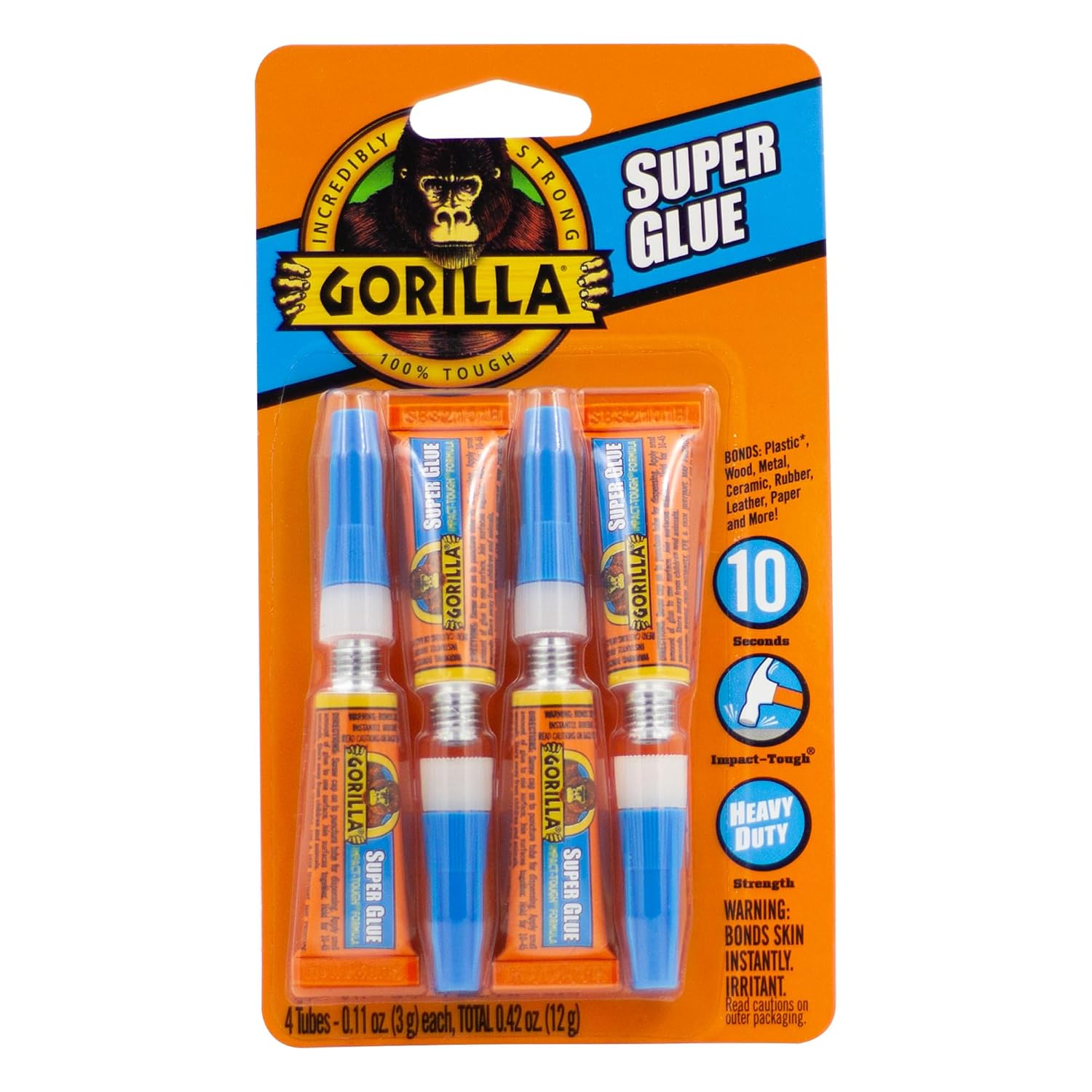
This Gorilla Super Glue review gets straight to it: yes, the Gorilla Super Glue is worth it for most quick fixes. You get fast-setting, impact-tough bonding in a small package, and the anti-clog cap actually works. It’s not perfect, but for around $8.76, it’s a solid choice.
The brand's dependable performance and user-friendly anti-clog design make it a solid everyday buy at a fair mainstream price.
Price vs. rivals
Pricier
CheaperTypicalPricier
Priced notably higher than standard super glues due to the impact-tough formula and brand premium, placing it well above typical mid-range alternatives.
Ease of use
Great 78/100
The glue is generally easy to use for quick household repairs due to the anti-clog cap and simple tube design, but the fast-setting formula requires careful alignment and some users may find the small tube hard to squeeze for precise application.
Gorilla Super Glue Review: Overview
The Gorilla Super Glue is a cyanoacrylate adhesive, from the same basic family as Krazy Glue, but tuned to be a bit tougher and more forgiving. It comes as a single pack of four 3-gram tubes, which makes sense because opened super glue doesn’t last forever. The problem it solves is the classic one: something breaks, you need it fixed in seconds, and you don’t want to spend a day clamping and curing.
This is really for people who hate the frustration of a clogged nozzle and a tube that dries up after two uses. Gorilla’s anti-clog cap and impact-tough formula are the two reasons to pick it over the cheap stuff. You’re paying for convenience and a stronger bond on slightly flexible materials.
Gorilla Super Glue Review: Key Features
Gorilla Super Glue fast setting – The glue grabs quickly, so you don’t have to hold pieces together while you wait for something to cure. For small fixes, you’re talking about the time it takes to count to ten, not a coffee break.
Gorilla Super Glue anti clog cap – The cap has a small pin that pokes into the nozzle when you close it, clearing the opening. It doesn’t solve every clogging problem, but you’ll use more of the glue instead of fighting dried-up residue.
Impact tough super glue – Standard super glue can be brittle. This one is designed to take a few knocks without shattering the bond, which is why it’s a better choice for things that get handled, like a repair on a plastic tool or a toy.
Four small tubes – You get four separate 3-gram tubes instead of one big bottle. That’s actually a feature: open one, use it up, and the rest stay fresh. Super glue has a limited shelf life once opened.
Clear finish – The cured glue is transparent, so repairs don’t look like a white scab. That matters when you’re fixing something on display, like a ceramic vase or a photo frame.
Fit for You
You’ve got a broken pair of glasses and need a hinge fixed before tomorrow morning.
You keep a small basket of random stuff that breaks: picture frames, ceramic knobs, the back of a remote.
You’re tired of buying two tubes of super glue every year because the first one dries out before you need it again.
You need a repair that will get bumped or lightly twisted, like a plastic clip on a backpack or a tool handle.
You want a glue that sets in under a minute so you can finish the job and move on rather than babysit clamps.
Uses
Wood, plastic, ceramic, metal, rubber: this stuff sticks to more than you’d expect. One of the classic uses is a cracked plastic housing on a small appliance. You align the pieces, press firmly, and count to twenty. The bond holds, and you don’t have to walk around with a taped-up blender.
Another good scene is a shoe sole peeling away at the toe. Apply a thin line, press, and it grabs fast. It won’t be a forever fix if the shoe flexes constantly, but it buys you months, which is more than a sewing kit can say.
Gorilla Super Glue also earns its keep on decorative stuff. A chipped ceramic mug, a loose inlay on a wooden box, a broken statue. These are jobs where the fast grab and clear finish matter.
Experience
Using Gorilla Super Glue is about as simple as it gets. You crack the tube, squeeze out a drop, and press the parts together. The cap on this one is a bit easier than most because the anti-clog mechanism does its job. You’ll still want a paper towel nearby for drips, but you won’t be wrestling with a glued-shut nozzle.
Storage is where this pack earns points. Because you have four tubes, you can keep one in the kitchen drawer, one in the toolbox, and one in the craft bin. The catch: the tubes are small, so if you squeeze too hard you’ll flood the repair. Apply less than you think, because super glue spreads.
The smell is the usual sharp cyanoacrylate hit, so you’ll want a window open. It doesn’t fume as much as cheap hardware-store brands, but it’s still not perfume. Cleanup is easy if you act fast. Cured glue on your skin is the classic mistake. If you get it on your fingers, nail polish remover helps, but a few days of waiting works too.
Pros
Fast bonding – You can fix something and use it within minutes, not hours.
Impact resistance – That extra toughness matters when the repaired item gets handled roughly.
Anti-clog cap – It genuinely reduces the dried-nozzle problem that ruins most super glue tubes.
Four-tube pack – Fresh glue stays available when you need it, and you don’t have to open a new tube every week.
Clear finish – Repairs are less visible on light-colored surfaces.
Cons
Small tubes – 3 grams each doesn’t go far for bigger jobs. If you’re repairing a large surface, buy a bottle instead.
Air exposure – Even with the cap working, an opened tube has a limited life. If you use half a tube, expect the rest to thicken.
Not gap-filling – The two surfaces need to meet cleanly. Broken edges that have chips or gaps will need something like epoxy.
Skin stick – It bonds to you just as fast as it bonds to the object. The usual precautions apply.
Strong odor – The fumes are sharp, so you’ll want to use it in a ventilated area.
Advantages
In the Gorilla Super Glue vs Krazy Glue debate, the main difference comes down to toughness. Gorilla’s cured bond feels less brittle than Krazy Glue’s, and the anti-clog cap is a genuine advantage that saves you money in the long run. For an impact tough super glue, this one lives up to its name. If you’re wondering which super glue is best for plastic, the impact-tough formula puts this near the top of the list for hard plastics that see regular handling.
Who Should Buy
Buy it if you fix small household items and you’re tired of glue that dries up before the next repair.
Buy it if you need a repair that will take a knock, like a loose part on a kids’ toy or a snapped hinge on a plastic bin.
Skip it if you mainly glue soft, flexible rubber or fabrics that move a lot. A flexible adhesive or a two-part epoxy is a better match.
Skip it if you’re putting together a large project where you need working time to align surfaces. This glue is too fast for that.
Look elsewhere for gap-filling repairs, like a chipped edge or a broken seam where two parts don’t meet evenly. That’s a job for epoxy.
FAQ
Is the Gorilla Super Glue worth it?
Yes, for most small repairs it’s worth the price because you get four usable tubes, a reliable anti-clog cap, and a bond that holds up to everyday knocks. The trade-off is the small tube size, so it’s not for big projects.
How long does Gorilla Super Glue take to dry?
It sets in under a minute for most small bonds. The exact time depends on the material and how thin the glue layer is, but expect to hold pieces together for a short count rather than a long wait. You’ll notice the bond firm up almost immediately, with full curing happening over a few hours.
Is Gorilla Super Glue good for plastic?
Yes, it works well on many plastics, especially hard plastics, because the impact-tough formula absorbs a little shock. Soft plastic that bends a lot is a different story; for that, you’ll want a plastic-specific flexible adhesive.
How does Gorilla Super Glue compare to Krazy Glue?
Gorilla Super Glue tends to feel more impact-resistant after curing, while Krazy Glue is often a bit thinner and quicker to run. The anti-clog cap on the Gorilla is a real advantage, but Krazy Glue usually has a wider range of brush-on and pen applicators.
Does the anti-clog cap really work?
It works better than a standard cap because it includes a pin that clears the nozzle when you close it. You’ll still need to wipe the tip after use, especially if you squeeze out too much, but it prevents most clogging.
Can I use Gorilla Super Glue on glass or metal?
Yes, you can bond glass and metal with it, but you’ll want the surfaces to be clean and dry. It works best on small, tight-fitting pieces. For large glass repairs, a UV-curing glue is a better option.
Final Verdict
The Gorilla Super Glue review ends on a simple note: this is the tube to grab when a repair needs to happen fast and hold up to real life. The anti-clog cap and impact-tough formula make it worth the small extra cost compared to bargain brands.
Just keep in mind the small size. You get four 3-gram tubes, which is great for freshness and portability, but not for building a terrarium or fixing a cracked car bumper. For standard household repairs, that’s the right trade.
Gorilla Super Glue sits at the pricier end of the cyanoacrylate aisle, but it earns that spot with a build that actually works after you squeeze. The anti-clog cap alone saves you from the frustration of a dried-out tube after one use. Pair that with a formula that sets fast and stays tough under impact, and you’ve got a glue that earns its $8.76. But not everyone needs that level of grip or is willing to pay for it. Here’s how it stacks up against three real alternatives.
Product
Price Range
Key Strength
Key Weakness
Best For
Gorilla Super Glue (fast-setting, impact-tough)
~$8–$10
Anti-clog cap, impact resistance, fast grip on porous and non-porous surfaces
Expensive per tube; thicker liquid can be tricky on tight joints
Everyday repairs where you need a bond that won’t shatter on drop
Krazy Glue Original Liquid
~$3–$5
Cheap, widely available, thin liquid seeps into hairline cracks
Bottle clogs easily, brittle bond, weak on plastic
Quick, cheap fixes on non-structural items like ceramic or paper
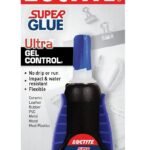
Loctite Super Glue Ultra Gel Control
~$5–$7
Gel formula stays where you put it, no drip, works on vertical surfaces
Sets a bit slower; cap design still allows drying if not sealed tight
Repairs on upside-down or vertical parts like a broken headlight tab
Loctite Super Glue All Plastics
~$7–$9
Specifically engineered for polypropylene, polyethylene, and other tricky plastics
Mediocre on metal and wood; tube packaging is basic
Repairing plastic items that other super glues just bounce off
Gorilla Super Glue vs Krazy Glue
The price gap here is real. Krazy Glue costs about half of what Gorilla asks, and for a single use on a broken mug handle, that makes sense. But the plastic bottle cap on Krazy Glue is a nightmare—it glues itself shut after maybe two uses. You’ll wrestle with it, then end up cutting the tip off and losing half the tube. Gorilla Super Glue’s anti-clog cap clicks shut with a satisfying snap and stays clear. For best super glue for plastic, the impact-tough formula matters too: Krazy Glue dries brittle, so if you fix a plastic toy that gets thrown around, the bond cracks. Gorilla’s rubber-toughened version flexes slightly and holds. That said, if you’re gluing something that won’t take any stress—like a loose button on a shoe—Krazy Glue is perfectly fine and saves you five bucks.
Gorilla Super Glue vs Loctite Ultra Gel Control
This is a closer fight. Loctite’s gel is fantastic when you need to glue something upside down—it stays put instead of running down your fingers. The Gorilla Super Glue is a liquid, though it’s thicker than standard super glue. It won’t drip quite as readily, but don’t trust it on a vertical surface like a broken dashboard vent. Where Gorilla wins is speed. The Gorilla Super Glue fast setting claim is real: you get a strong hold in about 10–15 seconds, while the Loctite gel needs closer to 30–45 seconds with firm pressure. If you’re impatient or holding two awkward parts, that extra time matters. The Loctite cap is okay, but it’s a simple flip-top that still lets air in over time. Gorilla’s cap design is smarter—it seals the nozzle completely. For the price difference (maybe a dollar or two), you decide: speed and cap quality vs. no-drip control.
Gorilla Super Glue vs Loctite Super Glue All Plastics
Here’s where specialization beats generalization. Loctite’s All Plastics formula is the best super glue for plastic when that plastic is the frustrating kind—polypropylene (PP) or polyethylene (PE). Try gluing a cracked laundry basket lid with standard super glue and it pops right off. Loctite All Plastics actually etches those slick surfaces and holds. Gorilla Super Glue is good on many plastics (ABS, polycarbonate, acrylic), but it won’t bond to PP or PE without a primer. If your repair is exclusively that kind of plastic, go Loctite. But for everything else—rubber, metal, wood, ceramic, common plastics—Gorilla’s impact toughness gives a stronger overall bond that resists shock. The Loctite tube is basic, no fancy cap, so it dries out faster. So the question is: what’s the job? A single specific plastic = Loctite. A mix of materials or general household fixes = Gorilla.
So, is Gorilla Super Glue worth it? Yes, if you’re tired of dried-out tips, weak bonds that shatter, and multiple tubes per project. The anti-clog cap alone makes it a better long-term buy than Krazy Glue. And the impact-tough formula gives it an edge over Loctite’s gel in speed and durability—unless you need no-drip or specialty plastic adhesion. If your repairs are mostly on polypropylene or polyethylene, grab Loctite All Plastics instead. For everything else—toys, tools, shoes, mugs, household breaks—Gorilla Super Glue is the one that doesn’t let you down after the tube is opened.
Ready to decide on the Gorilla Super Glue?
See today’s price, stock and delivery options on Amazon.