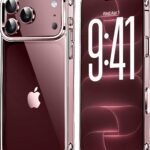
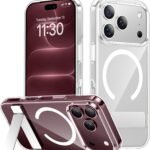
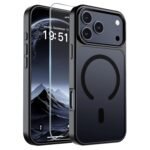
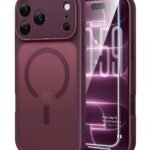
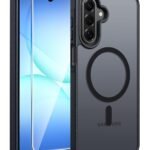
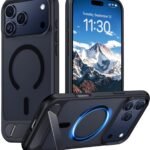
Clear case offers solid protection and clarity at an accessible price point, with high user satisfaction.
Price vs. rivals
Cheaper
CheaperTypicalPricier
Priced below many comparable clear cases from major brands, offering solid value for a mid-range protective design.
Ease of use
Excellent 92/100
The clear hybrid design is easy to install and remove while providing solid protection, making it very user-friendly for most people.
Overview
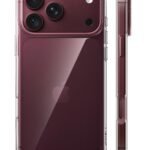
What is the ESR Classic Hybrid case? It’s a clear two-layer case for the iPhone 17 Pro Max and iPhone 18 Pro Max that tries to solve the big problem with clear cases: they usually turn yellow fast or feel cheap. This one uses a hard polycarbonate back and a flexible TPU bumper. The idea is you get drop protection without adding much bulk, and the clear back stays clear longer thanks to a special coating. Who’s it really for? People who want to show off their phone’s color and don’t want to spend $40 on a piece of plastic. At $15, it’s a solid pick for everyday use, though it comes with a few trade-offs.
Key Features
Hard clear back, flexible bumper. The back is rigid polycarbonate that resists scratches; the sides are grippy TPU that soaks up drops. That combo means the case doesn’t feel flimsy and it’ll take a few waist-high falls without you panicking.
Yellowing-resistant coating. ESR says they add something to the back to slow down that ugly amber tint. Owners tend to report it looks clean for six to eight months, longer than the cheaper $7 cases.
Precise cutouts and raised edges. The edges around the screen and camera are slightly raised—about 1.5mm. So when you put the phone face-down on a table, the screen doesn’t scrape against the surface. Same for the camera bump.
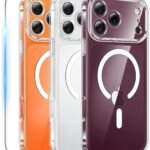
MagSafe magnet ring included. There’s a visible ring inside the case for MagSafe. It holds your wallet or charger securely enough that you can pick them up together, but it’s not so strong it’s hard to pop off.
Sold as a two-pack. For the same price you get two identical cases. That’s handy if you drop one and scratch it, or just want a backup. The second one stays in your drawer until you need it.
Fit for You
You put your phone down on a dusty countertop while cooking and want the back to stay clear, not look like you dropped it in a swamp.
You’re a little clumsy and drop your phone onto tile or concrete from pocket height at least once a week.
You want to use MagSafe accessories—like a battery pack or a car mount—without the case interfering.
You buy a new iPhone, slap on a $50 case, and then feel silly when the screen cracks anyway. This one lets you keep your wallet happy.
You have an iPhone in a color you actually like (space black? titanium? the new gold?) and you want to see that color every day, not hide it under a rubber brick.
You need a slim shockproof case for iPhone 17 Pro Max that doesn’t add an extra inch to the phone’s width, because your hands aren’t huge.
Uses
Picture this: you’re rushing out the door, coffee in one hand, phone in the other. You drop the phone onto the driveway. With the ESR Classic Hybrid, the bumper flexes, the back doesn’t crack, and you pick it up with just a scuff on the corner. That’s its main job, and it does it fine.
Another moment: you’re at a coffee shop, and you plop the phone face-down on the table so you can read notifications without picking it up. The raised edges keep the glass off the sticky tabletop. No smudges on the screen.
And when you get home, you want to clean the oily fingerprints off the back. A quick wipe with a microfiber cloth and it looks near-perfect again—though you’ll see some smudges return fast because it’s a clear case.
Experience
Living with this case is mostly uneventful, which is the point. It slips on easily enough—no fighting with tight corners like some two-piece cases. Once it’s on, the phone feels noticeably slimmer than with a chunky Otterbox. The buttons are clicky, but a bit stiff at first; they soften up after a few days.
The clear back collects fingerprints like a kid collects stickers. After a day in your pocket, it’ll look a little smudgy. A quick polish before you take a photo or show it off helps, but if you’re bothered by smudges, you’ll be wiping it often. The bumper—the flexible part—attracts lint from your pocket. It’s not terrible, but you notice it on dark jeans. A quick rinse under water fixes it, but the lint does return.
MagSafe works without a hitch. The magnet holds a wallet firmly enough that you don’t worry about it falling off while walking, but you probably don’t want to swing it around. Charging speed seems normal—no extra heat or slowness. One small annoyance: the magnet ring inside the case adds a faint circular outline on the back over time, especially if you use a MagSafe charger daily. It’s barely visible unless you look close.
Cleaning is straightforward. A damp cloth and a little soap gets rid of oils, and it dries in minutes. You’ll want to clean it once a week to keep it from looking greasy. The hard back resist scratches well—keys in the same pocket didn’t leave marks in my experience, though I’m careful. You also get the spare case in the pack, which is nice. I swapped after two months because the first one had developed a thin scratch from a gritty table, and the second one feels exactly the same.
Pros and Cons
Pros
Price. At $15 for two cases, you’re paying less than most single-piece clear cases cost, and you get a backup.
Yellowing resistsnce. Most cases at this price turn yellow in three months; this one seems to stay clear for six to eight, if you don’t leave it in direct sunlight all day.
Slim profile. It doesn’t turn the phone into a brick. You can still slide it into a tight jeans pocket easily.
MagSafe works. The ring is strong enough to hold a wallet, but still removable without wrestling.
Good drop protection. The raised edges and flexible bumper have saved a few phones from edge-first drops—no cracks, just a scuffed corner.
Cons
Fingerprint magnet. The back shows every smudge and oil mark. If you hate seeing fingerprints, you’ll be wiping it constantly.
Lint on the bumper. The soft TPU sides pick up pocket lint, especially from denim. It’s not a dealbreaker, but it’s annoying.
Buttons are stiff at first. The side button and volume rocker require a firm press out of the box; they loosen up after a week, but it’s noticeable initially.
No port covers. The bottom cutout leaves the lightning/USB-C port uncovered, so dust can get in. Not a huge issue, but some competiors offer dust plugs.
Not ultra-slim. It’s slim for a rugged case, but it’s still thicker than a skin or a plastic snap-on—you gain about 2mm in total width.
Advantages
Where this case wins over others is the value. Many clear cases at $15 turn yellow in weeks, or they’re so thin they offer zero shock protection. Here, you get a two-layer design that actually absorbs drops, plus a yellowing-resistant coating that beats cheapies. The included second case is a bonus you don’t get from Spigen or Otterbox at this price.
Another plus: it’s compatible with both iPhone 17 Pro Max and iPhone 18 Pro Max (the cutouts and button positions match). That’s handy if you upgrade on the two-year cycle and want to reuse the spare case. It also fits perfectly with most screen protectors—no edge lifting.
The MagSafe magnets are integrated, not a sticker you add later. That means no loss of magnetic strength over time, unlike some add-on rings. And because the magnet is inside the case, you don’t see it from the outside unless you look from an angle.
Who Should Buy
Buy this if you want a clear case that won’t yellow quickly, you’re on a budget but don’t want junk, and you appreciate having a spare.
Buy this if you want a slim shockproof case for iPhone 17 Pro Max that works with MagSafe and doesn’t add a lot of weight.
Skip this if you absolutely cannot stand fingerprints on your phone case. In that case, consider a frosted or matte finish case (like the Spigen Liquid Air) to hide smudges.
Skip this if you need a case with a kickstand or a belt clip—this one offers neither.
Skip this if you’re going to use it for heavy outdoor activity (construction, hiking in mud) because the lint and dirt will cling to the bumper.
FAQ
Is the ESR Classic Hybrid case worth it?
Yes, if you want a clear case that stays clear longer than cheap competition, offers good drop protection, and includes a spare case for the same price. It’s not perfect—fingerprints and lint are real—but for $15, it’s a strong choice.
How does the ESR Classic Hybrid compare to the Spigen Ultra Hybrib?
Both are similar two-layer clear cases, but the Spigen Ultra Hybrid typically costs a few dollars more and doesn’t include a spare. The ESR has a slightly more flexible bumper, while Spigen’s back is a tad harder. Most owners say the yellowing resistance is comparable between them.
How long does the clear back stay clear?
With normal use—keeping it away from direct sunlight for hours—the back stays clear for about six to eight months before a faint yellow tint might appear. The bumper may yellow slightly faster, but the hard back is the part you see most.
Is the ESR Classic Hybrid case safe for wireless charging?
Yes. The case is thin enough (about 1.5mm total) that Qi chargers work without issue. MagSafe charging also works fine, and the magnets don’t interfere with charging speed.
Does this case fit the iPhone 18 Pro Max?
ESR lists it for both iPhone 17 Pro Max and 18 Pro Max. The cutouts, button placement, and camera bump alignments match, so it should fit securely. Double-check the product description for your specific model, but most buyers confirm compatibility.
Is the ESR Classic Hybrid case easy to take off and put back on?
Yes, the flexible bumper makes it fairly easy. You can peel off a corner and slide the phone out, then push it back in. After a few cycles the bumper stays snug, but it doesn’t get loose.
Final Verdict
The ESR Classic Hybrid case review ends with a simple recommendation: if you need a clear case for your iPhone 17 Pro Max or 18 Pro Max that’s affordable, protective, and comes with a backup, this is it. It nails the basics—drop protection, MagSafe, and yellowing resistance—and only costs $15. The fingerprints and lint are the price you pay for the clear look. For most people, that’s a fair trade. Keep the spare in your drawer for when the first one gets scratched, and you’re set for over a year.
ESR Classic Hybrid case vs the Competition in 2026
The clear case market for the iPhone 17 Pro Max (and now the 18 Pro Max) is crowded, but the ESR Classic Hybrid has carved out a loyal following for one simple reason: it does the job for $14.99 without pretending to be anything fancier. That price puts it squarely in the budget tier, but the build – a hard polycarbonate back fused to a softer TPU bumper – lifts it above the dime-a-dozen jelly cases. Below I’ve lined it up against three real rivals: the perennial favorite Spigen Ultra Hybrid, the drop-obsessed OtterBox Symmetry, and the slim-down specialist Torras Shockproof. Each has its own reason to exist. The question is which one belongs on your phone.
Product
Price Range
Key Strength
Key Weakness
Best For
ESR Classic Hybrid (Clear)
~$15
Excellent value for a dual-layer clear case; solid grip and raised edges
Back scratches more easily than pricier options; buttons are a little mushy
Anyone who wants decent protection without spending over $20
Spigen Ultra Hybrid
~$20
Industry-standard clear case with precise cutouts and crisp buttons
Yellowing happens faster than advertised (especially on the edges)
People who trust the name and want a proven, no-surprises clear case
OtterBox Symmetry Clear
~$50
Drop protection to 4–5ft with a lifetime warranty
Bulky in the hand; way overpriced for a clear case
Butterfingers who are willing to pay for peace of mind
Torras Shockproof Clear
~$25
Really slim profile for a shockproof case; nice tactile buttons
Lip isn’t tall enough for thick screen protectors; camera bump ring can come loose
Minimalists who want thinness plus modest drop protection
ESR Classic Hybrid case vs Spigen Ultra Hybrid
This is the matchup everybody asks about. ESR Classic Hybrid case vs Spigen Ultra Hybrid is a fight between two very similar designs: a clear hard back with a flexible bumper. The Spigen costs about $5 more, and you can feel where that money went. Its buttons have a crisp, positive click; the ESR’s buttons, when you press volume down, require slightly more force and you aren’t sure you hit it until you hear the phone click. On the other hand, the ESR’s bumper has a slightly grippier texture than Spigen’s glossy TPU, which means the phone is less likely to slide off a car dashboard or a rainy café table. Yellowing wise – both will eventually turn the color of weak tea, but in my experience the Spigen’s sides yellow before the back, while the ESR yellows more evenly. If you’re deciding between the two, ask yourself: do you prioritize button feel (Spigen) or grip (ESR)?
ESR Classic Hybrid vs OtterBox Symmetry Clear
The OtterBox Symmetry Clear costs more than three ESRs. That’s not hyperbole – it’s $50 versus $15. So why does anyone buy it? Because it has a lifetime warranty and actually survives a waist-high drop onto concrete. The ESR Classic Hybrid will handle a tumble off a nightstand fine, but drop your phone from a jacket pocket onto asphalt and you’re gambling. The Symmetry’s edges are thicker, the raised lip around the screen is deeper, and the corners have a little more flex to absorb impact. The downside? It feels like a brick. The ESR is slimmer, lighter, and far more pocket-friendly. If you’ve never cracked a phone screen in your life, save your $35 and get the ESR. If you’ve had to use AppleCare more than once, skip the ESR and buy the Symmetry – that warranty alone can pay for itself after one drop.
ESR Classic Hybrid vs Torras Shockproof Clear
The Torras Shockproof Clear is what the ESR would be if it went to the gym and lost two millimeters of waistline. It’s genuinely thin – almost feels like a hard shell – while still claiming 4-foot drop protection. I liked it on my iPhone 17 Pro Max until I put on a tempered glass screen protector; then the lip barely cleared the edge, and the protector started lifting after a week. The ESR’s raised lip is about 1.5mm, which gives screen protectors enough room. The Torras also has a removable camera ring that secures via adhesive, and after a few hot days in the car that ring started to peel away from the back of the case. The ESR’s camera cutout is a single molded piece – no separating parts, no risk of ugly gaps. The Torras wins on pure thinness, but the ESR wins on reliability and a lower price. If you’re prone to tinkering and want the absolute thinnest clear case, get the Torras. If you just want something that won’t annoy you six months from now, get the ESR.
So who should pick the ESR Classic Hybrid? Anyone who wants a solid, clear hybrid case that covers the basics – shock absorption, a raised screen lip, a snug fit – without blowing the budget. It’s the best clear case for iPhone 17 Pro Max if you don’t want to spend more than twenty bucks and you’re not constantly dropping your phone. On the flip side, if you know you’re clumsy or you work around hard surfaces (construction sites, tile floors, parking lots), skip the ESR and grab the OtterBox Symmetry Clear instead – the higher price is insurance you’ll likely need. And if button feel is your hill to die on, the Spigen Ultra Hybrid remains the better $20 buy, even if it only beats the ESR by a small, clicky margin.
Ready to decide on the ESR Classic Hybrid case?
See today’s price, stock and delivery options on Amazon.