The short answer in this BLACK+DECKER BPWM20W review: it’s worth buying if you’re in an apartment with no laundry hookups and you’re tired of wringing clothes by hand. It spins them properly dry. But you’ll have to work around its limits and quirks, and it’s not a full-size machine pretending otherwise.
This portable washer offers a solid balance of capacity and reliability at a competitive mid-market price point.
Price vs. rivals
Pricier
CheaperTypicalPricier
This price is notably higher than many budget portable washers, sitting in the upper-mid range compared to similar capacity models.
Ease of use
Great 80/100
Compact and portable design makes it convenient for small spaces, though connecting to faucet requires minimal effort.
BLACK+DECKER BPWM20W Review: Overview
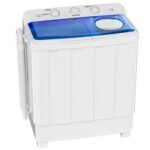
This is a 2.0 cubic foot portable washer with a 15.4 lb capacity. You attach its hose to your kitchen faucet, run a load, and drain it into the sink. Wash, rinse, spin—then you hang dry or toss things in a dryer. It’s a self-contained laundry setup that doesn’t need permanent plumbing.
It’s for renters, small apartment dwellers, RV owners, or anyone who wants to avoid the laundromat for small loads. Not for a family of five. Not for washing king-size comforters. For daily clothes, delicates, and modest loads, it does the work.
BLACK+DECKER Portable Washer Features
2.0 cu. ft. drum with a 15.4 lb load limit – That’s about six t-shirts, a couple pairs of jeans, and some socks. You’ll learn to load strategically. Overstuff it and the spin cycle gets grumpy.
Three wash cycles and three water levels – Normal, delicate, and quick wash let you match the load. The water level setting stops you from wasting water on a half-full drum.
Transparent lid – Sounds simple, but you’d be surprised how handy it is to watch the water level or spot a suds overload without lifting the lid.
Spin cycle that actually extracts water – Clothes come out damp, not dripping. You’ll cut drying time by hours compared to wringing or a cheap spinner.
Portable design with casters and a faucet adapter – It rolls across a kitchen floor, stores in a closet, and hooks up to most standard faucets. No plumber needed.
Fit for You
You live in a studio and your building’s laundry room closes before you get home from work.
You’re tired of spending $6–8 a load at the laundromat for clothes you could wash in the kitchen.
You have a baby and run small loads of onesies and bibs every other day.
You’ve got a small apartment with a kitchen sink and absolutely no space for a full washer.
You’re in an RV and want to wash a week’s worth of t-shirts and shorts without hunting for a laundromat.
Uses
A week’s worth of work shirts, pants, and socks fits in two loads. Run a quick wash for gym clothes while you make dinner. The delicate cycle handles silk blouses and wool socks without turning them into doll clothes.
The “I need this shirt dry by morning” move: wash it on the quick cycle, spin it hard, then hang it. It’ll be ready in a few hours instead of the next day.
Small towels, dish rags, and kitchen linens are perfect. So are pet beds and toys, if you don’t mind lint in the filter.
Experience
Setup takes about ten minutes. You screw the faucet adapter onto your kitchen faucet, attach the hose, and plug it in. The manual walks you through it. The hardest part is convincing yourself the adapter won’t leak—it won’t, if you tighten it.
You fill the drum through the hose, toss in detergent, and add clothes. Turn the dial to your cycle and water level, pull the knob, and it starts. The machine fills, agitates, drains, fills again to rinse, drains, and spins. A normal load takes about 30–35 minutes. The spin cycle is where the noise happens—a solid hum with some vibration if the load is unbalanced. It’s not silent, but it’s quieter than a dishwasher.
The small annoyance is the fill and drain hose. You need the sink free during a load. And the drum is small, so you’ll do two loads for what a normal washer handles in one. You learn to sort strategically: darks first, lights second, towels separate.
Cleaning is straightforward. The lint filter catches most of the fuzz, and a quick wipe inside after each load stops mildew. Let the lid dry open between uses.
BLACK+DECKER BPWM20W: Pros and Cons
Pros
Real spin cycle – Clothes come out damp enough to cut dryer time or hang dry overnight. This is the feature that makes it worth buying over a cheap spinner.
Portable and easy to store – It rolls on casters, fits in a closet, and hooks to any standard faucet. No installation cost.
Simple, no-fuss controls – Three cycles, three water levels, one knob. You don’t need a degree to run a load.
Decent build for the price – The plastic body feels solid, the lid seals well, and the drum holds up to regular use.
Cons
Small capacity will frustrate you some days – You can’t wash a full week’s clothes in one load. If you hate splitting laundry, this will annoy you.
The spin cycle can shake an unbalanced load – A single heavy item (a thick hoodie, a pair of jeans) will make it wobble. You’ll learn to balance loads or stop and redistribute.
It ties up the kitchen sink – The hose fills and drains through the faucet, so you can’t use the sink during a wash. Plan around it.
Not for bulky items – A king-size sheet or a heavy comforter won’t fit. You’re still going to the laundromat for those.
The drain hose can kink if you’re not careful – You have to route it so water flows out freely. A kink means a soggy floor and a load that won’t drain.
Advantages
The BLACK+DECKER BPWM20W vs other portable washers in its price range: it wins on the spin cycle and brand reliability. Many cheaper portables spin so weakly that clothes come out soaked—then you’re back to wringing. This one gets things genuinely dry. The faucet adapter is standard and easy to find replacements for, and replacement hoses are cheap. Compared to a laundromat trip, you save $8–10 a load and an hour of your time. For someone who does two loads a week, that adds up fast.
Who Should Buy
Apartment dwellers without hookups – If your building has a laundry room but it’s expensive or inconvenient, this is the best portable washer for apartments at this price.
RV and van owners – It fits in a small space, runs off standard power, and hooks to a sink. You’ll need to empty the tank or drain outside, but it works.
People who do small, frequent loads – If you wash clothes every few days rather than letting them pile up, the capacity won’t bother you.
Skip it if you have a family of four or more, need to wash bulky items regularly, or want a machine that runs totally unattended. Look at a full-size portable or a compact all-in-one unit instead.
FAQ
Is the BLACK+DECKER BPWM20W worth buying?
The question “is BLACK+DECKER BPWM20W worth buying” depends on your situation. For someone in an apartment without hookups who does small loads, yes. It saves lau-dromat trips and gets clothes genuinely dry. If you need a full-size capacity or hate splitting laundry, it’s not the right machine.
How long does the BLACK+DECKER portable washer last?
Owners tend to report 3–5 years of regular use before things like the spin mechanism or drain pump start acting up. Keeping the filter clean and letting the drum dry between uses helps. It’s not built like a commercial machine, but it’s solid for the price.
Is it safe for delicate fabrics and silk?
The delicate cycle is gentle enough for most silks and hand-wash items. Use cold water and skip the spin if you’re nervous. That said, air-drying is still safer than any machine. The machine won’t rip your clothes, but the spin can stress seams if the load is unbalanced.
How do you drain the BLACK+DECKER BPWM20W?
The machine drains by pumping water out through the same hose it used to fill. You route the hose to the sink, and the pump does the work. Gravity helps if you keep the hose lower than the drum. A kink in the hose stops the flow, so check it before every drain.
Can you use it in an RV or camper van?
Yes, as long as you have a standard faucet to connect to and a drain for the water. In an RV, you can drain into the gray tank or outside with a hose extension. The machine draws about 600 watts, so it works on a generator or inverter without issues.
How much water does it use per load?
A full load uses roughly 8–10 gallons of water, depending on the cycle and water level you choose. That’s about half what a full-size washer uses. The low water setting uses less, so you can match it to the load size and save even more.
BLACK+DECKER BPWM20W Review: Final Verdict
This BLACK+DECKER BPWM20W review comes down to one honest point: it’s a practical solution for a specific problem. If you’re in an apartment, RV, or small home without laundry hookups and you’re tired of the laundromat, it will save you time and money. The spin cycle is the real standout—it actually works.
The one thing to keep in mind: it’s small. You’ll do more loads, and you’ll work around the sink being occupied. Accept that, and it’s a solid buy. Expect it to last a handful of years with normal care. For the price, that’s fair.
BLACK+DECKER portable washer vs the Competition: Best Portable Washer for Apartments in 2026
The BLACK+DECKER BPWM20W sits right in the middle of the portable washer market. It doesn’t ask you to babysit a twin tub, but it doesn’t cost as much as a full-size hookup unit, either. For most apartment dwellers, it hits the sweet spot of capacity and convenience. The question is whether you want to pay for the automatic spin cycle or save money by manually switching loads yourself.
Product
Price Range
Key Strength
Key Weakness
Best For
BLACK+DECKER BPWM20W
Mid (~$380)
Fully automatic with a genuinely effective spin cycle
2.0 cu. ft. drum is tight for a king duvet
Renter who wants set-and-forget simplicity with actual drying power
Giantex SX-703DP
Low (~$200)
Large 2.6 cu. ft. capacity for the price
Twin tub design—you handle the wet transfer manually
Budget buyer willing to spend time to save money
Panda PAN56SM1
Mid (~$300)
Very compact; high RPM spin loosens water fast
1.6 cu. ft. drum demands smaller, more frequent loads
Single person in an RV or studio with minimal floor space
GE GNWT106-1
Mid-High (~$420)
Reliable mechanical controls and easy top-load access
Smaller tub and a weaker spin per dollar than the Black+Decker
Shopper who defaults to a legacy brand and doesn’t trust digital panels
BLACK+DECKER portable washer vs the Giantex Twin Tub
The biggest decision you face in this category is single tub vs twin tub. The BLACK+DECKER portable washer is a single front-loader with a spin cycle, so you load the clothes, add soap, and walk away for thirty minutes. The Giantex twin tub gives you separate wash and spin baskets. You run the wash cycle in one side, then physically grab the sopping load and transfer it into the spinner. It takes up more floor space than the Black+Decker, and the drain hose setup on the Giantex is a genuine annoyance to stop it from flopping out of the sink. The tradeoff is brutal: you save about a hundred and fifty bucks on the Giantex. But you earn that discount by standing over the machine. Choose the Giantex if the price difference means real groceries. Choose the Black+Decker if your time is the scarcer resource.
BLACK+DECKER portable washer vs the Panda PAN56SM1
If the Panda PAN56SM1 is on your list next to the BLACK+DECKER BPWM20W, you’re comparing two smart single-tub units with one main split: size. The Panda squeezes into a tighter footprint, but its 1.6 cubic foot drum means you run more loads. The Black+Decker gives you 2.0 cubic feet, which fits another pair of jeans and a hoodie per cycle. The real difference is in how they handle a wrong button press. The Panda packs its brains into a fully digital panel that can lock you out with an unbalanced load error code. The Black+Decker uses a simple mechanical dial and push buttons that you can’t accidentally override. If you are genuinely jammed into a closet space, the Panda fits. For almost everyone else, the Black+Decker’s bigger capacity and tougher controls make more sense.
Is the BLACK+DECKER BPWM20W worth buying over the GE GNWT106-1?
The GE GNWT106-1 is the choice everyone makes when they overthink reliability. And to be fair, the GE has a better reputation for longevity and a top-load layout that lets you toss in a forgotten pair of socks mid-agitation. But the Black+Decker beats it on two practical fronts: the spin cycle and the tub size. The GE spins, but it leaves clothes wetter than the Black+Decker does. After the Black+Decker’s spin cycle, you are hanging damp clothes, not dripping clothes. The Black+Decker also has a 2.0 cu. ft. drum against the GE’s 1.6, which is the difference between washing a comforter in one go versus two. If you have the extra cash and a soft spot for the GE nameplate, get the GE. If you want a machine that does a better job of actually processing your laundry, the Black+Decker is the practical winner.
So who should actually buy the BLACK+DECKER BPWM20W? The person who wants to fill a machine, press a dial, and come back to clothes that are nearly dry enough to throw in the dryer. It handles the standard apartment mix—towels, jeans, t-shirts, gym socks—without any drama. If you live with a king duvet that needs washing every week, the Giantex twin tub gives you more flexibility for a lot less money, even if it demands your attention. But for the standard new-apartment laundry problem, the Black+Decker offers the best balance of automation, spin performance, and cost in the portable washer space.
Ready to decide on the BLACK+DECKER portable washer?
See today’s price, stock and delivery options on Amazon.