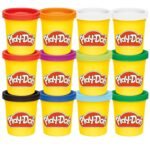
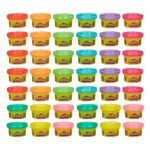
Exceptional unit value from the massive 65-can count, combined with top-rated quality from a trusted brand, makes this an outstanding value for group or classroom play.
Price vs. rivals
Pricier
CheaperTypicalPricier
Priced moderately above typical mid-range for a large count pack of this brand, reflecting the exclusive set with specialty confetti and sparkle variants.
Ease of use
Excellent 95/100
Very easy for an average person to open the small cans and use the soft, pliable dough right away.
Overview
So, is the Play-Doh 65-Pack review worth your time because the product itself is a good deal? Short answer: yes, for most people. At roughly $22, it’s the cheapest way to stock up on a huge variety of colors. But those are 1-ounce cans. You’re buying quantity of color, not quantity of dough per container.
This set solves the problem of having to choose just a few colors or running out mid-project. It replaces the frustration of tiny variety packs with a rainbow of 65 different small cans. It’s really for the household or classroom that goes through Play-Doh quickly and wants options—play dates, preschool rewards, or keeping a 4-year-old busy for an afternoon.
Key Features
65 Unique Colors in One Box: You aren’t getting eight colors repeated with different labels. This is a genuine spread—neons, brights, darks, and pastels. The range actually matters when a kid insists they need “sunset orange” specifically.
Includes Play-Doh Confetti Cans and Sparkle Clay: The specialty textures are usually sold separately in smaller packs. Getting them here saves you a second purchase. The confetti has little plastic flecks; the sparkle has fine glitter. They add sensory variety.
Resealable 1-oz Cans: Each is the classic small size with a screw-on lid. They’re easy for a 3-year-old to grip, but you’ll need to nag them about closing the lids tighty.
Back to School Classroom Supply Staple: This is a common bulk buy for teachers because it spreads far across a table of 6 kids. The resealable containers also make it practical for weekly art stations.
Non-Toxic and Safe for Ages 2+: Play-Doh is the standard for safety. It’s wheat and gluten free. The taste is so salty and bitter that most kids only try eating it once.
Fit for You
You run a preschool or daycare and need a big, sealable stash for art time that you can dole out in portions.
You’re tired of fights over color choices and want every kid at the table to have their own can of the basic colors plus a few weird ones for fun.
You are a parent who has accepted that Play-Doh is a household staple and buying in bulk is the only smart financial move.
You’re reviewing the best Play-Doh set for preschool classrooms specifically because you need variety over per-can volume for a group setting.
You want the novelty of confetti and sparkle textures without buying a separate 4-pack of each.
You’re putting together goodie bags or party favors and want a cheap, colorful filler that isn’t just candy.
Real-World Uses
Preschool Art Station. Set this out with cookie cutters and plastic knives. Four kids can all make “pzza” without fighting over the red because you have the deep red, bright red, and neon pink all in the pile.
Rainy Day Boredome Buster. When the screen-time limit hits, throwing this on the floor with a few mats buys you 45 solid minutes. The novelty of the sparkle and confetti cans buys you another 10.
Sensory Learning. Sort the colors. Count them. Practice “squish” and “roll”. The different textures—smooth, sparkly, and confetti—add a sensory layer that standard packs don’t have. It’s a cheap occupational therapy tool.
Real Talk: The Play-Doh 65-Pack Experience
Setting up, you’ll notice the box is packed tight. The 65 cans come in a cardboard case. Getting them out is actually kind of annoying—the cardboard is flimsy and you’ll probably just end up ripping it open. Then you’ll spend 10 minutes lining them up like a crayon box. That part is deeply satisfying.
The real day-to-day experience is all about the 1-oz size. Those small cans are perfect for little hands to hold and open, which is a legit plus for a 3-year-old’s confidence. But they dry out faster once opened if your kid is bad at closing lids. And they are bad at closing lids. The screw-on lids are standard Play-Doh—easy enough to remove, hard for them to screw back on tight.
Cleaning up is standard Play-Doh stuff. It crumbles. It gets in the carpet. The confetti cans add an extra annoyance—those little plastic flecks get everywhere. The sparkle clay leaves a slight shimmer on hands and tables. The biggest small annoyance? Finding the lid you just dropped. 65 tiny lids rolling around. You have been warned.
Pros and Cons
Pros
Incredible color variety. 65 distinct colors mean less whining about not having the exact shade. It keeps the peace at a shared table.
Solid value per can. At the $22 price point, you’re paying about 34 cents a can. That’s hard to beat for brand-name Play-Doh.
Includes texture variety. The confetti and sparkle cans are usually sold separately. Getting them here saves you buying a gimmick set later.
Good for shared spaces. If you’re a teacher or run a co-op, having 65 cans means 6 kids can each have 10 colors without anyone going broke.
Cons
1-oz cans run out fast. If you have one kid who uses a lot of dough per sculpt, a single can lasts maybe 2–3 sessions. You buy variety of color, not volume of dough.
Packaging is a pain. The cardboard box is designed for shipping, not storage. Plan on buying a separate plastic bin or zipper bag to keep these organized.
Lids are tiny and many. 65 cans means 65 lids to lose. And 65 things to step on. A few will inevitably pop off in the box during shipping.
Confetti is messy. Play-Doh is already messy. The confetti flecks migrate. They stick to Play-Doh remnants. They turn into weird glittery crumbs that your vacuum will hate.
Play-Doh vs Crayola Modeling Clay: A Clear Advantage
Where this pack really wins is in the Play-Doh vs Crayola modeling clay debate. Crayola’s modeling clay is firmer and less sticky, which is good for sculptures that hold their shape. But it dries out much faster and doesn’t squish as easily for little hands. Play-Doh is softer, lasts longer if kept sealed, and the cleanup is easier (it vacuums up better). For pure sensory play and preschool use, Play-Doh is the standard for a reason.
This 65-Pack also beats buying the smaller variety sets. Those are often just 24 or 36 colors with lots of duplicates. This is genuinely 65 different shades. You get the full spectrum, from basic white and brown to weirdly specific ones like “Tye-Dye Blue” or “Lilac Luster”. That variety is the whole point.
Who Should Buy the Play-Doh 65-Pack? (A Reviewer’s Take)
Buy it if: you need a classroom supply, your kid is deep in the sensory-play phase (ages 2–5), or you’re hosting a party and want a big, colorful activity station.
Skip it if: your kid is a serious sculptor who needs bigger blocks of dough. They’ll get frustrated running out of one color. Look for the 3-oz or 5- oz tubs instead.
Skip it if: you hate tiny parts. The 65 small cans and 65 even smaller lids are an organizational nightmare if you’re not prepared for it.
Skip it if: you only want the specialty confetti or sparkle clay. Honestly, you should just buy one 4-pack of those. You don’t need 60 extra cans of regular.
FAQ
Is the Play-Doh 65-Pack Color Collection worth it?
Yes, for most people. At around $22, you get 65 cans of the safest, most recognizable modeling compound for kids 2+. The value per can is excellent, and the color variety is unmatched by smaller sets. Just understand you are buying small cans, not big tubs.
How long does a 1-oz can of Play-Doh last?
With regular use (2–3 play sessions), a 1- oz can will last about a week before it starts drying out, assuming you get the lid on tight. If your kid leaves it open overnight, expect a dry, crumbly lump the next day.
Is the Play-Doh 65-Pack safe for 2-year-olds?
Yes, it’s labeled for ages 2 and up and is non-toxic. The main concerns are the small parts (the confetti flecks and lids) and the fact that 2-year-olds will try to eat it. It tastes awful, so they usually stop, but supervision is key.
Does this set have duplicates or 65 unique colors?
It is genuinely 65 unique colors. You will not get five different blues. You will get a spread of nens, metallics, sparkles, and standard colors. The Play-Doh 65-pack colors are the main selling point of the whole box.
How does Play-Doh compare to Crayola modeling clay for kids?
Crayola modeling clay is stiffer and waxier, good for sculptures that hold shape. Play-Doh is softer and more malleable, better for squishing, rolling, and general sensory play. Play-Doh also lasts longer if stored right. For preschoolers, Play-Doh is usually the winner.
What’s inside the special “confetti” and “sparkle” cans?
The Play-Doh confetti cans have tiny colorful plastic flecks mixed into the dough. The sparkle cans have fine glitter. They feel cool to squish but the flecks and glitter will fall out during play and add to the mess.
Final Verdict of the Play-Doh 65-Pack Review
The Play-Doh 65-Pack is a smart buy for anyone tired of running out of colors or paying convenience pricing on small packs at the drugstore. It delivers exactly what it promisses: a huge range of colors and some fun textures in a portable size. The practical math works out in its favor.
The one thing to keep in mind is scale. This is a lot of individual units. It needs a dedicated storage home and a lid-closure routine. If you can handle the little-lid logistcs, this is the best value Play-Doh set on the market for pure color variety.
Play-Doh 65-Pack Color Collection vs the Competition in 2026
At $21.99, the Play-Doh 65-Pack Color Collection sits in a weird sweet spot—it’s both a bulk buy and a variety pack, offering more colors than any other single Play-Doh set you’ll find. It’s not the cheapest per ounce, but it’s the only one that bundles sparkle, confetti, and Color Burst formulas in one box. If you’re looking for the best Play-Doh set for preschool classrooms or just want to avoid buying six separate packs for a birthday party, this is the benchmark. But it’s got real alternatives, and some of them make more sense depending on what you actually plan to do with the stuff.
Product
Price Range
Key Strength
Key Weakness
Best For
Play-Doh 65-Pack Color Collection
$22
65 unique colors including sparkle, confetti & Color Burst
Small 1-oz cans run out fast for big projects
Classrooms, parties, kids who crave variety
Crayola Modeling Clay Bucket (4 lb)
$12–$15
Twice as much material for half the price
Only 4 earth-tone blocks; no brights, glitter, or confetti
Budget-conscious parents, sculpture-heavy play
Play-Doh 36-Pack Classic Colors
$13
Bigger 3-oz cans, better for extended modeling sessions
Only 36 colors, all solid—no sparkle or confetti
Kids who actually build and need more dough per creation
Play-Doh 24-Pack Sparkle & Confetti
$12
All glitter and confetti formulas, great for sensory play
Half the cans of the 65-pack, fewer colors overall
Kids obsessed with sparkly, textured dough
Play-Doh 65-Pack Color Collection vs Crayola Modeling Clay
If your kid is the type who rolls Play-Doh into long snakes and then smashes it into a pancake thirty seconds later, Crayola’s 4-pound bucket is the smarter buy. You get roughly twice the volume of modeling material for about ten bucks less. But that’s the trade-off: Crayola’s clay comes in only four colors—red, yellow, blue, and green—all muted, all solid, and it dries out faster if left uncovered. The Play-Doh 65-Pack gives you 65 different hues (including neon pink, teal, and lavender), plus cans with actual glitter specks and confetti particles. For preschool teachers who want to teach color names or run a “make a rainbow” project, Crayola just doesn’t cut it. If your main concern is value per pound and you don’t care about variety, go Crayola. For everything else, the 65-pack wins.
Play-Doh 65-Pack Color Collection vs Play-Doh 36-Pack Classic Colors
Here’s the dilemma: the 36-Pack Classic Colors gives you 3-ounce cans, so each container has three times as much dough as the 65-pack’s 1-ounce cans. A kid who likes to build actual shapes—flowers, animals, little hamburgers—will run through a 1-ounce can in one play session. That’s frustrating. The 36-pack also costs about $13, making it the better deal if what you want is plain, classic Play-Doh in bulk. But the 65-pack’s edge is its variety: you get 29 more colors, including the sparkle and confetti cans that make sensory play more interesting. If your child is under four and mostly squishes and pokes rather than sculpts, the 1-ounce size is fine, and the color selection keeps them engaged. For older kids who actually build things, I’d pick the 36-pack and then buy a separate sparkle set later. The “is Play-Doh 65-Pack worth it” answer really depends on the kid’s age and attention span.
Play-Doh 65-Pack Color Collection vs Play-Doh 24-Pack Sparkle & Confetti
The 24-Pack Sparkle & Confetti is the closest rival in terms of bling, and it costs about $12. It packs 24 cans of glitter and confetti varieties—no plain colors, no Color Burst. So if your kid is obsessed with anything shiny (and honestly, what toddler isn’t), the 24-pack gives you the same sparkly effect for half the price. But you miss out on the 41 other colors that come in the 65-pack, including the Color Burst cans that swirl when you mix them. The 65-pack also includes a few confetti cans, but it’s not all confetti—it’s a mix of textures. For a child who only wants glitter, the 24-pack is a better dedicated purchase. For the classroom setting where you need a range of colors and textures, the 65-pack is more versatile. If you’re doing a “Play-Doh 65-Pack review” comparison with this set, the 65-pack wins on total variety but loses on cost per sparkle can.
So who should buy the Play-Doh 65-Pack Color Collection? You should, if you’re stocking a preschool classroom or a playdate arsenal and need the widest possible spectrum of colors in one box. The 65-pack colors are genuinely distinct—no two cans are the same shade—and the mix of sparkle, confetti, and Color Burst keeps things interesting for a room full of kids. But if your budget is tight and your kid only wants to make one big snake, skip it and grab the Crayola bucket. If your child builds detailed creations and goes through dough fast, the 36-Pack Classic Colors is the better buy. And if you just want a pile of glitter goo, the 24-Pack Sparkle set is cheaper and simpler. The 65-pack is the jack-of-all-trades, and for that specific school-year sanity, it’s worth every penny.
Ready to decide on the Play-Doh 65-Pack Color Collection?
See today’s price, stock and delivery options on Amazon.