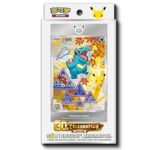
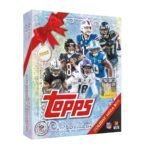
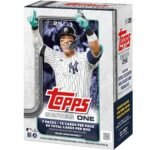
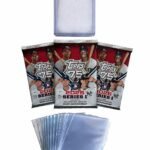
High customer satisfaction and commemorative appeal justify the price within a competitive market segment.
Price vs. rivals
Pricier
CheaperTypicalPricier
Priced slightly above the typical range for similar factory-sealed complete sets, reflecting the anniversary edition and inclusion of top rookie prospects.
Ease of use
Excellent 95/100
Opening a factory sealed box and viewing the cards is very straightforward for an average person.
Overview
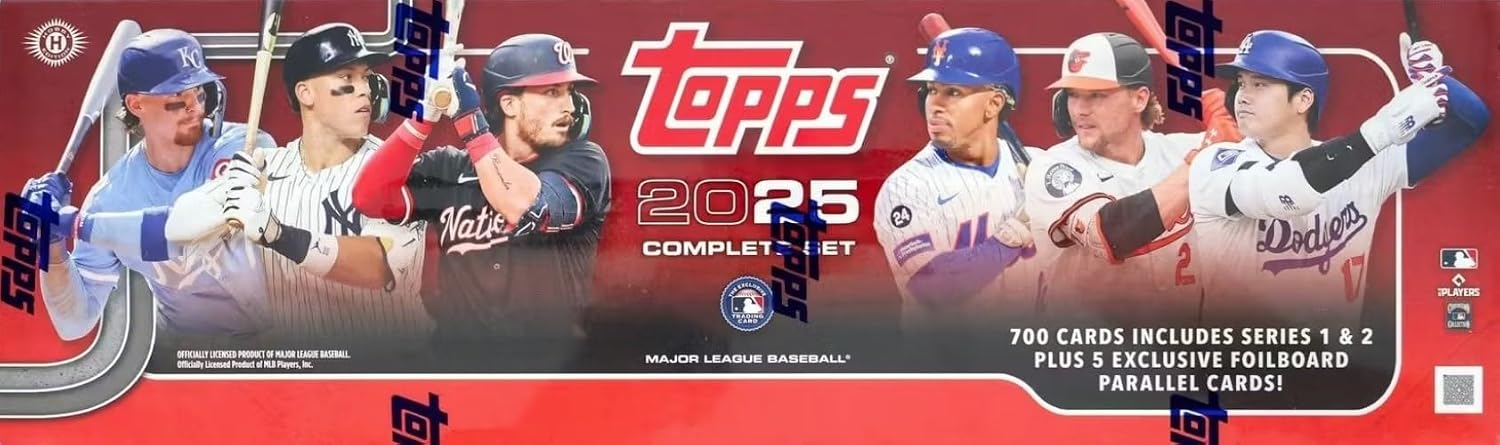
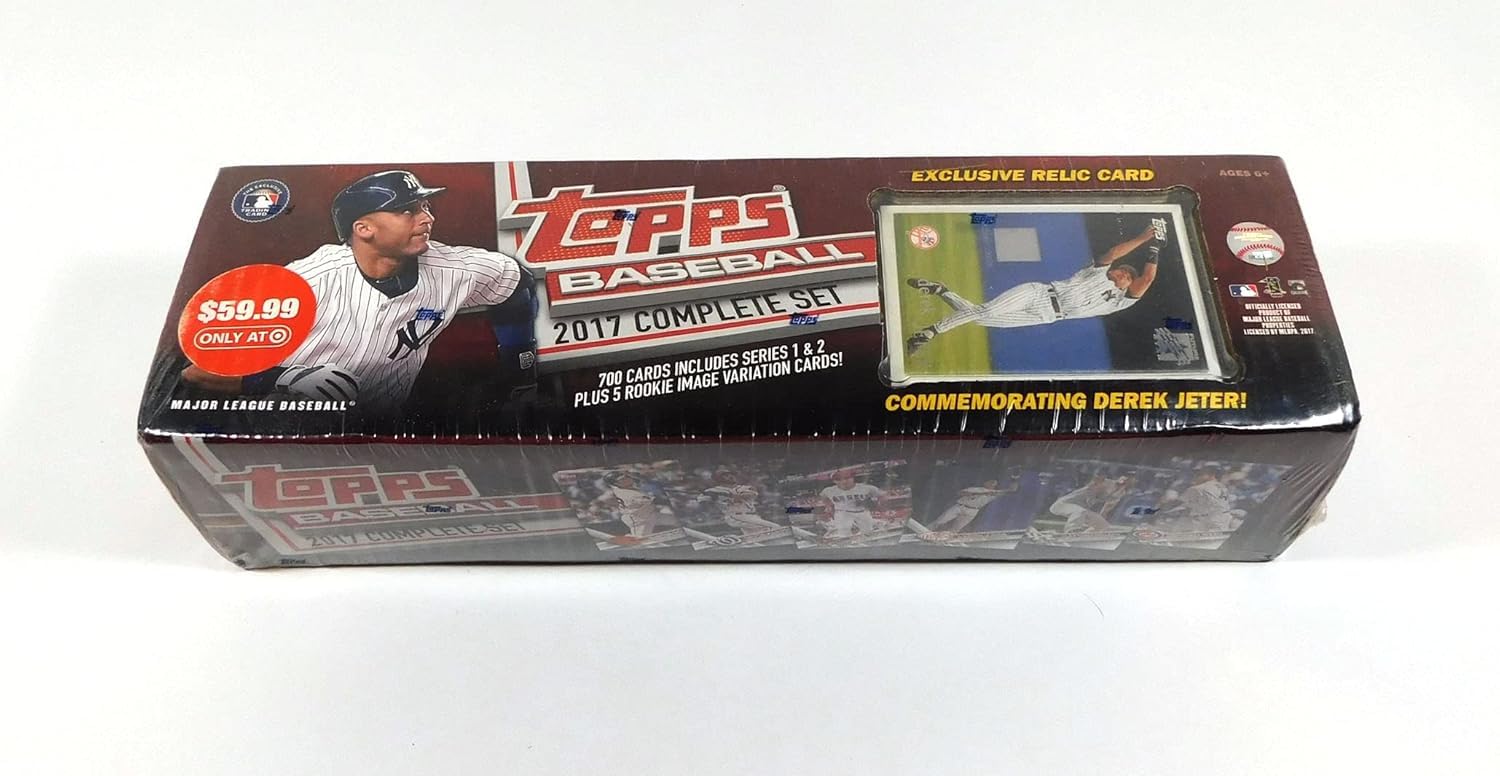
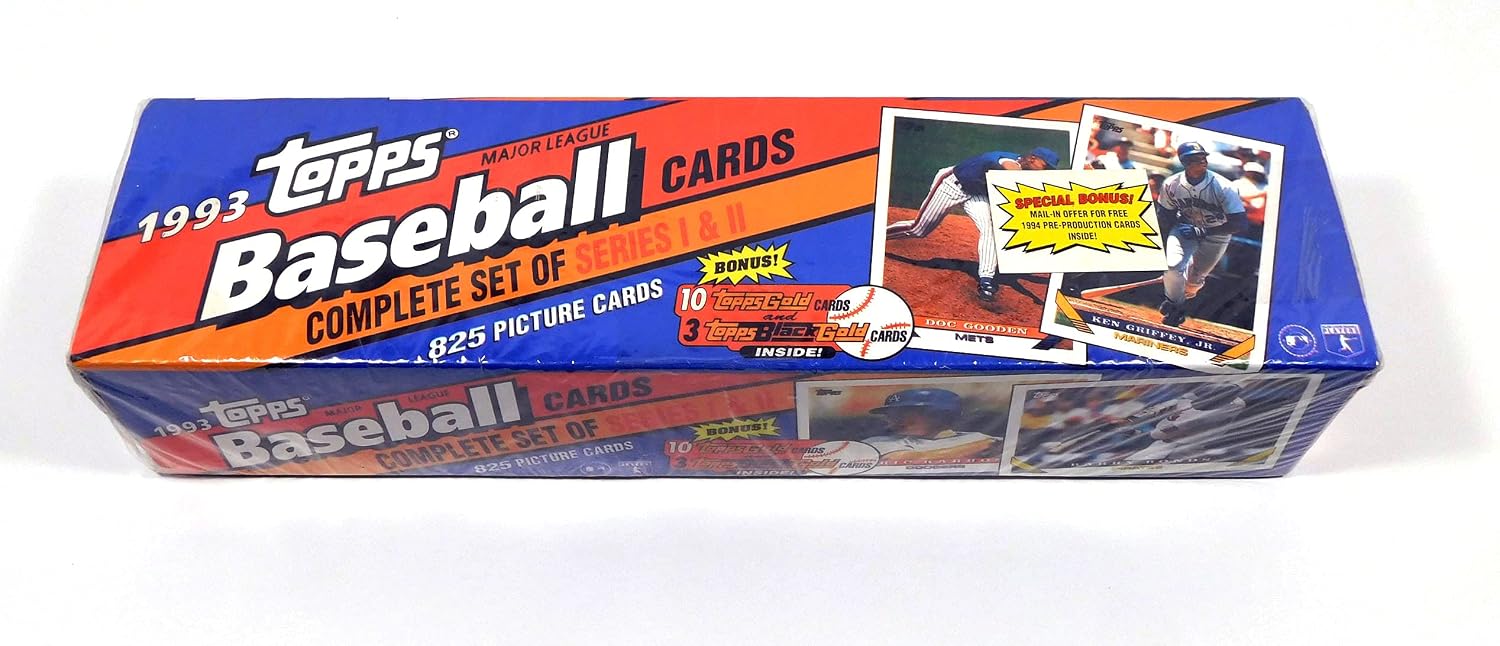
If you’re asking is the Topps 2026 Complete Set worth it, the short answer is: yes, if you want a reliable, affordable way to own every base card from the flagship set without chasing packs. This factory-sealed box gives you all 660 cards (plus inserts) in one go, and with the 75th anniversary design, it’s also a bit of a history piece. It’s for the collector who values completeness over the lottery thrill of a blaster box. Not for the pure investor looking for short-term flips.
What problem does it solve? The headache of piecing together a full set from retail, the risk of missing key rookies, and the sheer mess of loose cards. You open the box, thumb through the bricks, and you’re done. Parents buying for a kid who wants to “collect them all” – this is exactly that answer.
Key Features
Factory-sealed Topps set features – Every card comes from the same production run, which means condition consistency. You won’t find a perfect corners on every single card (it’s a machine-cut, after all), but the quality is much more consistent than mixing loose packs from different stores.
2026 Topps rookie cards checklist included – You get confirmed names: Jacob Misiorowski, Jac Caglianone, Roman Anthony, plus others that will shake out after the season. The key here is that you’re getting the first flagship rookie cards, not the Chrome or Bowman parallel – so expect the base version, not the autographs or colored parallels.
75th anniversary logo and retro-style design – Topps returned to a classic 1951-inspired look for the border and typeface. It’s clean, not gaudy, and owners tend to mention it looks sharp in a binder.
810 cards total (660 base + 150 inserts) – The insert sets typically include “’75 Topps” throwbacks, Future Stars, and a league leaders subset. Nothing super rare, but better than buying them randomly.
MSRP around $109 – At roughly $0.13 per card, it’s far cheaper per card than even the most efficient blaster box strategy. Especially if you catch it at or near that price.
Fit for You
You want to complete the 2026 flagship set without opening 30 packs and still missing half a dozen SPs.
You’re building a 75th anniversary set just to have a year-specific collection – the theme cards are the whole point.
You’re buying for a family member who actually wants a set to flip through, not just hoard it in a box.
You compare the Topps vs Bowman complete set – if you prefer flagship (licensing, MLB logos, iconic design) over the prospect-heavy, unproven minors of Bowman. This is the default choice for team-collectors.
You need a best baseball card set for collectors in terms of cost-per-card and guaranteed completion – this is exactly that. No “best” is subjective, but for the price of a hobby box that might yield half the set, this gives you the full set.
Uses
You get it home, slit the factory tape, and flip the first brick. The cardboard smell is strong. The cards are packed in order – you can start from card #1 and read the whole season story. The inserts break up the monotony, though they’re all cards you’d get anyway.
The best use case: a rainy Sunday binder session. Pop them into a box or pages, tab by team. The 75th anniversary theme makes them look great in nine-pocket pages next to a 1975 Topps set if you have one.
The worst use case: expecting to grade every card for resale. The factory-sealed set cards are rarely gem-mint 10 because of micro-scratching from the brick-formation. Grading is a lottery within a set. These are for collecting, not flipping to PSA 10.
Experience
Opening factory sets is straightforward. The outer box is a thin cardboard with Topps branding – not a display piece, but it keeps the bricks safe. Inside you get two or three stacks of cards, each wrapped in cellophane. Pull them apart, and you’ll notice the edges can have a little white if the wrapper was tight. That’s the usual trade-off for factory sets: the cards are in a sealed brick, not individually protected.
Sorting is optional because they’re already sorted by card number. If you want to rearrange by team, it takes about an hour. The card stock feels similar to a retail pack – slightly thinner than hobby box stock, but fine for a binder. The glossy finish picks up fingerprints quickly, so handle by edges or use gloves if you’re fussy.
The small annoyance: the foil stamp and 75th anniversary logo can catch light and make it hard to read the player name at certain angles. It’s not a deal-breaker, but you’ll tilt the card sometimes. Another one: the insert cards are sometimes glued together at the edges from the factory heat-seal. A gentle pull separates them, but if you’re obsessive, you might get a tiny paper tear. Check before buying if that bugs you.
Pros and Cons
Pros
Complete set in one shot – No packs, no dupes, no hunting for one card on eBay for $5 plus shipping.
75th anniversary design is genuinely good – Topps nailed the vintage feel without looking dated. The 1951-style is minimal, with large player photos and clean type.
Cost per card is low – At $109, it’s about $0.13 per card. A blaster box of 2026 Topps ($25 for 70 cards) costs about $0.36 per card, and you don’t even get a full set.
Rookies are relevant – Misiorowski, Caglianone, Anthony are legit names. If even one breaks out, the set has built-in value. Even if not, it’s a way to own the first year for them.
Cons
Factory-set condition is a gamble – The brick-pack method means cards can have minor surface scratches or corner dings. You won’t get a grading-friendly set out of the box.
No short prints or parallels – You get only the base set and a few inserts. If you chase rare variants, this is boring. That’s the trade-off for completion.
The box and packaging are cheap – The outer box rips easily when opening. You won’t re-use it for storage without taping it back together.
Topps vs Bowman complete set – If you’re all about prospects and rookie autographs, Bowman’s complete set has more future speculation. This is for the here and now MLB quality.
Advantages
Better than building from packs – You avoid the commons-pile problem. You know you have every card, including the short-printed superstars (even though they’re the same print run).
Timely purchase – 2026 sets hit shelves early in the season. Buying now gets the key rookies before their prices spike. The checklist won’t change until the update set later.
Good for breaking cards – If you’re a set builder who likes the tactile act of opening bricks, this satisfies that without the disappointment of a pack with no hits.
Who Should Buy
Set collectors – Obviously. Anyone who owns a binder for every Topps year will want this. The 75th anniversary makes it a nice year to own.
Parents – It’s a great gift for a kid who wants “all the cards.” The organized nature means less frustration and more flipping.
Casual investors – If you want a low-risk entry into 2026 cards that you can hold for 10 years, this is easier than managing loose packs. But don’t expect crazy returns – it’s mass-produced.
Skip it if you’re a flip-master – You’re better off buying hobby boxes and selling hits. Or if you only care about Bowman chrome, skip this and get the Bowman complete set for the prospect-heavy checklist.
FAQ
Is the Topps 2026 Complete Set worth it at $109?
Yes, for the price of a hobby box that might only give you half the base set, you get every card guaranteed. The cost per card is roughly the same as buying singles, but with none of the shipping fees or hunt time.
Does the set include every 2026 Topps card?
It includes the main 660-card base set plus the standard inserts (like ’75 Topps throwbacks, League Leaders, and Future Stars). It does not include the Update Series, short prints, parallels, or autographs from hobby packs.
How can you tell if a factory sealed Topps set is authentic?
Check the box cellophane has the Topps logo seal tape. The card condition should be consistent. Look for the printed checklist on the back of the box. If you buy from Amazon direct, risk is low.
Are the rookie cards in the 2026 Topps complete set the same as the hobby box rookie cards?
Yes, same card design and same base rookie cards. The only difference is the paper stock (slightly softer than hobby) and lack of serial-numbered parallels. The base rookie is the same.
What’s the best way to store the 2026 Topps complete set?
Binder and 9-pocket pages is the most convenient, or cardboard storage box with dividers. The cards fit standard sleeves. Avoid leaving them in the factory brick for years – the pressure can cause surface impressions.
How does the Topps vs Bowman complete set compare for resale value?
Bowman complete sets usually contain prospect cards that can boom or bust, but Topps sets have MLB logos and a more established collector base. Resale is slower but steadier for Topps. If you’re short-term, Bowman may spike harder; Topps is a longer hold.
Final Verdict
The Topps 2026 Complete Set is exactly what it says: a no-fuss, all-in-one solution for anyone who wants the entire flagship set without the pack-chasing headache. The 75th anniversary design gives it a welcome nod to history, and the rookie checklist is solid. The downsides – card condition, lack of rarities, cheap packaging – are trade-offs that every factory set buyer knows. If those are dealbreakers, skip it. But for the price, for the convenience, and for the pure fun of opening one stack and being done, it’s a solid buy.
One thing to keep in mind: buy it early in the season before the rookie hype inflates prices. At $109, it’s a fair deal. When eBay flippers list it at $150, it’s less compelling. Grab a box, open it, and enjoy the last factory set you’ll need to piece together from 2026.
Topps 2026 Complete Set vs the Competition in 2026
If you’re looking for a factory-sealed collection that covers the entire 2026 MLB season—Series 1, 2, and Update—the Topps 2026 Complete Set is the obvious anchor. At around $109, it lands smack in the middle of the market: not the cheapest, not the priciest, but it gives you every base card, every standard insert, and all the major rookies like Jacob Misiorowski, Jac Caglianone, and Roman Anthony. The 75th anniversary logo on the box is a nice bonus for tradition-minded collectors. But is it the best baseball card set for collectors in 2026? That depends on what you actually want from a sealed set.
Product
Price Range
Key Strength
Key Weakness
Best For
Topps 2026 Complete Set
~$109
Complete base run of Series 1, 2, and Update; includes all top rookies
No parallels, no chrome refractors; basic cardboard feel
Set builders who want one box to cover the whole season
Bowman 2026 Complete Set
~$85 – $100
Focuses on top prospects and early rookie cards (e.g., first Bowman autos)
Heavy on prospects who might never pan out; skips veteran stars
Prospect hunters and speculators
Topps Chrome 2026 Complete Set
~$150 – $180
Refractor finish, premium card stock, and exclusive color parallels
Costs nearly 70% more; fewer base cards per dollar
Collectors who want shiny, high-grade condition or investable parallels
Topps Heritage 2026 Complete Set
~$90 – $110
Retro 1977-style design with thick card stock and tougher short prints
Rookie checklist is thinner; missing many stars from the regular set
Nostalgia-driven collectors who love the throwback look
Topps 2026 Complete Set vs Bowman 2026 Complete Set
Both are factory-sealed, both give you a full set of cards in a neat box, and both cost around a hundred bucks. The difference is philosophical. The Topps 2026 Complete Set is about the here and now—every player who stepped on a field in 2026, from the superstars to the 25th man. The Bowman 2026 Complete Set is a bet on tomorrow. It loads up on first-year Bowman paper of guys like Ethan Salas and Walker Jenkins, players who might not even reach the majors until 2028. If you’re the type who enjoys tracking a prospect’s minor-league journey and flipping cards later, Bowman is the better play. But if you want to open the box and immediately see the actual 2026 rookies you watched on TV, stick with Topps.
Topps 2026 Complete Set vs Topps Chrome 2026 Complete Set
Here’s where the trade-off hits you in the wallet. The Chrome version is the premium sibling—refractors, shimmering colors, and card stock that feels thick enough to stop a BB. You pay a good $40 to $70 more for that sparkle. The Topps 2026 Complete Set, by contrast, is printed on standard paper stock. It’s fine. It won’t fall apart, but it won’t wow you either. The real question is: do you care about condition grading? Chrome cards, because of the glossy surface, tend to hold up better in PSA/BGS slabs. If you’re planning to submit a few key rookies for grading, Chrome might justify the extra cost. If you’re just building a personal collection to thumb through on a rainy Tuesday, save your money and go with the standard set.
Topps 2026 Complete Set vs Topps Heritage 2026 Complete Set
Heritage is the sentimental alternative. It mimics the 1977 Topps design, complete with the chunky team name banners and airbrushed action shots. The card stock is noticeably heavier—almost like a postcard. You also get short-printed variations that can be tougher to find, which adds a layer of hunt. But here’s the catch: Heritage’s rookie checklist is lean. You’ll get Misiorowski and Caglianone, but only if they made their debut early enough to be included. The Topps 2026 Complete Set has the full rookie class, plus all the veteran stars (Shohei Ohtani, Julio Rodríguez, etc.) that Heritage often leaves out for space reasons. If you’re after comprehensive roster coverage, Topps wins. If you want a fun, quirky design that feels like opening packs from your childhood, Heritage is a worthy distraction.
So who should buy the Topps 2026 Complete Set? If you want one box that delivers the entire 2026 MLB season in a single, organized stack—rookies, veterans, inserts, and all—it’s the best option. The price is fair for what you get, and the factory-sealed packaging means you won’t have to worry about sorting duplicates. But if you’re a prospect investor, the Bowman set is a smarter alternative. And if you’ve got the cash and want a set that will look better in a slab, the Chrome version is worth the stretch. Otherwise, the Topps 2026 Complete Set does exactly what it says—no surprises, no gimmicks, just a year of baseball in a box.
Ready to decide on the Topps 2026 Complete Set?
See today’s price, stock and delivery options on Amazon.