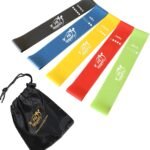
This TheraBand resistance bands review answers the question directly: yes, they’re worth it. At $11.99, you get a set of color-coded latex bands with clear tension levels. They’re the default choice in physical therapy for good reason—durable, portable, and easy to use. Just know they’re simple flat bands, not a fancy pulley system.
The product offers an exceptional balance of low price and high user satisfaction, making it a standout value in the budget category.
Price vs. rivals
Cheaper
CheaperTypicalPricier
Priced well below most comparable resistance band sets of similar rating, placing it in the budget-friendly range for casual or beginner users.
Ease of use
Excellent 85/100
Resistance bands are lightweight, portable, and intuitive to use for most exercises, though some users may need a brief learning curve to ensure proper form and avoid snapping.
Overview: TheraBand Resistance Bands Review
The band pack is simple: flat latex bands, not the rubber tube kind with handles. Each band has a different resistance level, so you can start light and progress as you get stronger. The problem it solves is keeping muscles active during recovery or at-home training without a rack of weights.
Who is it really for? People doing physical therapy exercises, Pilates mat work, mobility drills, or light strength sessions. It’s also a good choice if you travel and want a cheap, packable gym. If you need heavy resistance for serious bodybuilding, you’ll outgrow these fast. Physical therapists keep boxes of these around, which is why they’re often called the best resistance bands for physical therapy. The current rating is 4.6 out of 5 stars on Amazon.
Key Features: What TheraBand Bands Do
Color-coded tension levels TheraBand band tension levels are easy to read: lighter colors give more give, darker ones fight back. You’ll know which band you’re holding without a label.
Flat latex construction The band lies against your body instead of digging in, and it stays put when wrapped around your thighs or under your feet.
Compact and light It folds small enough for a coat pocket, so there’s no reason to skip a workout on a trip.
No hardware There are no handles, clips, or anchors to lose. You just stretch the band.
Natural rubber feel Latex has a good amount of snap and returns to shape well. Expect a rubber smell at first.
One size, many moves The same band can handle rows, presses, leg work, and assisted stretching.
Fit for You: Where These Bands Earn Their Keep
You follow Pilates videos at home and need a light touch of resistance for side-lying leg lifts and glute work. TheraBand resistance bands for pilates work because they don’t overpower the movement.
You’re doing physical therapy exercises after an injury, and your therapist gave you a progression you can match with the color-coded bands.
You travel a few days a month and want a workout that fits in a carry-on.
You’re starting a home gym on a small budget and want one tool that covers stretching and strength.
You do warm-ups before lifting and need a cheap way to activate glutes and shoulders.
Uses: TheraBand Resistance Bands for Pilates and Rehab
For Pilates, the lighter band is your friend. Loop it around your thighs for clamshells, bridge pulses, and side-lying leg lifts. You get enough resistance to feel the muscle working without turning the movement into a battle.
For physical therapy, the same principle applies but with more structure. Start with the lightest band you can handle, then move up one color when the exercises stop feeling challenging. That simple progression is the whole point.
Outside rehab, these earn their keep during warm-ups, band walks, shoulder rotations, and even stretch routines. If you’re sitting at a desk all day, a set of rows with the medium band can undo some of the hunching.
Experience: TheraBand Resistance Bands Review in Everyday Use
First thing you’ll notice is the rubber smell. It’s not overwhelming, but it’s there, especially when they’re new. Owners tend to mention it. Wipe the bands with a damp cloth and let them air out for a day or two and the smell settles down.
Setup is basically nothing. You step on the middle, loop it around a hand or ankle, or anchor it under a door for certain pulls. Because the band is flat, it stays put better than a tube band during lower-body work.
Cleaning is easy: soap and water, then dry. Do not put them in the washing machine. Storage matters more than you’d think. Latex hates direct sunlight and heat, so keep the bands in a drawer or cloth bag and they’ll last much longer.
Expect a bit of noise. A stretched band can squeak against skin or clothing. If it slips, it makes a slapping sound. It’s not annoying enough to avoid using them, but it is noticeable in a quiet room.
The small annoyances are real. Dry hands make the band hard to grip during pulling exercises. Flat bands have no padded handle, so heavy rows press into your palms. That’s the trade-off for the price and portability.
Pros and Cons
Pros
Affordable At $11.99, you get a full range of tension levels for less than one session with a personal trainer.
Trusted by therapists The color system is the same one used in many clinics, so instructions from your physical therapist will make sense.
Easy to pack They fold flat and weigh almost nothing.
Simple to use No clips, handles, or setup. Stretch and go.
Good for progressing Moving from a lighter to a heavier band is a clear way to measure strength gains.
Cons
Latex allergy risk If latex triggers a reaction, skip these and look for latex-free bands made from fabric or another material.
No handles Pulling exercises put more pressure on your hands. Some people wear workout gloves or wrap a towel around the band.
Tension jumps In the middle range, one band can feel a bit too easy and the next a bit too hard. It’s the nature of color-coded steps.
Can snap with abuse Stretching over a sharp edge or using a cracked band can cause it to break. Inspect them before each use.
Not for heavy lifters If you can easily move serious weight on rows, these bands won’t offer enough resistance on their own.
Advantages: TheraBand vs Other Resistance Bands
TheraBand vs other resistance bands comes down to consistency. The color-coded levels are standardized, so a red TheraBand from one pack feels similar to a red TheraBand from another. That’s not always true with generic bands, where the same color can vary wildly between brands.
Flat bands also beat tube bands for lower-body work. Tubes with foam handles are nice for curls and chest presses, but they pull and bunch up when you put them around your ankles. The flat design of TheraBand stays where you put it, which matters for glute work and Pilates moves.
The one place TheraBand loses is convenience for upper-body pulling. A tube band with handles is easier to grip. If you mostly do bicep curls and seated rows, a handled tube band might be a better fit.
Who Should Buy TheraBand Resistance Bands?
Physical therapy patients If you have a list of exercises from a clinician, these bands match the standard tension progression.
Pilates and barre fans The light-to-medium bands are perfect for glute and thigh work.
Travelers They take up less space than a t-shirt.
People with latex sensitivity Should pass and look for latex-free fabric bands instead.
Anyone doing heavy strength training Should look elsewhere, likely for heavier loop bands or dumbbells.
FAQ: TheraBand Resistance Bands Review
Is the TheraBand Resistance Bands worth it?
Yes, for most people. At $11.99, you get a set of reliable, standard resistance bands that work for rehab, Pilates, and light strength training. The main reason to pass is a latex allergy or a need for very heavy resistance. For everything else, these are a solid buy.
How long do TheraBand resistance bands last?
Expect six months to a year with regular use, and longer if you look after them. Keep them out of direct sunlight and away from heat. Wipe off sweat after workouts and check for small tears. When a band starts showing cracks or losing its snap, replace it.
What do TheraBand band tension levels mean?
The colors represent increasing resistance, from easier to harder. You start with a color that gives you some challenge, then move up when the movement feels too easy. The exact sequence is printed on the packaging, but the system is simple: light colors for recovery and small muscles, darker colors for strength work.
Can you use TheraBand resistance bands for pilates?
Yes. TheraBand resistance bands for pilates are a natural fit because the lighter bands give you controlled tension without taking over the movement. Loop one around your thighs for leg work, or hold it in your hands for upper-body exercises. It adds resistance while keeping the focus on form.
Are TheraBand bands safe for physical therapy at home?
Yes, when used properly. Start with the lightest band that gives you feedback, avoid overstretching, and don’t use a band that has cracks or tears. If you’re recovering from an injury, check your exercise list with a physical therapist first so you use the right level and range.
How do you clean TheraBand bands?
Wipe them down with mild soap and water, then dry them with a towel. Don’t put them in the dishwasher or washing machine. After sweaty workouts, a quick wipe extends their life. Let them fully dry before storing them in a drawer or bag away from sunlight.
Final Verdict: TheraBand Resistance Bands Worth It?
TheraBand resistance bands review comes down to this: buy them if you need a simple, portable way to add resistance to rehab, Pilates, or light strength training. At $11.99, they’re a small price for a tool that actually gets used.
Keep the one thing in mind: these are flat latex bands, not a full cable gym. They work best for controlled, moderate movements. Use them consistently, and they’ll earn their place in your routine.
TheraBand Resistance Bands vs the Competition in 2026
TheraBand has basically owned the physical therapy aisle for decades. It’s not the heaviest or toughest band you can buy, and it doesn’t come with handles or clips. What it does have is color-coded tension levels from tan to black, which physical therapists use to prescribe exercises. This TheraBand resistance bands review focuses on how that matters in real sessions. If you search “best resistance bands for physical therapy,” you’ll see these near the top. TheraBand vs other resistance bands is less about raw strength and more about control.
Product
Price Range
Key Strength
Key Weakness
Best For
TheraBand Resistance Bands
Budget-to-mid ($11.99 for a standard set)
Color-coded flat latex with gradual, controlled tension
Needs tying for some moves; no handles or clips
Physical therapy, pilates, rehab, gentle strength
Rogue Monster Bands
Premium
Heavy-duty loops that handle serious pulling and anchoring
Too stiff and bulky for precise rehab work
Powerlifting assistance, pull-ups, heavy strength work
Bodylastics Stackable Resistance Bands
Mid
Handles, door anchor, and clips for adjustable workouts
Tubes can kink and the hardware adds setup time
Home strength training where portability matters
Fit Simplify Loop Bands
Budget
Light, cheap fiber loops with a soft feel
Little resistance range; bands stretch out quickly
Pilates, glute activation, travel-friendly work
TheraBand Resistance Bands vs Rogue Monster Bands
Pick up a Rogue Monster Band and you’ll notice the rubber is thicker, the loop is heavier, and it wants to pull hard. That makes it great for assisted pull-ups or adding tension to a barbell. It also makes it wrong for most PT work. You can’t make fine tension adjustments with a Monster Band the way you can with a flat TheraBand. If you’re coming back from a shoulder injury, you need the early red or green TheraBand tension, not a loop that yanks you into position. But if your goal is strength rather than rehab, the Rogue is the more durable tool. It costs several times more, and it’ll last for years, which is fine if you actually need that much rubber.
TheraBand Resistance Bands vs Bodylastics Stackable Bands
Bodylastics makes a solid case for itself. You get handles, an ankle strap, a door anchor, and a stack of tubes you can attach and detach. That’s a full gym in a bag. It’s also the problem. The hardware takes time to set up, and the tubes have a tendency to kink, especially where the clip meets the rubber. TheraBand is simpler: unroll it, step on it, hold it. For TheraBand resistance bands for pilates, that flat latex gives you feedback along the whole length of the band, which tubing doesn’t. If you like adjustable handles and need to swap resistance mid-set, Bodylastics is a reasonable alternative. If you want no-fuss exercise that works with your PT’s cues, TheraBand wins.
TheraBand Resistance Bands vs Fit Simplify Loop Bands
Fit Simplify’s little fabric loops are cheap and friendly. They’re perfect for glute bridges and side-step walks, honestly. But their resistance is limited by the fiber, and after a few months the loops stretch out and feel less crisp. TheraBand band tension levels are much more precise, and the latex gives you a true progressive load instead of a soft cloth loop that bottoms out. That said, if you just want to wake up your glutes, Fit Simplify’s loops are easier to grab than a flat TheraBand, which sometimes feels like it’s going to tangle. The trade-off is durability and subtlety, and TheraBand has the edge there.
So is TheraBand worth it? If you want a band that your physical therapist can grade, that behaves consistently for pilates and rehab, and that doesn’t rely on clips and handles, yes. This is the standard for controlled, incremental resistance, and at $11.99 it’s a reasonable spend. If you’re mostly doing heavy pulls and loaded exercises, get the Rogue Monster Band instead. And if you want a portable strength kit with handles, Bodylastics is the better choice. TheraBand isn’t the wow purchase in a review like this. It’s the one you’ll actually keep using.
Ready to decide on the TheraBand Resistance Bands?
See today’s price, stock and delivery options on Amazon.