Delivers reliable electronic hearing protection and strong performance at a price that undercuts most comparable models.
Price vs. rivals
Cheaper
CheaperTypicalPricier
Priced below most electronic ear muffs like Howard Leight, but above basic passive models; offers good value for a budget-friendly choice.
Ease of use
Excellent 90/100
The electronic muffs are straightforward to put on, adjust, and operate with simple controls, making them highly accessible for an average user.
Overview
Electronic earmuffs that let you hear conversation and range commands while clamping down on gunfire — that’s the basic idea. The Walker’s Razor Slim is built for people who want hearing protection that doesn’t feel like a construction helmet strapped to their head. It’s aimed at shooters, hunters, and anyone who needs low profile electronic ear muffs that fit under a hat or behind a rifle stock. The trade-off is a noise reduction rating that’s decent but not class-leading, so you need to know where it fits your life.
What problem does it solve? The old choice between “can’t hear a thing” and “my ears are ringing”. By amplifying safe sounds (voices, birds, the coffee maker) and instantly cutting out loud ones (gunshots, nail guns, your neighbor’s leaf blower), these muffs let you stay aware without sacrificing safety. They’re not the most rugged or the quietest on the shelf, but for the price and the size, they’re a solid bet for most people who shoot a few times a month.
Key Features
NRR 23 noise reduction – The Walker’s Razor Slim noise reduction rating is 23 dB. That’s enough for .22, 9mm, and most shotgun loads at typical ranges. For magnum rifles or indoors with big bores, you’ll want to double up with foam plugs underneath.
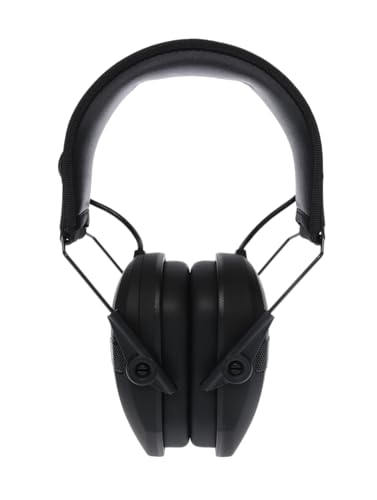
Ultra-low profile cups – The cups sit close to your head, which is the whole point. You can wear a cap, a beanie, or ear muffs under a tactical helmet and the stock won’t snag when you mount a rifle.
Sound amplification with volume control – Two external mics pick up ambient sound and feed it through speakers inside the cups. A dial on the side lets you crank it up to about 3x normal hearing or dial it down when you’re just waiting for the cease-fire.
Auto shut-off – After four hours of no loud impulse noise, the muffs turn off to save batteries. It’s a nice feature if you forget and leave them in your range bag, but it can be annoying if you’re sitting through a long class with mostly quiet moments.
Folding design – The headband collapses and the cups rotate flat. They’ll slip into a medium-sized pocket or the front pouch of a range bag without taking up half the space.
3.5 mm audio input – Plug in your phone or a radio scanner. The sound mixes with the environmental mics, so you can listen to music and still hear range commands. No Bluetooth – that’s a deliberate cost saving.
Fit for You
You shoot at an indoor range where the guy three lanes over is pounding a .44 Magnum into the stall wall, but you still need to hear the range officer call cold range.
You hunt and wear a hat or a beanie under your muffs, and you’ve been annoyed by bulky cups that push the hat off or interfere with your cheek weld on a shotgun stock.
You keep your gear in a small range bag and don’t want earmuffs that require their own duffel.
You need electronic protection for outdoor chores like mowing, leaf blowing, or using a nail gun – you want to hear the phone or someone calling from the porch.
You’re on a tight budget but don’t want to buy cheap passive muffs that give you zero situational awareness.
You’ve tried foam earplugs and can’t stand the feeling of something squished into your ear canal for three hours.
Uses
Picture a Saturday at the pistol range. You’re swapping drills with a friend. The Walker’s Razor Slim lets you hear his reloading technique and the joke about your last shot string. Then the guy on the next bay touches off a .308 and the circuitry clips the sound to a quick thump – no flinch, no ringing afterward.
At the clay field, you’re walking the course with a group. The low-profile cups don’t hit the comb of your O/U shotgun when you mount it. You can hear the pull call, the bird launch, and the “good hit” from the next station. The wind noise is there but it’s manageable; the volume dial lets you subtract the breeze when it gets gusty.
Around the house, they’re fine for weed-whacking or running a circular saw. You’ll still hear the doorbell or your kid shouting from inside – which regular muffs just turn into mime theater. The catch is that the amplification adds a faint, constant hiss when you turn it up past three-quarters. It’s not a dealbreaker, but it’s there.
Experience
Setup is two AA batteries, which are not included. The battery compartment is on the left cup, under a tight rubber cover – you’ll use a fingernail or a flathead screwdriver to pop it open. Expect to do that once a season if you shoot a couple hours a week.
The headband has a non-slip rubber pad on the inside. For most people it fits fine, but if your head is on the larger side (hat size 7¾ or above), the cups will squeeze a little. Not painful, but you’ll notice it after an hour. Owners tend to mention that the clamping force is lighter than the older Walker’s models, so it’s more comfortable for all-day wear, but the seal might shift if you turn your head sharply.
Sound quality – the Walker’s Razor Slim sound quality is clear for speech. You’ll notice the difference compared to passive muffs: you can hear your own voice naturally without shouting. The volume dial has a tactile click at each step, so you can adjust by feel with gloves on. The hiss I mentioned earlier becomes audible when you push the volume past the 75% mark. It’s like the floor noise of a cheap microphone. For most range sessions it’s not a problem, because you’re not maxing the dial out – but if you’re hunting in total quiet and want to hear a twig snap, you’ll trade off that hiss for a slight boost.
Cleaning is simple: wipe the foam ear pads with a damp cloth and mild soap. They’re not removable, so when they start to get funky after a year, you either replace the whole set of pads (Walker’s sells replacements for about $10) or buy new muffs. Storing them folded is easy – they’ll fit in a cargo pocket of a vest.
The small annoyance is the auto shut-off timer. If you’re sitting through a long course with a lot of classroom time and no shooting, the muffs will power down on you. You have to turn them off and on again to wake them up. It’s a minor hassle that most people get used to after the second time.
Pros and Cons
Pros
Compact and lightweight – They weigh a hair over 10 ounces and fold small. You’ll actually pack them in your range bag instead of leaving them in the car.
Clear amplification for speech – Conversation comes through naturally; you don’t feel like you’re listening through a tin can.
Very good price for electronic muffs – At roughly $31, they’re cheaper than most electronic options that offer similar features.
Durable construction for the price point – The plastic shell feels solid, not brittle. The headband springs back without creaking.
Audio input works well – Hook up a phone or a radio and the mix with ambient mics is natural enough for range use.
Cons
NRR 23 is not enough for very loud shooting – If you regularly shoot .308, 7mm Magnum, or anything with a muzzle brake indoors, you’ll need to double up with foam plugs. The foam muffs with NRR 30+ are bulkier but safer in those situations.
Headband can be tight on larger heads – People with head sizes above 7¾ often report pressure points after 30 minutes. Not a dealbreaker if you take breaks, but not ideal for an all-day hunt.
Amplification hiss at high volume – The floor noise is noticeable when you turn the dial up past 75%. It won’t ruin your day, but it’s not the cleanest circuit at max gain.
No Bluetooth – For the price, you can’t expect it, but some competitors in the $40–$50 range now offer it. You’re stuck with a cable if you want music or calls.
Battery cover is fiddly – The rubber tab is easy to misplace and the compartment requires some force to open. You’ll learn the trick, but it’s a small annoyance.
Auto shut-off can interrupt quiet sessions – Four hours of silence between shots will trigger it. Not a big deal, but you need to remember to check.
Advantages
Compared to other best electronic earmuffs for shooting in this price range, the Razor Slim’s size is what sets it apart. You can wear them under a knit cap in cold weather or under a full-cut tactical helmet, which most bulkier muffs won’t allow. They’re also noticeably lighter than the Howard Leight Impact Sport (a common alternative), which makes a difference for long range sessions.
That said, the Walker’s Razor Slim vs Howard Leight comparison usually comes down to this: the Howard Leight has a higher NRR (around 25) and a more adjustable headband, but it’s bigger and costs about $15 more. The Walker’s wins on portability and price; the Howard Leight wins on pure noise reduction and adjustability for big heads. If you value a compact shape and don’t shoot artillery, the Walker’s is the smarter buy.
Another advantage is the audio input jack. Many electronic muffs at this price skip that feature, so the ability to plug in a radio hearing enhancement system or a simple phone adapter is a real bonus for range safety officers or hunters who use communicators.
Who Should Buy
Buy them if you’re a casual to intermediate shooter who visits the range a couple times a month and wants hearing protection that lets you stay social and aware without spending $80+.
Buy them if you hunt with a shotgun or a rifle and need muffs that won’t interfere with your cheek weld or your hat.
Buy them if you keep a small range bag and want gear that doesn’t require its own bag for transport.
Skip them if you shoot high-caliber magnums regularly, especially indoors. Get the Howard Leight Impact Sport or a Peltor with NRR 26 or above, and still double up with plugs.
Skip them if you have a very large head (hat size 8+) – the clamping force will be uncomfortable and you’ll be better served by models with a wider, adjustable headband.
Skip them if you need Bluetooth for phone calls or audio streaming. Look at the Walker’s Razor Bluetooth model or the Etymotic ones if that’s non-negotiable.
FAQ
Is the Walker’s Razor Slim worth it?
Yes, if you need compact, low-profile electronic earmuffs that don’t cost a lot. The Walker’s Razor Slim review consensus among owners is that they deliver clear sound, good build quality for the money, and a size that fits under headgear – just understand the NRR limitation for very loud environments.
How long do the batteries last?
Typical battery life is around 350 hours on standard alkaline AAs, but that depends on how much you use the amplification. Owners report closer to 300 hours if you keep the volume high. The auto shut-off helps stretch them out.
Is it safe for shooting with a rifle?
For most common calibers (9mm, .22, .223, 12-gauge shotguns), the NRR 23 is considered safe when the muffs are worn correctly. For magnum rifles or prolonged exposure to high-decibel gunfire, you should combine them with foam earplugs for extra protection.
What is the noise reduction rating of the Walker’s Razor Slim?
The Walker’s Razor Slim noise reduction rating is 23 dB according to the ANSI standard. That’s lower than many full-size muffs but acceptable for typical recreational shooting.
Does it have Bluetooth or a microphone for phone calls?
No Bluetooth. The muffs have a 3.5 mm audio input jack, so you can connect a phone or radio with a cable, but you won’t use the internal mic for calls unless you add an external boom mic adapter.
Can I wear these with a hat or glasses?
Yes, the low-profile design is made for that. The ear cups are thin enough that they don’t push your hat off, and they have enough room for most eyeglass temples without breaking the seal.
Final Verdict
The Walker’s Razor Slim is a smart buy if you want electronic hearing protection that doesn’t dominate your head or your wallet. It does the basics well: amplifies speech clearly, cuts off gunshots, and folds small enough to live in a range bag. The biggest thing to keep in mind is the NRR ceiling – it’s adequate for most recreational shooting, but not for high-caliber indoor sessions where you need every decibel of reduction. For the price and the compact profile, it’s one of the most sensible choices in the “under $35, fits in a pocket” category.
The electronic earmuff market is packed. Everyone claims their pair is slim, offers great sound, and won’t break the bank. The Walker’s Razor Slim has practically become the default answer for shooters who want low-profile gear without spending serious cash. It sits at a sweet spot—around $31—where it undercuts the big names on price while offering a design that genuinely solves a problem. But it isn’t the only option, and depending on what you actually do at the range, the “best” choice might be something else entirely.
Product
Price Range
Key Strength
Key Weakness
Best For
Walker’s Razor Slim
Budget-Mid (~$30-35)
Best low-profile fit; excellent stock clearance.
Sound quality is decent, not great; battery door feels cheap.
Rifle shooters who need to mount a stock without bulky cups getting in the way.
Bulky cups and headband; less comfortable for extended wear.
Pistol and shotgun shooters on a budget who prioritize sound clarity.
3M PELTOR SportTac 100
Mid-Premium (~$70-90)
Superior audio fidelity; outstanding build quality and padding.
Significantly more expensive; far from a low profile design.
Serious shooters, instructors, or those running comms who wear ear pro all day.
Pro For Sho 34dB
Budget (~$20-25)
Highest passive NRR rating (34dB); dirt cheap.
Muddy electronics; uncomfortable fit; bulky as a brick.
Indoor range duty with heavy magnum loads when maximum raw protection matters more than comfort.
Walker’s Razor Slim vs Howard Leight Impact Sport
This is the comparison that matters most. The Howard Leight Impact Sport has been the budget king for years, and for good reason—the audio is genuinely better. The microphone picking up ambient sound feels more natural, and it handles sudden wind gusts at an outdoor range without making you feel like you’re in a hurricane. The Razor Slim’s speakers are fine for a quiet indoor range, but they can get a bit swampy when a loud crack hits the limiter. So why would you pick the Walker’s? Stock clearance. The Howard Leights stick out like saucers on the sides of your head. If you shoot a rifle with a proper cheek weld, you will bump the cups and break your seal. The Walker’s Razor Slim sits tight and low—it actually stays out of the way. For the same rough price, you trade audio polish for a form factor that actually works with a long gun.
Walker’s Razor Slim vs 3M PELTOR SportTac 100
Stepping up to the SportTac 100 feels like moving from a rental car to something you actually own. The Peltors cost roughly double the Walker’s, and you feel it everywhere—the dense foam, the solid headband tension, the rich audio that doesn’t distort under heavy noise. The Walker’s Razor Slim review consensus gets the rating right (4.8 out of 5 stars), but the common complaint about the battery door popping open in a range bag is fair. The Peltors don’t have that problem. They also aren’t trying to be low profile electronic ear muffs. They are big, comfortable, and built for long days. If you’re an instructor or someone who lives at the range, the upgrade is worth it. If you just need a cheap, reliable set that fits in a bag and doesn’t look ridiculous at the bench, the Razor Slim does 90% of the job for half the money.
Don’t Panic About the Noise Reduction Rating
A lot of people search for “Walker’s Razor Slim noise reduction rating” and see the 23dB NRR and think it’s too low. It’s not. 23dB is standard for electronic muffs that actually work well. The Pro For Sho 34dB muffs boast a massive NRR, but there is a catch. The electronics on those budget cans are muddy and quiet, and the fit is a lottery—either too tight or too loose. You get hit with the raw protection of a high NRR, but you lose the ability to hear range commands clearly. The Walker’s Razor Slim sound quality is drastically better than any ultra-budget 34dB muff. If you are shooting .308 all day inside a concrete box, the extra passive protection of the Pro For Sho might justify the discomfort. For everyone else, the Walker’s gives you a better overall experience and enough protection for any standard caliber.
Choose the Walker’s Razor Slim if your main priority is getting the slimmest possible profile for rifle work without spending more than $40. It wins on ergonomics and value, even if the audio isn’t class-leading. Skip it and get the Howard Leight Impact Sport if you shoot mostly pistols, care more about sound clarity, and don’t have a problem with bulkier cups. The Howard Leights are a better all-around general purpose muff, but the Walker’s is the better specialist for the shooter who needs to stay low and tight on the stock.
Ready to decide on the Walker's Razor Slim?
See today’s price, stock and delivery options on Amazon.