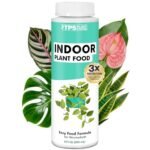
Is the Miracle-Gro Indoor Plant Food review worth reading before you buy? Yes, because this 8 oz liquid fertilizer is the easiest way to keep houseplants fed, but it has quirks you should know about. It’s cheap, simple, and effective for most common houseplants, though the measuring cap is genuinely annoying.
Strong ratings and a convenient two-pack make it a solid mid-market choice with dependable performance for the price.
Price vs. rivals
Typical
CheaperTypicalPricier
Priced around the typical mid-range for liquid indoor plant foods, given the two-pack convenience and brand recognition.
Ease of use
Excellent 95/100
The product is easy to use with clear mixing instructions, making it straightforward for anyone to apply regularly.
Overview
This is a liquid fertilizer made for indoor potted plants. You dilute a capful into a quart of water, water your plants with it, and repeat every two weeks during growing season. It solves the basic problem every plant owner faces: keeping plants alive without turning feeding into a chemistry project.
It’s really for people with a mix of common houseplants—pothos, monstera, snake plants, philodendron, that sort of crowd. If you want a single product that handles all of them without you needing to research NPK ratios, this is the one.
Key Features
8 oz squeeze bottle, sold as a 2-pack – Each bottle makes about 32 quarts of fertilizer solution. For most folks with a dozen or fewer plants, that’s several months of feeding per bottle.
10-10-10 balanced NPK ratio – Equal parts nitrogen, phosphorus, and potassium covers the broadest range of houseplants. You don’t have to match the fertilizer to the plant’s bloom cycle, which is exactly the point.
Concentrated liquid formula – Unlike granular fertilizers that sit on the soil surface, this mixes straight into your watering can. Nutrients reach roots immediately.
Works with all indoor potted plants – The label is straightforward: houseplants, container plants, even edibles grown indoors. One bottle replaces a shelf full of plant-specific fertilizers.
Clear dosing instructions – The cap has a fill line at one teaspoon, and that makes measuring dead simple, even if the cap itself is messy.
Fit for You
You have more than three houseplants and you’re tired of remembering which one needs what.
You’re a beginner who just learned that water alone doesn’t keep plants alive forever.
You want a fertilizer that works the same way every time, with no guesswork.
You travel or get busy, because feeding every 14 days is forgiving if you miss a week.
You have a mix of leaf plants and flowering houseplants and want one bottle for all of them.
Uses
Picture your pothos looking a little pale in February. You mix one capful into your watering can, give it a normal drink, and within a week or two the new leaves come in greener. That’s the main event here.
It also earns its keep when you’re propagating. After cuttings root in water, moving them to soil with a gentle feeding helps them settle in faster. The fertilizer is mild enough that you won’t burn tender new roots.
One more scene: you repotted a snake plant last spring, and this summer it’s pushing out new shoots. A monthly feeding gives it the nutrients that fresh potting mix lacks once the nutrients get washed out.
Experience
Mixing a batch takes about thirty seconds. You fill a quart container with water, add one capful, stir, and water your plants. The formula dissolves instantly, and there’s no lingering smell. You’ll see results within a couple of weeks, mostly in new leaf growth and darker green color.
The catch is the cap. The fill line sits small, and when you pour, the fertilizer tends to drip down the side of the bottle. It’s sticky, and the residue on the cap gets crusty between uses. Not a dealbreaker, but keep a damp cloth nearby.
Another small annoyance: the cap isn’t a measuring cup with a pour spout. It’s just a cap with a line. If you overpour, there’s no way to push the excess back in cleanly. You’d think for a product this mature, they’d have fixed this by now.
Pros and Cons
Pros
Works on everything – One bottle feeds your entire indoor plant collection, no separate formulas needed.
Forgiving for beginners – The dose is small and gentle, so a slightly over-generous pour won’t kill your plants.
Inexpensive – At around $11 for two bottles, each quart of fertilized water costs pennies.
Fast results – Liquid fertilizer reaches roots quickly, and you’ll notice new growth within two weeks.
Cons
Messy cap design – The fill line is small, and the liquid drips down the side when you pour. Plan for sticky fingers.
Must remember to feed – Unlike slow-release granules that feed for months, this needs reapplication every two weeks.
Easy to overuse – Because it’s liquid, you might get enthusiastic and feed more often. That’s harmful, not helpful.
Advantages
The biggest advantage this has over granular fertilizers is immediacy. Granules need time to break down and require soil moisture to activate. With this liquid, you’re not waiting—the nutrients are available the moment you water. That matters when a plant looks hungry and you want to act.
It’s also gentler than some synthetic powders, which can be harsh if you mis-measure. The balanced formula handles most houseplants without overloading them.
Who Should Buy
Buy it if you’re new to houseplants and want one simple product that works.
Buy it if you have a diverse collection and hate keeping multiple fertilizer bottles.
Buy it if you’ve been relying on potting mix alone and want an obvious boost in leafy growth.
Skip it if you only have a single, slow-growing cactus or succulent that needs feeding once a year.
Skip it if you prefer set-it-and-forget-it fertilization—look for a slow-release granule instead.
FAQ
Is the Miracle-Gro Indoor Plant Food worth it?
Yes, for the price and convenience. Two bottles cost about $11 and last months, making it one of the most cost-effective ways to feed a normal houseplant collection.
How long does a bottle last?
Each bottle makes about 32 quarts of fertilized water. If you have ten plants and water them weekly, one bottle easily lasts three months, often longer.
Can I use this on my outdoor potted plants?
The label is for indoor plants, and the concentration is gentle enough for container plants outside, but you’ll need to feed more often since rain flushes nutrients out of pots.
Is it safe for my pets?
The fertilizer itself isn’t marketed as pet-safe, so keep the bottle out of reach and don’t let pets drink the treated water. Ingesting large amounts could cause stomach upset.
How often should I feed plants?
Every 14 days during spring and summer. In fall and winter, skip feeding entirely because most houseplants go semi-dormant and need a rest.
Final Verdict
The Miracle-Gro Indoor Plant Food is one of the best indoor plant food for all houseplants if you want a single, foolproof fertilizer that covers everything. It’s cheap, effective, and available everywhere.
Keep in mind that it’s not a magic serum—your plants still need the right light and proper watering. But for feeding, this is the one to start with.
Miracle-Gro Indoor Plant Food vs the Competition in 2026
Miracle-Gro Indoor Plant Food sits in an odd spot in the fertilizer aisle. It’s not technically the best value, nor is it the most specialized. What it is, is the default—the bottle you buy when you just want your potted plants to stop looking sad without needing a chemistry degree. For a lot of people, that’s all they need. But the market for plant food has changed. Let’s stack it up against a few real alternatives to see where it wins, and where you might want to pass.
Product
Price Range
Key Strength
Key Weakness
Best For
Miracle-Gro Indoor Plant Food (8 oz Squeeze)
Mid (~$11 for two)
No mixing, no measuring, no mess
Generic 1-1-1 ratio; mostly water
Absolute beginners and casual plant owners
Jack’s Classic All Purpose (Powder)
Budget (~$15 for 100+ gallons)
Pennies per feeding. Huge volume.
Requires mixing; easy to over-fertilize
Large collections or budget-focused growers
Osmocote Smart-Release (Granules)
Mid (~$15 for 1.5lb jar)
Apply once every 6 months. Forgiving.
Ineffective in compacted or very dry soil
People who forget to fertilize
Dyna-Gro Foliage Pro (Liquid Concentrate)
Premium (~$20 for 8 oz concentrate)
Superior 9-3-6 ratio for foliage & micronutrients
Requires a syringe; smells strong
Plant enthusiasts with rare or expensive plants
Miracle-Gro Indoor Plant Food vs Jack’s Classic indoor plant food
The biggest argument against the Miracle-Gro squeeze bottle is simple: you are paying a lot for water. Jack’s Classic comes as a yellow powder in a bag. That $15 bag mixes up into over 100 gallons of active fertilizer. The 8 oz Miracle-Gro bottle? You’re lucky to get 2 gallons out of it before it’s empty. The cost-per-feeding difference is massive. But here’s the thing: Jack’s requires you to mix it. If you’re the kind of person who leaves the bottle on the shelf and forgets, that extra step is a real barrier. Jack’s also runs a much higher N-P-K (20-20-20), which is a meal for hungry plants but a risky burn for succulents or slow growers. Miracle-Gro’s weak 1-1-1 mix is safer to be lazy with.
Miracle-Gro Indoor Plant Food vs Osmocote Smart-Release
Osmocote takes the “frictionless” idea even further. You sprinkle these pelleted capsules on the soil, water once, and the coating releases food every time you water for six months. It sounds perfect. The catch is that Osmocote relies on consistent moisture to activate evenly. If your soil goes bone dry, the release pauses. Then when you water heavily, it dumps. The Miracle-Gro bottle gives you manual control—you choose to squeeze or not to squeeze every time you water. For a routine houseplant watering schedule, Osmocote wins on laziness. For a more hands-on approach where you adjust feeding based on season or growth, stick with the liquid.
Miracle-Gro Indoor Plant Food vs Dyna-Gro Foliage Pro
This is the enthusiast choice. Dyna-Gro Foliage Pro is formulated entirely differently. Instead of a generic balanced ratio, it uses a 9-3-6 NPK plus a whole list of micronutrients like calcium and magnesium that Miracle-Gro outright skips. The result? Leaves get greener, stems get thicker, and plants seem to handle stress better. But Dyna-Gro is work. You need to measure milliliters with a dropper. The concentrate smells like a chemical lab. It’s also expensive upfront. If you own a single Pothos from the grocery store, you will not see the difference. If you own a rare Philodendron that cost $200, you absolutely will.
So who should buy the Miracle-Gro Indoor Plant Food? If you have a few plants on your windowsill and you want to feed them without thinking, this is for you. It’s the best indoor plant food for all houseplants if the alternative is feeding nothing at all. The perfect indoor plant fertilizer for beginners that aren’t ready to measure powders. But if you have a jungle of twenty plants you want to feed on a budget, skip it and buy Jack’s Classic. And if you’re chasing that next new leaf on an expensive cutting, skip it and buy Dyna-Gro. Miracle-Gro handles the middle ground—the casual owner keeping pothos alive. For everyone else, the alternatives offer a better fit.
Ready to decide on the Miracle-Gro Indoor Plant Food?
See today’s price, stock and delivery options on Amazon.