High user ratings and innovative dual applicator justify strong value-to-price fit at a modest price point.
Price vs. rivals
Typical
CheaperTypicalPricier
Priced moderately above standard super glues due to the specialized brush and nozzle applicator.
Ease of use
Excellent 90/100
The brush and nozzle applicator provides precise control and reduces mess, making it easy for most people to use, though caution is still needed to avoid accidental bonding.
Overview
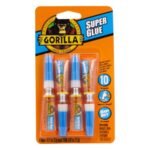
The Gorilla Super Glue Brush is a 12-gram tube of clear cyanoacrylate adhesive with a two-way applicator: a brush on one end and a precision nozzle on the other. It solves the classic super glue headache – either you squeeze out too much and make a mess, or the nozzle clogs before you finish the job. This one lets you dab, brush, or spot-apply, which changes the game for small fixes around the house.
It’s really for anyone who glues more than one thing a year. If you do craft work, repair plastic toys, or keep a junk drawer of broken stuff you’ll “get around to,” this is the format that actually works without swearing.
Key Features
Brush applicator: You paint the glue exactly where you want it, no squeezing, no blobs. Great for thin films on flat surfaces or inside a crack.
Precision nozzle: Flip the cap and you’ve got a fine tip for dotting glue into tight spots – like a snapped hinge pin or a ceramic handle.
Clear formula: It dries transparent, so it won’t ruin the look of a glass repair or a clear plastic part. The glue itself is thick enough not to run everywhere.
Anti-clog cap: The cap has a built-in pin that clears the nozzle when you close it. That alone saves the tube from drying out after three uses.
Impact-tough bond: It sets in about 10–30 seconds; full strength in 24 hours. The bond holds up to minor flexing, which matters for plastic repairs that take a bit of stress.
12 g size: Small enough to keep in a drawer, big enough for a dozen small repairs. You won’t waste half the tube because it hardened.
Fit for You
You’ve got a pair of glasses where the arm snapped at the hinge and you need a precise drop, not a flood.
You fix kids’ toys – the kind where the wheel pops off and you need to glue a tiny axle back into a plastic socket.
You craft with resin or polymer clay and need adhesive for attaching findings or mending a broken piece without visible glue lines.
You’ve ever thrown away a half-full tube of super glue because the nozzle was glued shut, and you’re done with that nonsense.
You repair small electronics enclosures – say, a remote control battery cover clip – and the glue has to go exactly in the crack, not all over the circuit.
You want one adhesive that works on plastic, metal, ceramic, wood, and rubber without having to read five different bottle labels.
Uses
I’ll give you a scene. Your coffee mug loses its handle. Normal super glue drips down the side, makes a white crust, and the handle still wobbles. With the brush nozzle, you paint a thin layer on both broken edges, press for fifteen seconds, and it’s solid. The clear glue disappears on the ceramic. You’re back to drinking coffee in five minutes.
Another common one: a plastic eyeglass frame snaps at the bridge. Precision nozzle gets a tiny drop into the break line. Hold it. Done. You don’t end up with glue on the lenses or your fingers. That alone makes this worth the $6.
For crafters, it’s great for attaching gemstones to a phone case or mending a broken resin figurine. The brush lets you cover a large area evenly – think gluing a thin sheet of plastic back onto a model – without puddles. And because it’s clear, you don’t get that cloudy residue that ruins a finished piece.
Experience
Out of the box, the tube is small – about the size of your thumb. The cap has two ends: one side with the brush, the other with the nozzle. You twist to switch. The first time you use it, you’ll notice the brush is soft and doesn’t shed bristles. Dip it, wipe off a little on the rim, and paint. The glue flows evenly, not too watery, not too thick.
The catch: the brush picks up a decent amount of glue, so you have to be careful not to paint it too thick. Thin layer bonds better anyway. And the brush will stiffen if you leave it uncapped for more than a minute, so keep the lid handy. The anti-clog pin in the cap works well – I’ve had the same tube for four months now and the nozzle still opens.
One annoyance: the tube is opaque, so you can’t see how much glue is left. You’ll eventually get a surprise when it runs dry mid-fix. Also, the brush end can get messy if you don’t wipe it before capping – dried glue builds up on the rim and makes twisting the cap stiff. A quick wipe with a paper towel after each use solves that.
Odor is typical cyanoacrylate – sharp, but not overpowering. Ventilate if you’re doing more than a dab. Cleanup is acetone (nail polish remover) or just let it wear off. It bonds skin almost instantly, so keep it away from your fingers. That’s true of any super glue, but the brush makes accidental contact more likely – your hand might brush the bristles. Learn from my regret: rinse with warm soapy water immediately, don’t try to peel.
Pros and Cons
Pros
Brush application gives you control: You can paint a thin, even layer without squeezing the tube. Less waste, fewer mistakes.
Two applicators in one package: The brush for broad or angled spots, the nozzle for pinpoint drops. You don’t need two separate glues.
Dries clear: Invisible on glass, clear plastics, and light-colored surfaces. No white residue if you use a thin coat.
Anti-clog cap actually works: Unlike many tubes that solidify after one use, this one stays fresh for months if you close it properly.
Strong bond on most materials: Plastic, metal, ceramic, rubber, wood – I’ve used it on all four, and it holds under normal use.
Affordable at about $6: Cheaper than specialty super glues, and you won’t need to replace it as often because it doesn’t dry out in the tube.
Cons
Opaque tube hides remaining glue: You can’t see how much is left until you squeeze and nothing comes out. Buy a spare if you rely on it.
Brush can get messy if not cleaned: Dried glue on the rim of the brush cap makes the lid hard to unscrew. A quick wipe avoids the headache.
Not gap-filling or flexible: For larger cracks or rubbery surfaces (like a shoe sole), you’d want a gel or a flexible adhesive instead. This is for tight-fitting parts.
Bonds skin instantly: The brush makes it easy to accidentally coat a finger. Have acetone handy if you’re clumsy.
Takes 24 hours for full strength: You can use the item after a few minutes, but don’t stress the bond for a day. Some other super glues reach full strength faster.
Advantages
Compared to typical squeeze-tube super glues (the kind with a tiny red cap that always clogs), the Gorilla Super Glue Brush is a huge upgrade in control and longevity. The brush applicator alone justifies the price – you’ll waste less glue and get better results on flat surfaces. The anti-clog cap is the quiet hero; most tubes I’ve owned are single-use because the nozzle seals itself shut. This one keeps going.
When you look at Gorilla Super Glue vs Loctite, the edge here is versatility. Loctite’s liquid control gel is good for vertical surfaces, but the brush gives you precision painting that a drop can’t match. For plastic repairs in particular – think a broken headphone arm or a snapped laptop stand – the brush lets you coat both edges evenly, which means a stronger bond. Loctite’s Precision line has a needle tip, which is better for tiny holes, but the brush-nozzle combo covers both jobs.
Who Should Buy
Buy it if: You do any kind of craft or repair work on small, flat surfaces – plastic models, ceramic knickknacks, glasses, toys. The brush makes it easy to apply a thin, even coat without mess.
Buy it if: You’re tired of super glues that dry out after one use. The cap design genuinely extends the tube’s life.
Buy it if: You want one adhesive that works on multiple materials and dries clear. It replaces three bottles in your drawer.
Skip it if: You mostly glue flexible materials like rubber soles or vinyl. You need a flexible adhesive, not a rigid cyanoacrylate.
Skip it if: You need to fill gaps – say, a wobbling chair leg. For that, get a wood glue or epoxy putty. This super glue works only when parts touch tightly.
Skip it if: You only glue things once a year. A regular tube costs less and you won’t care about the cap. But honestly, the brush is so much nicer you might find excuses to fix stuff.
FAQ
Is the Gorilla Super Glue Brush worth it?
Yes, for most home repairs and crafts. The brush gives you control you don’t get with a standard squeeze tube, and the anti-clog cap keeps the glue usable long after cheaper bottles have hardened. At $6, it’s a small price for less frustration.
How long does Gorilla Super Glue Brush last on plastic?
Properly applied to clean, tight-fitting plastic parts, the bond holds for years. The glue forms a permanent, impact-resistant bond. Expect to snap the part again before the glue fails – plastic breaks, the glue line usually doesn’t.
Is Gorilla Super Glue Brush good for plastic repairs?
Yes, it’s one of the best super glue for plastic repairs because the brush lets you wet both surfaces evenly – that’s what gives you maximum adhesion. It works on ABS, polycarbonate, acrylic, and many other common plastics. Not great on polypropylene or polyethylene (those need special primers).
Does Gorilla Super Glue Brush work on glass?
Yes, and the clear formula makes it invisible. Apply a thin layer to both edges, press for 15 seconds. It bonds firmly to glass, but the joint is brittle – if you drop the piece, the glass may break elsewhere, not the glue line. Use it for decorative repairs, not load-bearing glass.
Is Gorilla Super Glue Brush safe for food containers?
No, it’s not food-safe. Cyanoacrylate is non-toxic once cured, but the US FDA hasn’t approved it for direct food contact. Don’t repair the inside of a mug or a cutting board. For ceramic repairs on the outside only, it’s fine – just keep glue away from food areas.
Does the brush nozzle clog easily?
Not if you use the built-in pin in the cap. Twist the cap on – the pin pokes through the nozzle, clearing dried glue. That’s a real design improvement. I’ve had the same tube for four months and the nozzle still flows. The brush does need occasional cleaning, though.
Final Verdict
The Gorilla Super Glue Brush is a smart redesign of a product everyone knows. The brush solves the age-old problem of too much glue in the wrong place, and the anti-clog cap means you won’t toss a half-full tube in frustration. It’s not perfect – the opaque tube and occasional brush mess are real gripes – but for under six dollars, it’s the super glue you actually want to use.
If you fix things around the house, glue plastic models, or just want one clear adhesive that works on most materials without guesswork, buy it. If you’re a very occasional user, you might not need the brush, but honestly, you’ll wonder how you ever lived without it. One trade-off to remember: thin coats work best, so don’t slather it on. Paint it on, hold it, and move on.
Gorilla Super Glue Brush vs the Competition in 2026
The Gorilla Super Glue Brush sits in a specific pocket of the market. It’s not the cheapest option, and it’s not the most industrial-strength. But what it does — give you control over where the glue actually lands — it does better than almost anything else in that $5–7 range. The brush-and-nozzle combo is the whole story here. Whether that story has a happy ending depends on whether you’re repairing a ceramic vase or just trying to glue two flat blocks together.
Product
Price Range
Key Strength
Key Weakness
Best For
Gorilla Super Glue Brush (12 g)
Around $6
Brush + nozzle combo for pinpoint control
Brush can stiffen if cap isn’t wiped clean
Precision repairs, clear finish needed
Loctite Super Glue Liquid
Around $4–6
Rock-solid bond, trusted brand
No applicator; easy to over-apply or drip
General fixes where precision isn’t critical
Krazy Glue Brush & Nozzle
Around $5–7
Similar brush design, decent plastic bond
Brush bristles fray over time, cap gets crusty
Quick household fixes on the go
Gorilla Super Glue Original (tube)
Around $4–5
More glue per dollar, simple squeeze
No brush, messy, easy to squeeze too much
Bigger repairs, budget-minded buyers
Gorilla Super Glue Brush vs Loctite Super Glue Liquid
This is the comparison most people are here for. Loctite’s liquid formula is the old guard — you squeeze the tube, a drop forms, you pray it lands where you aimed. It works fine for a cracked mug handle or a loose cabinet knob. But for anything where the glue needs to go exactly there, and not spread to that spot right next to it, the Gorilla brush wins. Those bristles let you paint a thin, controlled layer onto a broken plastic earring clasp or a split phone case edge without flooding the whole surface. Loctite will bond stronger on a flat join, no question — its liquid seeps into cracks better. But the Gorilla Super Glue Brush gives you placement control that Loctite’s bottle simply doesn’t offer. If you’re asking “is Gorilla Super Glue worth it” for small, visible repairs, the answer is yes, because you’ll waste less glue and get a cleaner result.
Gorilla Super Glue Brush vs Krazy Glue Brush & Nozzle
Krazy Glue makes a brush-and-nozzle product too, and at first glance they’re twins. In practice, the Gorilla brush is stiffer and holds its shape after a dozen uses. The Krazy Glue version tends to develop a crust around the cap threads within a week or two, making it stick shut at exactly the wrong moment — like when you’re mid-repair and the cap won’t budge. The Gorilla Super Glue clear adhesive also stays genuinely clear as it dries. Krazy Glue’s formula can turn a little milky on transparent plastics, which defeats the point of using a clear glue in the first place. For the best super glue for plastic repairs where appearance matters — say, fixing a clear glasses frame or a plastic trinket — the Gorilla brush pulls ahead. You’ll pay maybe a dollar more, but for a repair that doesn’t look like a repair, that’s a fair trade.
If you’re gluing large flat surfaces or trying to save every penny, grab the standard tube. If you need to place glue precisely and want a clean, invisible bond on plastic, the Gorilla Super Glue Brush is the right pick. The brush nozzle makes it worth the extra dollar — assuming you remember to wipe the cap clean.
Ready to decide on the Gorilla Super Glue Brush?
See today’s price, stock and delivery options on Amazon.