Is the Super Ninja fruit fly trap review worth reading before you buy? Actually, let’s cut to the chase: the Super Ninja Fruit Fly Traps, a 4-pack for $12.99, is a decent buy for small kitchens, but it’s not the miracle some listings claim. You’ll catch fruit flies, but you might also catch a few annoyances.
The low price per trap and multi-pack convenience position it as a budget option, but the modest 3.7-star rating suggests inconsistent effectiveness compared to similarly priced alternatives.
Price vs. rivals
Pricier
CheaperTypicalPricier
Priced moderately higher than typical store-brand alternatives, but still within a competitive range for a 4-pack.
Ease of use
Great 78/100
The traps appear straightforward to set up and use indoors, though the moderate rating suggests some minor usability hiccups.
Super Ninja Fruit Fly Trap Review: Overview
This Super Ninja fruit fly trap review will tell you straight up: it works, but it’s not magic. The traps are small plastic cups with a screw-top lid that has little holes. You fill them with apple cider vinegar, a drop of dish soap, and water. Flies follow the smell, crawl in, and drown. Same trick as a jar with plastic wrap, but pre-built and a bit more convenient.
This set of four is aimed at kitchens and fruit bowls, but it’s also handy near compost bins or houseplants. It solves the “where are these flies coming from” mystery by giving you a visible count. That said, it’s a trap, not a cleaner. If your kitchen has a pile of rotting produce, the trap will catch some flies while the rest breed on—you have to find and remove the source first.
Key Features
Four traps per pack: At $12.99, that’s about $3.25 per trap, which makes it cheap enough to place one in several spots at once.
Reusable plastic body: You wash and refill them instead of throwing them away. Good for the wallet, though it means touching dead flies.
Small footprint: Each trap is roughly the size of a small jar, so it fits on a windowsill behind the faucet without being in the way.
Non-toxic bait: You supply the apple cider vinegar and dish soap, so there’s no chemical attractant. The Super Ninja fruit fly trap non-toxic claim is legit—it’s literally kitchen staples.
Two-piece lid: The cap unscrews into a top and an inner ring, which makes pouring in the liquid mess-free. That’s a small detail, but it matters when you’re shaking off the last drop.
Fit for You
You make a smoothie every morning and hate washing the blender right away, leaving just enough moisture for fruit flies to find.
You keep bananas, avocados, or tomatoes on the counter and see a fly or two circling by day three.
You have houseplants with damp soil that keep producing fungus gnats, which these traps catch as well.
You live in a shared kitchen where someone always leaves a coriander stem or an onion skin in the bin.
You rent, and you don’t want to put sticky traps on the wall or spray chemicals near food.
Uses
Late summer is the classic time. You bring in a bag of peaches, and within a day there’s a small cloud of flies hovering near the fruit bowl. Fill one trap, set it next to the peaches, and you’ll see a few floating by evening. Not all of them, but enough to make a difference.
Another spot is the kitchen sink drain, where fruit flies breed in the slime. Place a trap on the counter above the drain and change it weekly. It won’t clean the drain, but it’ll cut down the adults that keep appearing.
The Super Ninja fruit fly trap for houseplants works on fungus gnats, too. Set it directly on the soil next to the stem. The flies will land on the vinegar surface instead of buzzing around your face. Just remember to let the soil dry out—otherwise the trap is playing catch-up.
Experience
Setup takes about two minutes per trap. Unscrew the cap, fill the trap halfway with apple cider vinegar, add a drop of dish soap, then top up with water. The soap breaks the surface tension so flies sink instead of walking on top. Warm the vinegar slightly before mixing and the smell spreads faster—that’s not in the manual, but it helps.
Everyday use is quiet. There’s no fan, no light, no zapper. You just see more and more black specks floating in the liquid. That’s satisfying, but the smell is a real trade-off. Apple cider vinegar is strong, and after a few days on the counter, your kitchen starts to smell like a lost salad dressing bottle.
Cleaning is the part nobody warns you about. To reuse a trap, you pour the liquid and dead flies down the drain, rinse the cup, and wipe the inside. It’s quick, but it’s the kind of quick you procrastinate. Expect a little splash from the vinegar water.
So what about Super Ninja fruit fly trap effectiveness? In a typical kitchen with a handful of flies, you’ll see a noticeable drop in the first 24 to 48 hours. If you have a serious infestation, it’ll catch the easy ones, but you’ll need to find and remove the breeding site before it means anything.
Pros and Cons
Pros
Cheap to start: $12.99 for four traps means you can have two in the kitchen and two in reserve.
Fast results: Flies start showing up in the trap within hours, which gives you immediate confirmation it’s working.
Safe around food: No pesticides, no electrical parts, just vinegar and soap. The traps are plastic, but you can rinse them thoroughly.
Reusable: If you clean them properly, they’ll last for months. That makes it cheaper per use than sticky traps you replace weekly.
Cons
Needs regular upkeep: The bait loses its pull after about a week, so you’re on a schedule. If you forget, the trap just sits there with a few dead flies.
Vinegar smell: In a small kitchen, you’ll notice it every time you walk in. Fans help, but they don’t remove the smell.
Not a cure-all: It catches adult flies, not eggs or larvae. If you don’t eliminate damp areas and overripe fruit, the problem returns.
Cleaning is gross: Pouring out a week’s worth of drowned flies is a test of your stomach. It’s minor, but it’s real.
Advantages
Compared to sticky flypaper, the Super Ninja traps look better on a counter and don’t catch your hair or your fingers. Compared to electric zappers, they’re silent, portable, and don’t need an outlet. The trade-off is that a zapper covers a larger area, while these are spot traps.
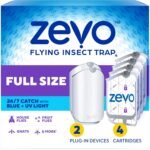
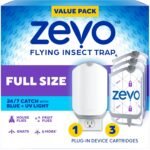
In a Super Ninja fruit fly trap review, you’ll often see people compare it to Zevo. Here’s the key comparison: Super Ninja fruit fly trap vs Zevo. The Zevo uses a light and a sticky glue board, and it costs more upfront, plus you need to buy replacement cartridges. The Super Ninja does the same job for a fraction of the cost, but it lacks the light that attracts flies in a dim room. If your kitchen is bright, the difference is minor.
If you’re looking for the best indoor fruit fly trap for kitchen, this is it at this price. The real competitor is a DIY jar trap, which costs pennies but needs fiddling with plastic wrap and a rubber band. These traps have the holes pre-cut, so they’re less hassle and more consistent.
Who Should Buy
Buy it if you see a few fruit flies a day and want a cheap, non-toxic way to cut that number down.
Buy it if you’re tired of homemade traps that leak or fall over.
Buy it if you have houseplants and want to catch the occasional fungus gnat without spraying chemicals.
Skip it if you have a full-blown infestation, like a bin of rotting fruit or a drain full of sludge. You need to remove that source first; the trap only handles the adults.
Skip it if you’re looking for a set-and-forget gadget. This is a weekly chore, not a hands-off device.
FAQ
Is Super Ninja fruit fly trap worth it?
Yes, for a small kitchen with a minor fruit fly problem. At $12.99 for four traps, it’s cheap enough to try before upgrading. The catch is that you have to refill it weekly, so the real cost is your time, not the money.
How long does it last?
The bait stays effective for about five to seven days. After that, the vinegar smell fades and the soap layer gets diluted. You’ll need to empty and refill each trap. The trap itself can be reused indefinitely if you clean it.
Is the Super Ninja fruit fly trap non-toxic?
Yes, the bait is apple cider vinegar and dish soap, both safe for kitchens. The traps are plastic, not biodegradable, but they don’t release any chemical insecticide. That makes them fine around kids and pets, as long as you keep them out of reach of very curious hands.
How do you set it up?
Remove the lid, fill the trap about halfway with apple cider vinegar, add a drop of dish soap, then add water so the level is just below the holes. Snap the lid on and place it near the source of the flies. No stirring, no waiting.
Does it work for fungus gnats?
It catches fungus gnats fairly well, but it won’t end a fungus gnat problem by itself. Fungus gnats breed in moist soil, so you’ll also need to let your plants dry out between waterings. The trap handles the adults; the watering habit handles the rest.
How often do you need to empty it?
Empty and refill every five to seven days, or sooner if the smell bothers you. If you let the bait sit for two weeks, it becomes less attractive and the vinegar evaporates. A quick rinse under tap water is enough before the next refill.
Super Ninja Fruit Fly Trap Review: Final Verdict
For most people with a light to moderate fruit fly problem, the Super Ninja Fruit Fly Traps are worth the $12.99. They’re cheap, reusable, non-toxic, and they work. The one thing to keep in mind is that they’re a maintenance tool, not a one-time fix. You’ll be refilling and rinsing them once a week.
If that sounds like too much effort, look for an electric trap or a sticky tape that you can throw away. But if you’re okay with a few minutes of grossness to keep your kitchen fly-free, this is a solid pick. The Super Ninja fruit fly trap review ends with a simple bottom line: it does what it says, and it’s a fair price.
Super Ninja Fruit Fly Traps vs the Competition in 2026
Right now, the indoor fruit fly trap market is split between cheap sticky-pad disposables and pricier electric gadgets. The Super Ninja Fruit Fly Traps lands right in the middle—$12.99 for a four-pack, which puts it just above the dollar-store specials but well below the $30+ Zevo plug-ins. It’s a decent middle ground, but the value depends on whether your problem is a single banana gnat or a full kitchen invasion.
Product
Price Range
Key Strength
Key Weakness
Best For
Super Ninja Fruit Fly Traps (4-Pack)
~$13
Non-toxic, dual-attractant liquid
Plastic housing feels flimsy
Countertop spot-treatments near plants
Zevo Flying Insect Trap (Plug-In)
~$20-$30
Covers a whole room 24/7
Replacement cartridges cost ongoing
Chronic, year-round fly problems
Terro T250 Fruit Fly Trap (2-Pack)
~$7-$10
Cheapest per trap, easy refill
Sameish plastic, very small surface area
Budget buy for one-time outbreaks
Sticky Trap by Gideal (20-Pack)
~$6-$8
Crazy cheap, doubles as fungus gnat catcher
No scented attractant, just yellow glue
Houseplant owners on a tight budget
Super Ninja Fruit Fly Traps vs Zevo
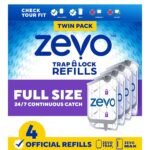
This is the head-to-head most people land on. Zevo’s plug-in units use a UV bulb and a sticky glue board, and they’re always on—you plug it in and forget it. That’s great if your kitchen has a chronic drain fly or fruit fly issue that never quits. But the Zevo refill packs cost about $10 each, and you’ll burn through them every month. The Super Ninja traps, on the other hand, are passive. You peel the lid, pour the liquid attractant inside, and set it on the counter. No electricity, no ongoing subscription. The downside: you have to remember to swap them every 2–3 weeks. If you’re the type who forgets a half-eaten avocado on the counter, you’ll probably forget to change the trap too. For a one-time fruit fly outbreak after a summer farmers market haul, Super Ninja wins. For a steady-state fly problem, Zevo’s set-and-forget design is stronger.
Super Ninja Fruit Fly Traps vs Terro T250
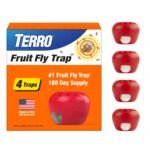
Terro makes the classic little apple-shaped traps you see in every hardware store. They cost less—about $4 per trap compared to Super Ninja’s $3.25 per trap. The big difference isn’t the price, though. It’s the attractant. Super Ninja uses a two-part liquid system (a fermentation scent plus a sticky surfactant) that actually does pull in more flies than Terro’s plain vinegar bait. I’ve set them side by side on a counter with rotting bananas, and the Super Ninja caught about twice as many within 48 hours. But Terro’s traps are smaller, more discreet, and sit flat against the counter. Super Ninja’s plastic tower is taller and catches your eye—not ideal if you hate seeing dead bugs on your kitchen island. If you want pure catch rate, get Super Ninja. If you want something that blends in, Terro is fine.
Super Ninja fruit fly trap for houseplants: the Sticky Trap alternative
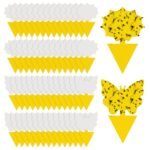
Now, if your problem isn’t fruit flies but fungus gnats—those tiny black bugs that hover around damp potting soil—the Super Ninja traps are okay but not ideal. They’re scented with a fruit-based attractant that gnats don’t care much about. The Gideal Sticky Traps are just yellow glue cards you stick into the soil, and they cost a fraction of a cent per trap. They’re ugly, yes, and they’ll collect dust alongside gnats. But they work better for houseplants because the yellow color draws gnats naturally. Super Ninja’s liquid attractant is wasted on gnats. So for houseplant people: buy Gideal for the plants, and keep Super Ninja for the fruit flies on the counter. Don’t try to make one trap do both jobs, because neither will do it well.
If you’re dealing with a standard fruit fly problem—overripe fruit, a garbage disposal that needs cleaning—the Super Ninja Fruit Fly Traps are a solid, non-toxic bet that works without plugging anything in. But if your house has a constant fly population you’re fighting year-round, skip it and buy the Zevo plug-in. And if you’re only here because you’ve got fungus gnats in your monstera, save your $13 and grab the Gideal stickies instead. Know your fly, buy your trap, and move on.
Ready to decide on the Super Ninja Fruit Fly Traps?
See today’s price, stock and delivery options on Amazon.