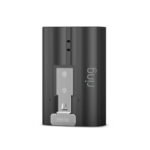
This product's price and capacity align with entry-level magnetic chargers, offering decent value despite average ratings and limited battery size.
Price vs. rivals
Cheaper
CheaperTypicalPricier
Priced well below most popular alternatives in this category, positioning it as an affordable, budget-friendly option for a compact magnetic charger.
Ease of use
Excellent 90/100
The magnetic attachment and wireless charging make it very convenient for average users.
Podoru MagSafe power bank review: is it worth your $17?
The Podoru MagSafe power bank review gets a straight answer: for $16.99, it’s absolutely worth grabbing if you want a slim, grab-and-go backup that doesn’t add bulk. You won’t get lightning speed or a full recharge, but for a quick top-up during a lunch break or a long walk, it does exactly what it promises.
Overview
This is an ultra-slim magnetic charger that snaps onto the back of any iPhone with MagSafe (12 through 15 series). It’s a 5000mAh battery pack—enough to give an iPhone 15 about 60–70% extra juice from dead flat. The whole pitch is convenience: no cables, no fuss, just stick it on and keep moving.
It’s really for people who hate carrying a brick in their bag. You know, the kind of person who wants a backup for the evening commute or a day of light use, not someone planning to charge a tablet or game for hours.
Key Features
Magnetic snap alignment – The magnets line up perfectly with the iPhone’s charging coil, so you don’t have to fiddle. Just place it and it clicks into position.
Ultra-slim profile – At roughly the thickness of a credit card stack, it slips into a jeans pocket without a noticeable bump.
5000mAh capacity – A realistic half-to-two-thirds charge for most modern iPhones. Good for a midday rescue, not for a full charge.
USB-C input – You charge the pack itself via USB-C, which means you can use the same cable you already carry for your phone.
LED indicators – Four tiny lights on the edge show remaining battery level, so you’re not guessing.
Passthrough charging – Plug the pack into a wall charger while it’s stuck to your phone, and both charge at once. Handy for overnight desk use.
Fit for You
You only need a small top-up during a lunch break or a commute, and don’t want to carry a cable.
You have an iPhone 12 or newer and want a backup that stays stuck on the back without a wallet attachment getting in the way.
You often leave the house with 20–30% battery and just need enough to get through a few more hours.
You’re tired of fat power banks that weigh down your bag and take up pocket space.
You want a cheap option to keep in your car glovebox for emergencies without worrying about losing a $50 accessory.
Uses
Picture this: you’re at a coffee shop, your phone hits 15% and you still need directions home. Slap the Podoru on the back, order another drink, and by the time you’re done it’s at 50%. No wires draped across the table.
On a long walk with the dog? Stick it on and keep listening to podcasts. The slim profile means you can still hold the phone one-handed without a weird bulge digging into your palm.
At a concert, it’s a lifesaver. You’re taking photos, checking set times, and your battery is dying fast. The Podoru slides into a tiny crossbody bag and attaches instantly. Just be aware that the charging speed is slower than a wall plug—think 5W to 7.5W, not the 15W you’d get from a MagSafe charger on a desk.
Experience
First impression: it’s smaller than you expect. The packaging is minimal, and the matte finish feels nice—not cheap plastic, but not premium either. You just peel off the protective film and stick it on your phone. The magnets grab firmly; you can shake it lightly and it won’t fall off. But if you have a thick case (especially one with a chunky MagSafe ring or a pop socket), the attachment gets weaker. A slim silicone case works great.
Charging starts automatically when attached. No button pressing, though there is a small button on the side to check battery level. The LEDs are bright enough to read in daylight. One annoyance: the pack gets warm during use. Not alarmingly hot, but warm enough that you notice it if you’re holding the phone for a while. That’s normal for any wireless charger, but worth flagging.
The USB-C charging port is on the bottom edge, which is convenient when you’re charging the pack itself—just plug it in upright. Full recharge of the pack from empty takes about 2–2.5 hours with a 20W adapter. Not fast, but not terrible for the size.
Pros and Cons
Pros
Extremely slim and light – At 0.4 inches thick and under 120 grams, you barely notice it’s there until you need it.
Reliable magnetic hold – Sticks firmly to iPhones with MagSafe, even with a case that has a MagSafe ring.
Great value for the price – $17 is less than half of what Anker charges for a similar spec. You’re not sacrificing build quality for the savings.
Simple operation – No apps, no buttons, no pairing. Stick and charge is the whole workflow.
Good for emergencies – Keeps your phone alive long enough to call a ride or navigate home when you’re caught without a wall outlet.
Cons
Slow charging speed – Expect around 5W to 7.5W, which is noticeably slower than a wired fast charger or a desktop MagSafe pad. Don’t expect a quick burst.
Not enough for a full charge – On a larger iPhone (Pro Max models), you’ll only get about 40–50% extra. You’ll still need a wall charger for a full 0–100%.
Gets warm during use – The pack heats up, which slows charging further and can feel uncomfortable if you hold the phone for a long call.
Magnetic strength varies with cases – If you have a thick or non-MagSafe case, the hold might be too weak to keep it attached securely. A slim case is best.
No built-in lightning cable – Some competitors include a short cable for non-MagSafe devices. This one doesn’t, so it’s iPhone-only for wireless charging.
Advantages
Compared to other ultra-slim magnetic charger options in the same price range, the Podoru strikes a nice balance: it’s slimmer than most, the magnets are strong, and the finish resists fingerprints. Podoru vs Anker MagSafe power bank is the obvious comparison—Anker’s 5000mAh version (the 621) costs about $35 and charges a bit faster (7.5W vs 5W typical) with a built-in kickstand. But the Podoru wins on portability and price. If you rarely need a kickstand and don’t mind slower speeds, you save $18.
Costs less than half of the equivalent Anker model.
Thinner and lighter, so it’s easier to leave attached to your phone all day.
Works with any MagSafe-compatible case, including Apple’s own silicone cases.
Who Should Buy
Buy it if you’re a light to moderate iPhone user and want a low-cost backup that fits in your pocket without a second thought. It’s perfect for keeping in a bag or car for emergencies.
Skip it if you need a full charge for a Pro Max phone or you game heavily. You’ll be frustrated by the slow speed and limited capacity. Look for a best magnetic power bank for iPhone with a larger capacity (10,000mAh) and 15W charging, even if it costs more.
Skip it if you have a super thick case or a non-MagSafe case—without good magnetic alignment, the charging becomes unreliable and the pack may fall off.
FAQ
Is the Podoru MagSafe power bank worth it?
Yes, for $17 it’s a solid value if you want a slim, no-cable backup. Just temper your expectations on speed and capacity—it’s for top-ups, not full recharges.
How long does it last?
The 5000mAh capacity gives about 60–70% extra charge to a standard iPhone 14 or 15. The pack itself takes around 2 hours to fully recharge via USB-C with a 20W brick.
Is it safe for my iPhone battery?
Yes. The Podoru uses standard Qi wireless charging protocols with temperature regulation. It stops charging once your phone hits 100%, so no risk of overcharging.
Does it work through a phone case?
It works best with thin MagSafe-compatible cases (like Apple’s silicone or clear case). Thick cases or those without a magnetic ring will weaken the hold and may prevent charging.
How does the Podoru compare to Anker’s MagSafe battery pack?
The Podoru is cheaper and slimmer, but the Anker 621 charges faster (7.5W vs 5W) and includes a kickstand. If speed and a stand matter, spend the extra; if size and price matter, get the Podoru.
Can I charge it while it’s attached to my phone?
Yes, passthrough charging works. Plug a USB-C cable into the pack while it’s stuck on your phone, and both devices charge together. Handy for overnight.
Final Verdict
The Podoru 5000mAh power bank is a smart buy if you want an ultra-portable backup that disappears in your pocket. It’s not the fastest or the most powerful, but at $17 you’re getting exactly what you pay for—a reliable, no-hassle magnetic charger for short-term rescue. The main thing to keep in mind: don’t expect it to replace a wall charger. Use it as a buffer, not a solution, and you’ll be glad you have it.
For anyone asking is Podoru power bank worth it, the answer is a quiet yes—especially if you value compactness over raw capacity. Just grab a slim case to go with it, and you’re set.
Podoru MagSafe power bank vs the Competition in 2026
The Podoru MagSafe power bank sits at the budget end of the magnetic battery market, and for $16.99 it’s hard to ignore. But “cheap” doesn’t always mean “good enough.” To help you decide, I’ve pitted it against three real alternatives: the Anker 621 MagSafe Battery, the Belkin BoostCharge Magnetic 5000, and the Mophie Snap+ Juice Pack Mini. Each has its own trade-offs in size, speed, and overall feel. Here’s how they actually stack up.
Product
Price Range
Key Strength
Key Weakness
Best For
Podoru MagSafe Power Bank 5000mAh
Under $20
Ultra-slim profile and low price
Delivers only 7.5W wireless; build feels a bit hollow
Budget buyers who want a barely-there backup for a single top-up
Anker 621 MagSafe Battery (5000mAh)
Around $35–40
Solid magnetic hold and reliable charging
No USB-C output port; thicker than the Podoru
Anyone who trusts Anker’s reputation and doesn’t mind wired-only passthrough
Belkin BoostCharge Magnetic 5000mAh
Around $30–35
Built-in foldable kickstand for hands-free viewing
Heavier; wireless output still capped at 7.5W
People who watch video while charging and want a stand integrated
Mophie Snap+ Juice Pack Mini 5000mAh
Around $45–50
Premium materials, a USB-C cable included, and a more Apple-like aesthetic
Pricey for the same capacity; charging speed not better than Podoru
Ecosystem loyalists who value design and a bundled cable over pure specs
Podoru MagSafe power bank vs Anker 621 MagSafe Battery
This is the most obvious “is the extra cash worth it?” comparison. The Anker 621 costs more than double the Podoru’s $16.99. What do you get for that money? A slightly stronger magnetic grip — the Podoru’s magnets hold your iPhone fine for sitting on a desk, but if you toss the pair into a bag, the Podoru can shift. The Anker stays put better. On the other hand, the Anker 621 lacks a USB‑C output port; you can only charge its internal battery through the USB‑C port, not charge a phone through it. The Podoru gives you a USB‑C output, so you can also top up earbuds or a second phone. For many, that makes the Podoru more versatile, but you do lose that rock-solid magnetic security. If you mostly use the battery at a desk and want a slim backup you won’t cry about losing, the Podoru wins. If you need a tighter grab for pockets or bumpy rides, spend up for the Anker.
Podoru MagSafe power bank vs Belkin BoostCharge Magnetic 5000
The Belkin BoostCharge adds a trick the Podoru doesn’t: a foldout kickstand. It’s genuinely useful for propping up your iPhone for FaceTime or YouTube while it slurps juice. But the Belkin is noticeably thicker and heavier — about a quarter more bulk. The Podoru is one of the slimmest magnetic packs I’ve seen at this capacity; it’s barely thicker than a credit card stack. That slimness means it doesn’t add much weight when you stick it on the back of your phone, and it doesn’t create a weird lump in a jeans pocket. The Belkin’s kickstand also makes it less pocket-friendly. And here’s a dirty secret: both top out at 7.5W wireless charging for iPhones. So the Podoru is not slower in real-world use. Pick the Belkin only if you regularly watch video while charging. Otherwise, the Podoru is lighter, cheaper, and just as fast.
Podoru MagSafe power bank vs Mophie Snap+ Juice Pack Mini
Mophie charges a premium for polish. The Snap+ Juice Pack Mini feels solid in the hand — soft-touch plastic, tidy seams, a satisfyingly heavy weight that says “expensive.” It also includes a short USB‑C cable in the box, something the Podoru skips. But for that $45–50 price, you’re still getting the same 5000mAh capacity and the same 7.5W wireless output. The Podoru, at a third of the cost, charges your phone at the same speed and is actually a few grams lighter. The Mophie’s advantage is that you’ll want to keep it on your desk because it looks nice; the Podoru feels more like a utilitarian tool you’d toss in a backpack. If you care about matching your iPhone’s finish and want a cable included, the Mophie is the better choice. If you just need power, the Podoru does the same job for way less money.
So who should actually buy the Podoru MagSafe power bank? If you’re on a tight budget, want the slimmest possible magnetic battery for occasional top-ups, and don’t mind that the build feels a little entry-level, it’s a fantastic deal. You’ll get a full charge or a solid reserve for your iPhone without adding much pocket bulk. But if you demand a stronger magnetic lock, need a built-in kickstand, or want a premium feel that matches your phone’s price tag, look at the Anker 621 or the Belkin BoostCharge instead. And if you’re already deep in the Apple accessory ecosystem and value a bit of polish, the Mophie Snap+ is the more refined — if more expensive — alternative to the Podoru. Just know that every one of these alternatives charges at the same wireless speed, so the Podoru’s low price isn’t hiding a slower fill-up.
Ready to decide on the Podoru MagSafe power bank?
See today’s price, stock and delivery options on Amazon.