If you’re wondering whether the Huggies Snug & Dry review you’re about to read is going to tell you these are worth it—yes, for most newborns and early-stage babies, they absolutely are. They’re a reliable, affordable workhorse diaper that handles heavy wetness and keeps skin dry, but they’re not the softest option out there. Here’s the honest, no-fluff take.
With a strong 4.7-star rating and a per-unit price typical of mid-tier diapers, Huggies Snug & Dry offers reliable quality at a fair value.
Price vs. rivals
Cheaper
CheaperTypicalPricier
This price is below the typical range for premium diapers of this size, positioning it as a more affordable option among top-tier brands.
Ease of use
Excellent 92/100
Diapers are straightforward to put on and take off, and the high rating reflects dependable, convenient everyday use.
Overview
These are Huggies’ budget-friendly, all-day diaper aimed at newborn-to-toddler stages—specifically the Size 1 version for babies 8–14 lbs. The core job is straightforward: soak up pee fast and keep the skin feeling dry so you don’t have to change every thirty minutes. They come with a wetness indicator (a yellow line that turns blue) that’s a lifesaver when you’re running on three hours of sleep.
Who are they really for? Parents who want a solid, no-frills diaper that doesn’t leak overnight and doesn’t cost a fortune. If your baby has extremely sensitive skin or you’re obsessed with the pillowy-soft feel of premium diapers, you might want to look at Huggies Little Snugglers instead. But for the day-to-day grind of feedings, naps, and diaper bags, Snug & Dry holds its own.
Key Features
DryTouch™ core with absorbency channels – Pulls wetness away from skin fast. You’ll notice fewer angry red marks after a long nap.
Wetness indicator – That yellow-to-blue line. It’s not a gimmick; it saves you from poking a finger into a diaper to check. Great for grandparents too.
Gripstrip stretches – The waistband and leg gathers are elastic but not stiff. They stay put through squirms and crawling attempts.
Leak lock system – A double leg cuff that actually works. Even after a 10-hour overnight stretch (yes, some babies sleep that long), the bed stays dry.
Size 1 fits 8–14 lbs – That’s the typical newborn-to-early-infant window. If your baby is on the smaller side, Size 0 or 1 from a different line might fit better—these are slightly roomy.
Fit for You
You want a diaper that won’t explode during a car trip when the nearest rest stop is 40 minutes away.
You’re building a bulk stash and need something that performs consistently without costing premium money.
You’re trying to find the best diapers for newborns with sensitive skin—these are fragrance-free and dye-free on the inner liner, though the outer has prints.
You change diapers at 3 AM and need the wetness indicator to tell you it’s time without turning on a blinding light.
You’re comparing Huggies Snug & Dry vs Pampers Swaddlers and want the one that’s better at holding liquid overnight without feeling damp.
You’ve got a baby who pees like a firehose after every feeding (hello, cluster feeding phase).
Uses
You’ll use these as the main daytime diaper, especially between feedings when you know a big wet is coming. They handle the post-bath relaxation pee, the mid-nap flood, and the diaper bag emergency where you forgot a change of clothes. The double-leg cuffs are tall enough that even if your baby does the alligator roll, you rarely get a leg leak.
Overnight they shine—if your baby sleeps 6–8 hours straight, a Snug & Dry Size 1 will hold it, though the outer may feel slightly damp in the morning. The absorbency is solid. For super heavy wetters, some parents pair these with a diaper booster, but nine times out of ten you’re fine.
One surprise use: they make great burp cloth backups. You know, when you’re out and the actual cloth is in the wash. A fresh diaper positioned over your shoulder catches spit-up surprisingly well.
Experience
Setup is dead simple. The diaper comes out of the package with a faint, clean smell (no perfume). The stretchy waist feels forgiving—it snaps on easily even when your baby’s kicking. The wetness indicator is your best friend: a quick glance tells you if it’s dry or soiled. You’ll stop doing the finger-poke after the first pack.
The plastic outer shell is thin but sturdy. You can hear a slight crinkle when your baby moves—nothing loud, just the whisper of a waterproof layer. It’s not the quietest diaper on the market (some Pampers are quieter), but it’s not a problem unless you’re in a silent room.
The Huggies Snug & Dry features and absorbency become obvious after a heavy pee: the core swells evenly, no sagging in one spot. The leg gathers stay up. The real annoyance? The tapes. They’re the standard fasteners, not the “repositionable” kind you see on Little Snugglers, so if you need to re-tape, you lose some stickiness. Make sure you get the fit right the first time.
Storage is easy—the box is compact, and the diaper stack doesn’t take up a third of your changing table. No scent leaks into the room. After use, the diaper holds the liquid well inside; you won’t get a wet splash when you roll it up.
Pros and Cons
Pros
Excellent absorbency for the price – Holds up to 12 hours of wetness for most babies. Nighttime leaks are rare.
Wetness indicator works every time – Reliable and visible. You’ll trust it by day two.
Fragrance-free and dye-free inner liner – A good pick for babies prone to diaper rash or eczema; the outer prints are safe.
Consistent sizing – Size 1 fits as expected, no weird gaps or too-tight marks on thighs.
Leak protection from double cuffs – Even with a wiggly baby, you get fewer blowouts than with cheaper store brands.
Cons
Not the softest feel inside – The inner liner is smooth but not plush. If your baby has very delicate skin, Little Snugglers are noticeably gentler.
Tapes aren’t repositionable – You only get one good shot at fastening. If you miss, the tape loses grip quickly.
Outer plastic is on the crinkly side – Not a deal-breaker, but quieter diapers exist (like Pampers Pure).
Can feel damp on the outside after very long stretch – Overnight, the shell sometimes feels slightly moist to the touch, though the inside stays dry.
Advantages
Where Snug & Dry beats most alternatives is the price-to-performance ratio. You’re getting about the same leak protection as Huggies Little Snugglers for twenty percent less per diaper. Compared to Pampers Swaddlers, these hold more liquid before reaching the “needs a change” point—though Swaddlers are softer.
Cost per diaper – At roughly $0.20 each (depending on pack size), they’re cheaper than premium lines while delivering similar absorbency.
No fragrance or lotion – Many sensitive-skin parents report fewer rashes than with scented diapers.
Double leg cuffs are genuinely effective – Less blowout cleanup than with Luvs or generic brands.
Wetness indicator – Not all diapers in this price range have one; Pampers Swaddlers do, but Huggies’ version is larger and easier to spot in dim light.
Who Should Buy
Buy these if: You want a reliable workhorse diaper for daytime and overnight use, and you don’t mind a slightly less plush feel. Budget-conscious parents, daycare stockpilers, and anyone tired of leaks from cheaper brands.
Skip these if: Your baby’s skin is extremely sensitive and requires the softest possible lining (go with Huggies Little Snugglers or Pampers Pure). Or if you need fully silent diapers for a light-sleeping baby—these crinkle.
Consider Pampers Swaddlers if softness is your top priority; they’re pillow-like but slightly less absorbent overnight.
Try Huggies Little Snugglers if you want the same brand’s gentle touch with a softer, quilted feel—but expect a higher cost per diaper.
FAQ
Is the Huggies Snug & Dry Diapers worth it?
Yes, for most families. The absorbency is strong, the leak protection is reliable, and the price per diaper is among the best for a national brand. You trade a bit of softness for economy.
How long does a Size 1 Snug & Dry diaper last?
For a typical newborn, 3–4 hours during the day, and up to 10–12 hours overnight. Heavy wetters may need a change at 8 hours, but overnight blowouts are rare.
Are Huggies Snug & Dry safe for newborns with sensitive skin?
They are fragrance-free and use no dyes inside the liner. Many parents of sensitive-skin babies report success. The outer prints are dyed but don’t touch skin directly. Still, if your baby reacts, try the Little Snugglers version.
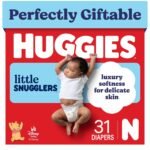
Which is better: Huggies Snug & Dry vs Huggies Little Snugglers?
Little Snugglers are softer, have a wetness indicator, and include a “StretchySides” for a gentler fit. Snug & Dry cost less and offer similar absorbency. Choose Little Snugglers for comfort; Snug & Dry for value.
Can you use Huggies Snug & Dry overnight?
Yes, many parents do. The absorbency core holds a full night’s wetness for most babies. After a long stretch, the outer shell may feel slightly damp, but the inner stays dry.
Do Huggies Snug & Dry have a wetness indicator?
Yes, a blue line appears when wet. It’s easy to see—even in low light—and fades within a few seconds if you check too quickly. It’s accurate.
Final Verdict
Buy these if you need a diaper that works hard, doesn’t cost a fortune, and keeps your baby dry through normal day-to-day life. The Huggies Snug & Dry is the best option in its price tier for parents who value performance over luxury. The only real catch is the less-soft interior—so if your baby’s skin is extra sensitive, you might pay more for the Little Snugglers. Otherwise, this is the diaper you’ll grab every time.
Huggies Snug & Dry Diapers vs the Competition in 2026
When you’re staring down a newborn who goes through diapers like a frat house goes through pizza, the choice between and Huggies Snug & Dry Diapers and its rivals comes down to one thing: what bugs you most? Leaks? Fits? Price? This is the workhorse of the Huggies line—reliable absorbency at a price that won’t make you weep. But the market has options that are softer, cheaper, or gentler on rash-prone skin. Here’s where the real differences show up.
Product
Price Range
Key Strength
Key Weakness
Best For
Huggies Snug & Dry (Size 1, 44-count)
Mid-range (~$9)
Double leak guards + hourglass shape that doesn’t shift
Not the softest; some parents find the inner liner rough on newborn skin
Parents who want solid overnight performance without paying premium prices
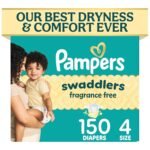
Pampers Swaddlers (Size 1, 44-count)
Premium (~$10–$11)
Cloud-like softness with a wetness indicator line
Can balloon when fully wet; thinner absorbent layer than Huggies
Newborns with very sensitive skin; parents who prioritize feel over cost
Huggies Little Snugglers (Size 1, 44-count)
Premium (~$10)
GentleTouch liner with a pocket to catch blowouts
Higher price per diaper than Snug & Dry for nearly identical absorbency
Newborns with eczema or frequent blowouts where gentleness matters most
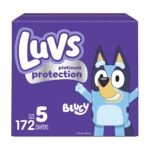
Luvs Ultra Leakguards (Size 1, 60-count)
Budget (~$6–$7)
Lowest cost per diaper in this size; thick padding
Lacks a wetness indicator; can feel bulky between baby’s legs
Families on a tight budget who change diapers frequently and don’t need frills
Huggies Snug & Dry vs Pampers Swaddlers
You’ll often see these two side by side in the baby aisle, and the Huggies Snug & Dry review crowd tends to split along one axis: do you value softness or staying power? Pampers Swaddlers feel like a cloud made of marshmallow fluff—your baby’s thighs will be cradled in a way that makes you want to nap next to them. But here’s the catch: that softness comes from a thinner core. When the diaper gets full, it can swell into a saggy balloon that wicks moisture away from the leak guards. Huggies Snug & Dry, meanwhile, uses a denser pad and a double-leak-guard design that keeps urine where it belongs even after a six-hour stretch. If your baby sleeps like a log and you’re trying to avoid middle-of-the-night changes, the Huggies wins. But if your newborn has sensitive skin and you want every surface to whisper “soft” before a rash appears, the Swaddlers are the better bet. That wetness indicator on both? Huggies does a blue line, Pampers does yellow—same utility, different color.
Huggies Snug & Dry vs Huggies Little Snugglers
This is the sibling rivalry you didn’t know you needed. Both are made by Huggies, so the foundation is the same: same hourglass shape, same dual leak guards, same Size 1 fit. The difference is in the liner. Little Snugglers have a “GentleTouch” fabric that’s noticeably plusher—think flannel pajamas versus a cotton tee. They also include a little blowout pocket at the back (a gusset that catches poop before it escapes up the spine). That pocket is a lifesaver for the first two months when every diaper change feels like a hazmat operation. But you pay for it: a box of Little Snugglers costs about the same as Snug & Dry but holds fewer diapers (36 vs 44 in some pack sizes). Is Huggies Snug & Dry worth it over its pricier cousin? Depends. If your baby is a blowout machine, spend the extra few bucks for the pocket. If your baby’s waste stays mostly contained and you just need absorbency for urine, the Snug & Dry does the same job at a lower per-diaper cost. Both brands score similarly on the “best diapers for newborns with sensitive skin” lists, but Little Snugglers picks up the edge for severe rash issues.
Huggies Snug & Dry vs Luvs Ultra Leakguards
Let’s talk money. Luvs is the budget king—a 60-count pack of Size 1 costs less than a 44-count of Huggies Snug & Dry. That’s a 30% savings per diaper. If you’re changing a newborn 10–12 times a day, those savings add up to a full meal out each week. But you trade off. Luvs diapers feel thicker—almost like a cloth diaper—and that bulk can make it harder to get a snug fit around skinny newborn legs. I’ve seen more side leaks with Luvs on tiny babies because the padding pushes the leg gathers away from the skin. Also, no wetness indicator. You’ll be doing the “poke and sniff” test. The absorbency itself is decent for daytime use, but overnight? Huggies Snug & Dry holds at least an hour longer before backing up. So if your baby is a heavy wetter or you want to skip the 2 a.m. change, the Huggies is worth the premium. But if you’re okay with frequent changes and saving every dollar, Luvs is a totally workable alternative. Just don’t expect it to be a perfect fit for pooter-tiny newborns. For most parents sorting through the best [category] for 2026, the decision comes down to how many trade-offs you can stomach. If you need a steady, reliable diaper that won’t leak overnight and isn’t trying to be a luxury pillow, pick the Huggies Snug & Dry. It’s the sane middle ground. But if your baby’s skin flares up at the touch of anything less than velvety, take the money you’d save and spend it on Pampers Swaddlers or Huggies Little Snugglers instead. And if your bank account is the tightest constraint? Grab Luvs and a pack of diaper rash cream—you’ll survive, just with a few extra changes.
Ready to decide on the Huggies Snug & Dry Diapers?
See today’s price, stock and delivery options on Amazon.