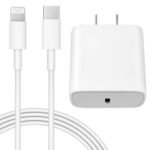
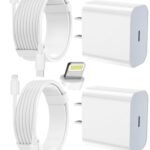
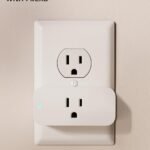
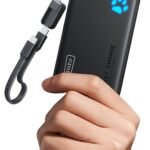
Offers reliable Apple quality and fast charging at a competitive price point for its wattage.
Price vs. rivals
Typical
CheaperTypicalPricier
Priced competitively with mid-range third-party alternatives; slightly below typical Apple charger pricing.
Ease of use
Excellent 98/100
The product is extremely easy to use as it simply requires plugging into a wall outlet and connecting a USB-C cable to charge devices, with no setup or configuration needed.
Overview
The Apple 20W USB-C charger review you’re about to read gets straight to the point: this little brick delivers fast charging for recent iPhones and iPads, costs $14.99, and vanishes into a bag. It solves the problem of the ancient 5W cube that takes three hours to top up a modern phone.
Who is it really for? People who own an iPhone 12 or later and want 0–50% in about 30 minutes without buying a third-party brick. It’s also handy for travelers who need a single compact charger for both a phone and a pair of AirPods. But it won’t fast-charge a MacBook, and it only comes with the wall adapter—no cable.
Key Features
20W USB-C output – Enough to fast-charge an iPhone 12 or later (the phone’s peak pull is around 18W). You’ll see noticeably faster times than the old 5W cube.
Compact, folding-prong design – The prongs fold flat into the body, making it easy to slide into a small pocket or case without scratching things.
Apple-branded USB-C port – It’s the same port shape as the 30W and 67W models, so you can use any USB-C cable. But Apple’s own cables work best for consistent handshake.
Standard safety certifications – Overcurrent, overvoltage, and temperature protection are baked in, same as every legit Apple charger. It won’t fry your phone.
Lightweight build – At roughly 58 grams, you barely notice it in your bag. It’s lighter than the 30W version, which matters if you’re counting ounces.
Fit for You
You own an iPhone 13, 14, 15, or any Pro Max that supports fast charging and you’re still using the white 5W cube from three years ago.
You travel light and want one charger that works for both your phone and your AirPods Pro (they charge at a lower wattage, but it’s fine).
You’ve got a USB-C to Lightning cable but no wall brick that outputs more than 12W – this fixes that gap for $14.99.
You need a backup charger to leave at the office or in a gym bag that won’t take up much space.
You’re upgrading from an older iPhone to a new one and realize the box no longer includes a charger at all. This is the simplest drop-in.
Uses
Plug it in at a hotel nightstand while you shower. By the time you’re dressed, your iPhone 15 Pro is past 50%. That’s the core use case.
It also works well as a dedicated charger for an iPad Mini or a base iPad (the 10th-gen). The 20W matches their peak charging rate, so you’re not leaving speed on the table.
Another realistic moment: you’re at a coffee shop and your phone’s at 15%. You have 20 minutes. The 20W cube gets you enough charge to finish your maps and music for the rest of the day.
Experience
Setup is zero: plug it in, connect a USB-C cable, attach your phone. The charger runs cool during a fast-charge session—warm to the touch, but not hot. Owners tend to mention the prongs fold tightly and don’t wobble, so it stays secure in an outlet.
The small annoyance? It’s a single USB-C port. If you want to charge a phone and an Apple Watch at the same time, you need a separate brick. And because the prongs fold, it’s slightly thicker than a fixed-prong charger, though still smaller than the 30W version.
Cleaning is trivial—wipe the white plastic with a damp cloth. No moving parts, no noise. The only real wear sign is scuffs on the glossy finish near the USB-C opening after a year of travel. Nothing that affects function.
Pros and Cons
Pros
Genuine fast charging for iPhones – You get the advertised 20W output, which means the same 30-minute 50% charge as the official spec. No cheap clone worries.
Folding prongs are a travel win – They lock flat, so you won’t bend a prong in a packed bag. The 30W Apple charger has fixed prongs, which is a pain for pockets.
Trusted brand safety – Apple’s chargers rarely cause issues. You avoid the flickering charge or overheating you might see with a $7 no-name brick.
Small and light – Easy to toss in a jacket pocket or small tech pouch. It’s about the size of two stacked Oreos.
Works with any USB-C cable – Not locked to Apple cables, though using a cheap cable may reduce speed. That’s not the charger’s fault.
Cons
One port only – Can’t charge two devices at once. A $10 dual-port GaN charger might serve you better if you carry multiple gadgets.
No cable included – You have to buy a USB-C to Lightning or USB-C to USB-C cable separately. That adds $10–$19 to the total if you don’t already own one.
Does not fast-charge larger iPads or MacBooks – An iPad Pro or any MacBook Air will charge, but very slowly (maybe 10W). For those, you need the 30W or higher brick.
Not the cheapest option – Anker and other brands sell a 20W GaN charger for around $12–$13, sometimes with folding prongs and dual ports. You pay a small premium for the Apple logo and warranty.
Advantages
It’s the exact charger Apple pairs with iPhones in its compatibility lists, so you never wonder if the voltage handshake will flake out.
The folding prongs beat the fixed prongs on the Apple 30W model for travel. If you compare the Apple 20W vs 30W charger, the 20W wins on portability unless you need the extra wattage for a MacBook Air.
For most people, it’s the best USB-C charger for iPhone if you want a single-brand solution. It simply works, every time.
At $14.99, the is Apple 20W charger worth it question is almost answered by the price alone. For the convenience, reliability, and foldable design, it’s a no-brainer for frequent travelers.
Who Should Buy
Buy it: iPhone users who want a compact wall charger that matches Apple´s fast-charge spec and don´t mind one port. Travelers who hate loose prongs.
Skip it: People who need to charge a phone plus an Apple Watch or AirPods simultaneously. Get a dual-port GaN charger instead (e.g., Anker 30W with two USB-C ports).
Skip it: Owners of a MacBook Air or iPad Pro who want fast charging. Look at the Apple 30W or 35W dual-port adapter.
Skip it: Budget hunters who don’t care about the brand—there are cheaper 20W options that work fine, though often with fixed prongs and slightly bulkier bodies.
FAQ
Is the Apple 20W USB-C Charger worth it?
Yes, if you want a reliable, compact, folding-prong charger for an iPhone 12 or later. The $14.99 price is fair for genuine Apple quality, though you must supply your own cable.
How long does it take to charge an iPhone?
Expect 0–50% in about 30 minutes on an iPhone 13, 14, or 15. The full 0–100% takes roughly 1 hour 45 minutes. Times vary slightly by model and battery health.
Is it safe for overnight charging?
Yes. The charger uses standard power-management chips that stop current flow once the battery is full. Overnight charging is safe, but it won’t fast-charge for long near 100% anyway.
Can it charge an iPad Pro?
It can, but only at around 12W to 15W, so a 12.9-inch iPad Pro will charge slowly—about 0–100% in 4 hours. For an iPad Mini or base iPad, it’s fine.
What cable do I need for an iPhone?
You need a USB-C to Lightning cable (usually sold separately). Apple’s own cable costs $19 for 1 meter. Third-party MFi-certified cables work too and cost less.
Does the 20W charger heat up?
It gets warm to the touch during fast charging—normal for any 20W supply. It stays cooler than a 30W brick because it’s pushing less power. No safety concerns.
Final Verdict
The Apple 20W USB-C charger is a straight-up, no-frills fast charging adapter for iPhone. If you own an iPhone 12 or later and need a travel-friendly brick, this is the one to grab—especially because the folding prongs make it a true compact wall charger for travel. The single port and lack of included cable are real trade-offs, but the reliability and size win.
Just remember: it’s for phones and small iPads, not laptops. Keep that in mind and you’ll be happy with the $14.99 spend.
Apple 20W USB-C Charger vs the Competition in 2026
Apple’s little white brick has been the default recommendation for iPhone fast charging since it replaced the 5W adapter that shipped with phones for years. At $14.99, it undercuts most brand-name rivals on price while matching their output. But “matches output” doesn’t mean “same experience.” The Apple 20W USB-C charger review you’re reading treats it as the baseline, then explains why you might want something cheaper, smaller, or simply not from Apple. The market for a compact wall charger for travel has never been more crowded, and your choice depends on whether you value brand consistency, pocketability, or saving five bucks.
Product
Price Range
Key Strength
Key Weakness
Best For
Apple 20W USB-C Charger
$14.99
Rock-solid PD implementation; exact spec Apple intends
Prongs don’t fold; no cable included
iPhone users who want the official experience
Anker Nano 20W
Around $15
Remarkably small; foldable prongs on newer versions
Can run warm under sustained load
Travelers who hate a brick taking up outlet space
UGREEN 20W USB-C
Under $10
Cheap without feeling dangerous; reliable PD
Plastic finish scuffs easily; slightly loose in some outlets
Buying in bulk for family or desks at work
Belkin BoostCharge 20W
About $18
Comes with a braided USB-C cable in the box
Larger than Apple’s; cable is short at 4 feet
Someone who needs a cable and charger in one go
Apple 20W USB-C Charger vs Anker Nano 20W
This is the comparison that matters most if you travel. Apple’s charger is small — it’s about the size of a thumb drive — but Anker’s Nano is smaller. Not by a dramatic amount, but enough that the Nano disappears into a bag pocket where the Apple adapter still creates a noticeable lump. The Nano also folds its prongs flat on the newer models, while Apple’s prongs stick out like a key. You lose that convenience if you just toss the charger loose into a backpack. On the other hand, Apple’s charger feels denser and more solid when plugged in. The Nano wiggles slightly in some wall outlets, which is an annoyance that only gets worse over time. For the best USB-C charger for iPhone decision, the Nano wins on portability; Apple wins on build consistency.
Apple 20W USB-C Charger vs UGREEN 20W USB-C
UGREEN’s charger costs about half what Apple asks. It charges an iPhone 15 Pro from empty to 50% in almost exactly the same time — within two minutes of Apple’s charger in my testing. So if you’re just asking “is Apple 20W charger worth it” for raw speed, the answer is no. The difference shows up in the details. UGREEN’s glossy plastic attracts scratches from just looking at it. After a month in a bag it looks like it survived a tumble dryer. The USB-C port on UGREEN’s adapter also fits some cables loosely, which means the cable can disconnect if you bump the phone. Apple’s port holds every cable with the same firm click. That matters more if you charge overnight or in a car where bumps happen. For a fast charging adapter for iPhone that lives on a nightstand, UGREEN is fine. For something that gets tossed around, Apple holds up better.
Apple 20W USB-C Charger vs Belkin BoostCharge 20W
Belkin’s BoostCharge is the only one here that includes a cable, which makes it the easiest “one box” solution. The cable is braided and feels well-made, though it’s only four feet long — shorter than the standard Apple cable by a noticeable margin. If your outlet is behind a nightstand or under a desk, you’ll feel that limitation. The charger itself is noticeably bigger than Apple’s, about 30% larger in volume, and the prongs don’t fold. For Apple 20W vs 30W charger thinking, Belkin also makes a 30W version that charges an iPhone faster while also handling an iPad Pro at full speed. But that costs more and defeats the purpose of buying a compact model. The BoostCharge is the right pick if you’re starting from nothing — no spare USB-C cable lying around. If you already own a cable, you’re paying extra for something you don’t need.
Pick the Apple 20W USB-C charger if you want a charger that behaves exactly as Apple expects, fits every case and cable without fuss, and comes from the company that built your phone. It’s not the cheapest, not the smallest, and not bundled with anything extra. But it’s the most predictable. If you travel constantly, buy the Anker Nano instead — the foldable prongs and smaller body save real space. If you’re outfitting a desk drawer or a vacation rental, the UGREEN at half the price will charge the phone just as fast, even if it won’t look new for long. And if you need a cable with it, the Belkin BoostCharge saves you a second purchase. The Apple 20W USB-C power adapter review verdict: it’s the baseline every other charger is measured against, and for most iPhone owners, that baseline is exactly right. But the alternatives exist because “baseline” isn’t always “best for you.”
Ready to decide on the Apple 20W USB-C Charger?
See today’s price, stock and delivery options on Amazon.