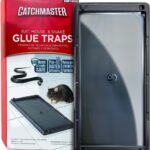
Catchmaster Max-Catch review: yes, this 36-pack of sticky mouse traps indoor is worth it for most home rodent problems. It’s cheap, versatile, and proven at catching mice, though it’s not a one-size-fits-all solution. You get a lot of traps that work reliably when placed correctly.
The product offers strong adhesive quality and a generous quantity for the price, but the rating and bulk pack size place it above budget options without reaching the premium tier's performance or design refinement.
Price vs. rivals
Pricier
CheaperTypicalPricier
Priced above many comparable 36-pack glue trap options, reflecting a premium for the Catchmaster brand and widespread retail availability, though still within a moderate range for multi-pack mouse traps.
Ease of use
Excellent 90/100
Simple peel-and-place design makes these glue traps very easy for anyone to use effectively.
Catchmaster Max-Catch Review: Overview
This is a 36-pack of glue boards, not snap traps. Catchmaster makes the Max-Catch as a flat adhesive board that mice and rats walk onto and get stuck. It’s designed for indoor use along walls, under appliances, in garages, and any place where you see droppings or hear scratching. The bottom line for this Catchmaster Max-Catch review is simple: it’s a straightforward tool, not a clever system.
The problem it solves is to catch rodents without poison, without resetting, and without a snap trap that misfires. If you have a light to moderate mouse problem, the Catchmaster Max-Catch glue traps 36 pack gives you enough boards to saturate your whole perimeter for about $23.99. That’s roughly 67 cents per trap, which is the real appeal. With 36 boards, you can be generous with placement, which matters because mice like to explore new objects in their path.
Catchmaster Max-Catch Review: Key Features
36 glue boards in one box – Enough to cover a large house or a two-car garage. Because they’re cheap per trap, you can place one every couple of feet along a wall, which is exactly how you catch mice.
Foldable cardboard base – You can use it flat for mice or fold it into a tunnel for rats. This is a real advantage over flat plastic boards, because a cautious rat won’t step onto an open sticky surface.
Strong adhesive – Once a mouse steps on it, it stays. The glue grabs hard enough that a small mouse can’t pull free. That’s the whole point, but it also means you need to keep it away from pets and bare feet.
Peel-away paper liner – Each board comes with a sheet you peel off in one piece. It doesn’t tear or leave residue on your hands. This keeps the glue fresh until the moment you need it.
No poison – There’s no toxicity to worry about, which is a big plus if you have small children in the house. You still need to handle the boards carefully, but you’re not dealing with a lethal substance.
Fit for You: When the Catchmaster Max-Catch Glue Traps Are the Right Trap
You’ll know these are the right choice if you recognize yourself in a few of these situations.
You see droppings in the back of a drawer or under the sink but never actually spot a mouse – the boards can sit silently and catch the nighttime runner.
You rent and don’t want to drill holes or leave marks – these traps are completely self-contained and take up no permanent space.
You have a garage or a shed where the temperature and dust make snap traps unreliable – the glue boards still work, though you’ll replace them more often.
You want to catch a single mouse in a holiday home or a summer cabin, then throw away the whole board without touching it.
You’re setting up a monitoring grid in a barn or attic before deciding whether to call an exterminator – 36 boards is enough to test multiple areas at once.
Uses: Real Scenes Where the Max-Catch Earns Its Keep
The classic use for sticky mouse traps indoor is the kitchen perimeter. You peel the paper, slide one board under the refrigerator, and let it work. If a mouse is running along the kickboard, it’ll cross that sticky surface within a night or two. This is where the glue boards shine because there’s no bait to go stale and no trigger to misfire.
Another real-world spot is the garage workbench. Mice love nesting in cardboard boxes and old rags. Lay a couple of boards between the boxes and the wall, and you’ll often find a catch within a week. The boards are thin enough to slide under shelving units where heavier traps can’t fit.
In an attic or crawl space, you can fold the board into an inverted V to make a tunnel. That’s less likely to catch a mouse than a flat board, but it catches rats that are more cautious about stepping onto an open surface. It’s a useful option to have in the same box.
People also use these as a check. When you’re not sure if a scratching noise is mice or just the house settling, place a few boards and wait a few days. If nothing sticks, the problem is probably outside. That kind of diagnostic use is where a multi-pack pays for itself.
Experience: What It’s Like to Manage a 36-Pack of Max-Catch Boards
Setup is almost embarrassingly easy. You open the box, peel the paper off each board, and place it. The whole 36-pack takes less than ten minutes. You’ll notice a faint, waxy smell when you peel the paper, but it fades within an hour. Some people compare it to a fresh playing card; others don’t notice it at all.
The first thing that strikes you is how sticky these are. If you accidentally touch the surface, the glue clings to your fingers and needs a bit of soap and warm water to come off. That’s a sign it’s working, but it’s also why you need to be deliberate about where you put them. Under a shelf or behind a cereal box is ideal.
The real annoyance is checking and replacing them. As dust and debris collect on the surface, the stickiness drops. In a dusty garage, a board may only stay effective for a week or two. In a clean kitchen, it can last a month or more. You’ll often look at a board, see dust but no mouse, and wonder whether it’s still good. The safe move is to replace it if the surface looks cloudy.
Storage is simple: they stack flat in the box, and the glue doesn’t dry out as long as the paper liner is on. The box is a bit bulky but light enough to keep on a shelf. You’ll want to fold the top closed so curious kids don’t reach in and touch a board.
One genuine downside that comes up in any Catchmaster Max-Catch review discussion is the emotional part. When you catch a mouse on a glue board, the mouse is alive and stuck. That’s not a pleasant sight, and it’s the main reason some people switch to snap traps. Owners tend to mention it more than any other issue. If you’re squeamish, you’ll need a plan for what to do when the trap works, and that plan isn’t fun.
Catchmaster Max-Catch Review: Pros and Cons
Pros
Low cost per trap – At $23.99 for 36 boards, you’re paying around 67 cents each. That makes it easy to spread them across the house without worrying about cost.
No setup skill required – No bait, no arming, no trigger. Peel the paper and you’re done. This is the biggest practical advantage when you’re dealing with a sudden mouse sighting.
No poison to worry about – The glue itself isn’t toxic, so there’s less risk to pets who roam around. Still keep it out of reach, but it’s a safer category than bait stations.
Lets you monitor activity – Leave a few boards in a room for a week and you’ll know for sure whether you have a mouse. That’s cheaper than paying someone to inspect.
Flexible for rats or mice – Flat for mice, folded into a tunnel for rats. One box covers both situations, which is rare at this price.
Cons
It doesn’t kill instantly – A glue board leaves a mouse alive and stuck. You have to decide how to end it, and the process isn’t something people enjoy. This is the honest trade-off.
Dust and dirt reduce stickiness – In a garage or a barn, the boards collect dust and stop being effective after a week or two. You’ll go through boards faster in those spaces.
A hazard for small pets and wildlife – A curious hamster, a bird, or a lizard can get stuck. It’s not toxic, but freeing an animal from the glue is stressful and can damage its skin or feathers.
Not for heavy infestations – If you’re seeing several mice a night, these boards won’t keep up. You need a baiting program or a professional to reduce the population.
Thin, flexible board – When you pick it up, it bends easily. You have to hold it by the edges or it’ll fold over and touch your fingers. A stiffer tray would be easier to handle.
Advantages: Catchmaster Max-Catch vs Tomcat Glue Traps
If you’re comparing the best glue traps for home, the main rival is the Tomcat range. Tomcat boards are slightly stiffer and have a similar adhesive, but they usually come in smaller packs. The Max-Catch wins on price per board and on that foldable tunnel option, which basic Tomcat boards don’t offer. Tomcat’s scent formulations vary more, and some people find Tomcat’s glue stickier in a way that’s harder to clean off. For a typical home, the Max-Catch gives you more coverage for the same money, and that’s what makes the comparison easy.
Who Should Buy This (and Who Should Skip It)
These Catchmaster glue traps for home use are a solid choice for a specific set of people. Here’s who should grab them and who should pass.
Buy them if you have occasional mice in a house or apartment and want a cheap, low-effort answer that works across several rooms.
Buy them if you need to confirm there’s a mouse before calling an exterminator – the boards double as an early-warning system.
Buy them if you have a garage or shed you can check every couple of weeks without needing a daily routine.
Skip them if you have pets that roam freely and could step on the glue – a covered snap trap or a live trap is the safer call.
Skip them if you’re dealing with a serious infestation of more than a few mice a week; you’ll spend a lot on boards and still not solve it.
Skip them if the idea of a live, stuck animal bothers you – you’ll dread setting the traps, and a snap trap avoids that situation.
FAQ: Common Questions
Is the Catchmaster Max-Catch Glue Traps worth it?
Yes, for most people with a small to moderate rodent problem, it’s worth it because the per-trap cost is so low and the traps work without poison or complicated setup. If you have pets that roam freely or an infestation, it’s less ideal and you should look elsewhere.
How long does a Catchmaster Max-Catch glue trap last?
A board stays sticky for roughly one to three months in a clean, dry indoor area, but dust and humidity shorten that lifespan. Weekly checks are the right habit, and it’s a good idea to replace any board that looks cloudy or has collected debris.
Is it safe for pets and kids?
It’s non-toxic, so most pets and kids won’t be poisoned, but the glue itself can cause a scary situation if a cat or a toddler steps on it. For pet-owning households, a covered trap or a bait station is safer. Place boards under things or behind boxes where only a mouse can reach.
Can I use Catchmaster Max-Catch traps for rats?
Yes, but only for smaller rats. You’ll want to fold the board into a tunnel shape so a cautious rat doesn’t just jump over it, and you might need multiple boards. For larger rats, a snap trap or a professional solution is more effective.
Where should I place them for the best results?
Put them along walls where mice run, with the sticky side up and the edge touching the baseboard. Under the kitchen sink, inside the back of cabinets, behind the refrigerator, and near entrance gaps in the garage are all proven spots. Avoid the middle of the room.
Do I need bait on these glue traps?
No, but a tiny dab of peanut butter in the center can help. The adhesive alone is enough, especially along a wall, but bait makes the trap more inviting for a suspicious mouse. Just use a small amount so the mouse doesn’t eat it and avoid contact with the glue.
Catchmaster Max-Catch Review: Final Verdict
If you’ve got a couple of mice in your kitchen or garage, this is the simplest, most cost-effective answer you’ll find. The catch rate per dollar is excellent, and the 36-pack means you can place enough traps to actually solve a small problem. You won’t feel bad about throwing one away.
The Catchmaster Max-Catch review comes down to one honest warning: these boards are not a humane or quick kill option. If you’re okay with that – and many people are – the Catchmaster Max-Catch glue traps are a solid buy. Just keep them away from pets and children.
Catchmaster Max-Catch Glue Traps vs the Competition: Best Glue Traps for Home in 2026
This Catchmaster Max-Catch review starts with the 36-pack, because that’s the one that changes the math. At $23.99, you get enough boards to set up a perimeter around a whole basement or garage. The Max-Catch isn’t fancy. It’s a flat cardboard sticky trap, with a dense glue layer and no poison. When people ask about the best glue traps for home, the Max-Catch usually comes up because it’s a whole box of line-up-the-wall-and-wait traps.
Product
Price Range
Key Strength
Key Weakness
Best For
Catchmaster Max-Catch Glue Traps 36pk
Mid: $23.99 per 36
Big sticky surface, dense adhesive
Boards stick to everything if you drop one; no reset after a catch
Covering long stretches of baseboard in basements, garages, and sheds
Tomcat Super Hold Glue Traps
Budget: small packs at most retailers
Easy to find, stiff tray shape, you can grab the edge
Less glue surface per trap; you need better placement
A single mouse in a kitchen or behind a fridge
Victor M121 Mouse Glue Traps
Budget to mid: pack counts vary
Classic flat board, widely available, discreet
Thinner board can curl, and the glue doesn’t hold as well in cold rooms
Quick setups under cabinets, along baseboards, and in closets
Trapper Max Glue Traps
Mid: pro pest-control price
Clear plastic tray, professional-grade glue
Usually sold in smaller retail packs, so cost per trap runs higher
Garages, crawl spaces, and other harsh indoor spots
Catchmaster Max-Catch Glue Traps vs Tomcat glue traps
The Catchmaster Max-Catch Glue Traps vs Tomcat glue traps angle isn’t about which one sticks better. Both stick fine. The difference is coverage and package size. Tomcat Super Hold Glue Traps come in small trays that are easy to toss under a sink, and the plastic rim means you can pick one up without glue on your fingers. The Catchmaster Max-Catch glue traps 36 pack gives you long cardboard boards that lie flat against the wall. You don’t have to guess where the mouse is running; you place several boards along the baseboard and let the mouse choose which one to cross. Is Catchmaster Max-Catch worth it for that? If you’re laying out a defensive line, yes. If you’ve got one mouse venturing out from behind the stove, Tomcat is less of an investment and easier to set.
Catchmaster Max-Catch Glue Traps vs Victor M121 glue traps
The Victor M121 is the kind of glue trap you buy when you’re at the hardware store and you don’t want to think about it. It’s a simple sticky board in a small flat pack. The problem is that the M121’s glue layer feels thinner than Catchmaster’s. Put it on a clean surface and it’ll catch a mouse. Put it in a dusty garage or on concrete and the edges start losing tack after a few days. The Catchmaster board, especially in the 36-pack, has more adhesive spread across a wider area. That matters for sticky mouse traps indoor when you’re not sweeping the floor first. If the M121 is on sale and you need one or two traps, it’s fine. When you start setting up multiple stations, the Catchmaster Max-Catch glue traps 36 pack is a better value than buying several small M121 packs.
Catchmaster Max-Catch Glue Traps vs Trapper Max glue traps
Trapper Max is the pro-grade choice, and its clear plastic tray is the reason. You can check a trap without leaning in to see if it’s empty, and the tray keeps the glue away from the floor when the temperature climbs. Catchmaster glue traps for home use are the right level of commitment: no tray, no plastic, just a flat board with a lot of glue. Trapper Max tends to come in smaller retail packs, so you pay more per trap. For the average house, that’s overkill. If you need a professional alternative to Catchmaster, Trapper Max is it.
So, who should buy the Catchmaster Max-Catch Glue Traps 36 pack? Anyone with a recurring mouse problem in a finished space: the kitchen, the laundry room, the basement stairwell. It’s the best glue traps for home when you want broad coverage without clearing your schedule to check traps every morning. Who should pick something else? If you only need to catch one mouse and you’d rather not keep 35 extra traps around, get Tomcat Super Hold Glue Traps instead. And if your trapping spots are an unheated garage or a damp crawl space, spend the extra money on Trapper Max. The Catchmaster falls in the middle, and for most homes, that middle is exactly right.
Ready to decide on the Catchmaster Max-Catch Glue Traps?
See today’s price, stock and delivery options on Amazon.