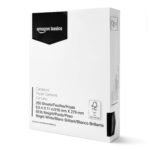
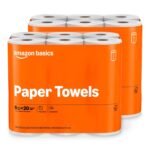
Amazon Basics offers reliable everyday printing paper at a price that undercuts many comparable office-supply brands while maintaining solid brightness and weight, making it an exceptional cost-saving value.
Price vs. rivals
Cheaper
CheaperTypicalPricier
Priced below typical name-brand reams, offering budget-friendly value with comparable specs.
Ease of use
Excellent 95/100
This standard copy paper requires no assembly or special skills, as it simply loads into a printer or copier just like any other ream, making it very easy for an average person to use.
Overview
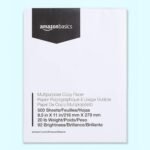
This Amazon Basics printer paper review cuts right to it: for $8.36 a ream, this 20 lb bright white paper 8.5 x 11 handles daily printing without drama. It’s for anyone who needs a reliable stack of copy paper for home or a small office and doesn’t want to overthink the purchase. Think school forms, shipping labels printed on the laser printer, or that 40-page recipe binder you’re finally putting together. It costs about half what premium brands charge, and for most of what people actually print, that trade-off makes perfect sense.
The catch is predictable: you give up a little surface smoothness and opacity compared to something like Hammermill. If you’re printing double-sided documents for a client or running high-speed office copiers all day, you’ll notice the difference. But if your printer sits on a desk in the corner and gets used a few times a week, this paper does the job for less.
Key Features
20 lb weight – This is the standard office-weight paper. It’s thick enough to take ink without bleed-through on one side, but not so heavy that you chew through your printer’s feed rollers.
96 brightness – Bright enough that black text snaps well and color graphics look presentable. It’s not the eye-searing 100+ brightness you’d want for photo prints, but for everyday documents it’s totally fine.
500 sheets per ream – One ream covers most people for a couple of months of moderate use. You can also buy it in multi-packs if you burn through paper faster.
Multipurpose design – Works in laser printers, inkjet printers, and copiers. It’s not a specialty paper for any single machine, but it feeds reliably in the common home and small-office models.
Acid-free construction – Means the paper won’t yellow or become brittle after a few years in a file folder. For tax documents or school records you plan to keep, that matters.
Slim, no-fuss packaging – The ream comes wrapped in standard paper with a tear strip. Nothing fancy, but you won’t find yourself wrestling with shrink wrap or a box that falls apart.
Fit for You
You print school permission slips, homework, and the occasional family newsletter and want a paper that works without you thinking about it.
You run a small home business and go through a ream every few weeks for invoices, contracts, and client handouts that need to look clean but not fancy.
You bought a laser printer for cheap per-page costs and need paper that handles toner heat without curling or jamming.
You’re stocking a shared printer in a co-working space or church office where volume is medium but nobody wants to spend premium money on paper.
You’re preparing for a move or a big printing project (wedding programs, yard signs, meeting packets) and need to buy a case without breaking the budget.
Uses
You’ll reach for this ream when you need to print the 15-page lease agreement your landlord emailed. The paper handles double-sided printing well enough that you can read both sides without the text from the other side shouting through. For a one-sided flyer or a kid’s science project, it’s more than adequate.
It’s also the paper you keep in the tray for the weekly grocery list and the coupon roundup. The 20 lb weight means it doesn’t feel flimsy when you scribble notes on the back of an old printout. And if you’re printing address labels or return-address sheets, the surface takes the adhesive without the paper wrinkling.
Where it stumbles slightly is with heavy ink coverage. If you’re printing a full-page photo on an inkjet, you’ll get some cockling (that wavy texture) as the wet ink soaks in. For a photo, use photo paper. For everything else, this does fine.
Experience
You pull the ream out of the box, tear the strip, and the paper feels familiar—nothing special, nothing offensive. It slides into the printer tray without fuss. The first page comes out clean, no dust or loose fibers. That’s the Amazon Basics way: unremarkable in a good way.
Over a few weeks of mixed use—laser prints, a few inkjet pages, some double-sided docs—you notice that the paper feeds consistently. No jams, no multifeeds. The 96 brightness level means your text is crisp but not sterile. Side by side with a sheet of Hammermill Premium, this paper looks slightly more matte and the fibers are a tiny bit more visible under a bright desk lamp. But you have to be looking for it.
The small annoyance: the ream wrapper is plain paper, not plastic, so if you store it in a damp basement, the wrapper can get a little soft. Keep it in a dry spot and you’re fine. Also, the sheets are cut square and the edges are clean, so your printer’s feed mechanism won’t pick up two sheets at once.
For a cheap multipurpose paper for laser printer use, it burns clean—no toner flaking, no curl after a long print job. You might notice the paper has a very slight mechanical scent when fresh, but it fades fast.
Pros and Cons
Pros
Price per ream is hard to beat – At about eight bucks, it’s usually a dollar or two less than the store-brand paper at office supply chains, and way less than premium brands.
Feeds reliably in common printers – Owners of HP, Brother, and Canon machines report few jams or misfeeds, which is the main thing you want from a budget paper.
Acid-free so it lasts – If you file something away for a few years, the paper stays white and doesn’t turn to dust when you pull it out.
Good for double-sided printing – The opacity is decent enough that text on the reverse side is a faint shadow rather than a distraction.
Multipurpose versatility – Laser, inkjet, copier, even some offset presses—it handles them all without complaint.
Cons
Not as smooth as premium papers – Run your finger across the surface and you can feel a slight tooth compared to a Hammermill or a bright-white premium sheet. It matters if you’re printing high-resolution graphics.
Opacity is just OK – Not bad, but if you hold a single sheet up to a lamp, you’ll see some light through it. For most docs it’s fine; for critical double-sided use with small text, you might prefer a heavier weight.
No re-sealable packaging – The paper wrapper is simple and doesn’t re-close. If you don’t finish the ream, store it in a plastic bag or a drawer to keep dust and moisture out.
Inkjet bleed with heavy coverage – If you’re printing a dense, full-page color document on an inkjet, the paper can cockle a bit and colors might not be as saturated as they could be on a coated paper.
Advantages
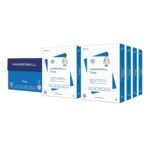
Price compared to Hammermill – The Amazon Basics vs Hammermill copy paper comparison is straightforward: Hammermill Premium costs roughly 50% more per ream. Amazon Basics gives you 80–85% of the same experience for less. For home and small-office use, that’s a good trade.
Consistency across reams – Buy a box of 10 reams and every sheet behaves the same way. The production quality control seems solid for a budget brand.
Lightweight shipping from Prime – A single ream arrives in a box that’s barely bigger than the paper itself. No wasted packaging, no crushed corners.
No subscription needed – You don’t have to sign up for Subscribe & Save to get a decent price. The one-off price is already competitive.
Who Should Buy
Home users who print homework, forms, and the occasional letter. This is your paper.
Small-business owners on a tight margin who need a basic paper for invoices, packing slips, and internal docs. It’s the best budget printer paper for home office use if you’re not entertaining clients.
Students who print essays, study guides, and schedules. The acid-free quality means that thesis you printed in freshman year will still be readable when you graduate.
Anyone stocking a community or church printer where volume is medium but the budget is small. A case of this is cheaper than most alternatives.
Skip it if you print high-resolution marketing materials, fine-art reproductions, or client-facing presentations where the paper’s feel and brightness matter. In those cases, spend the extra few dollars on a premium 24 lb bright-white sheet from Hammermill or a comparable brand.
FAQ
Is the Amazon Basics multipurpose printer paper worth it?
Yes, for the price. If your printing is everyday documents—forms, homework, invoices—this paper gives you a clean, reliable result at about half the cost of premium brands. You give up some surface smoothness and opacity, but for most people that’s an easy trade.
How does it compare to Hammermill copy paper?
Hammermill feels slightly smoother and has better opacity, meaning less show-through on double-sided prints. It also comes in a wider range of weights and finishes. Amazon Basics is a solid budget alternative that covers the vast majority of home and small-office needs for significantly less money.
Does this paper work in laser printers?
Yes, and it’s a good match. The 20 lb weight handles the heat of the fuser unit without curling or jamming. If you’re looking for a cheap multipurpose paper for laser printer use, this is a reliable choice that keeps per-page costs low.
Is it safe for inkjet printers?
It works in inkjets, but it’s not a coated paper. Expect some ink bleed on high-coverage color prints and slight cockling with very wet ink applications. For standard text and moderate color, it performs fine. For photos, stick to photo paper.
Can I use it for double-sided printing?
Yes. The 20 lb bright white paper 8.5 x 11 has decent opacity—enough that text from the back is a soft shadow rather than a distraction. If you’re printing dense blocks of small text on both sides, you might prefer a 24 lb paper, but for most double-sided work this is acceptable.
What do people complain about most?
The main complaints are the lack of a re-sealable wrapper and the paper’s tendency to show feed roller marks if you run it through a printer that leaves toner dust on the rollers. A few buyers also note that the paper isn’t as bright as premium picks, but that’s expected given the price.
Final Verdict
The Amazon Basics Multipurpose Copy Printer Paper is the definition of good enough. It does everything you need a cheap office paper to do for well under ten dollars a ream. If you’re printing everyday documents at home or in a small office, this is the paper to buy without overthinking it.
The one thing to keep in mind: this is a budget product, so treat it as one. It’s not a luxury presentation paper. But for the things you actually print most of the time—school forms, shipping labels, meeting notes, the family calendar—it’s hard to find a better value.
Amazon Basics Multipurpose Printer Paper vs the Competition: 2026 Review
This Amazon Basics printer paper review keeps the focus where it belongs: on the ream you’ll pull off the shelf for $8.36. Search for Amazon Basics multipurpose printer paper alternatives and you’ll mostly find the same few reams: Hammermill Great White, HP Papers, and Staples Multipurpose. All are 20 lb, 8.5 x 11, and close in brightness, so the real differences show up in the paper tray. The comparison below treats Amazon Basics as the budget baseline. It’s a strong candidate for best budget copy paper 2026, but it’s not automatically the right choice for every home office.
Product
Price Range
Key Strength
Key Weakness
Best For
Amazon Basics Multipurpose Copy Printer Paper
Lowest (about $8.36 per ream)
Very low price for a 20 lb / 96 bright white ream
Noticeably thin; can curl after laser printing
Everyday home office cheap multipurpose paper for laser printer
Hammermill Great White 20 lb
A bit more per ream
Stiffer sheets that feed more reliably
Not as bright as premium Hammermill lines
High-volume office printing without jams
HP Papers 20 lb
Mid-budget, usually above Amazon Basics
Clean white surface for text and color inkjet
Costs more without a huge functional gain
Home users who want a safer all-round ream
Staples Multipurpose Paper 20 lb
Often close to Amazon Basics in bulk packs
Easy to grab in the store
Less consistent finish and stiffness from pack to pack
Last-minute purchases, not long-term loyalty
Amazon Basics multipurpose printer paper vs Hammermill copy paper
The “Amazon Basics vs Hammermill copy paper” question comes down to how the sheet feels in the tray. Put the two next to each other and the Hammermill feels sturdier. It’s still plain 20 lb bright white paper 8.5 x 11, but it has more body, so it doesn’t flop as much when the duplexer pulls it back in. That matters if your printer has a tight paper path or you print double-sided reports. The Amazon Basics version is fine for the first pass; after a laser fuser, the edges can cockle just enough to make the second side feed less cleanly. Hammermill Great White avoids most of that for a bit more per ream. If you’re on a tight budget and your printer handles thin paper well, stick with Amazon Basics. If you’ve ever stood by the printer for ten minutes pretending to “fix” a jam, pay the extra.
Amazon Basics vs HP Papers: is Amazon Basics copy paper worth it?
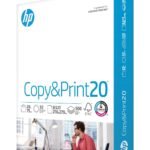
HP Papers is the safer middle child, a mid-budget ream. It’s not premium paper, but it’s whiter and a little smoother than the Amazon Basics, which helps when you print color charts or pages you’ll hand to a client. The catch: for simple text printing, the difference is hard to spot. Is Amazon Basics copy paper worth it? For drafts, notes, and school handouts, yes. For anything you’d put in a binder or hand to someone important, HP’s surface has a slight edge. If you print mostly text, the extra cost doesn’t buy you much.
Staples Multipurpose Paper: the in-store option
Staples Multipurpose Paper is the “grab it while you’re buying pens” option. It’s often priced similarly to Amazon Basics when you buy a full carton, but the quality has a wider variance: one pack might be fine, the next feels rougher and feeds a little less smoothly. If you don’t need a whole case and just need one ream today, Staples is handy. For an online order where you know exactly what you’re getting, the Amazon Basics is the more predictable alternative; with Staples you’re relying on whatever the local store has in stock.
If you want the best budget printer paper for home office and your main use is casual, stop overthinking it: the Amazon Basics multipurpose printer paper is worth the money. You’ll save enough across a year to buy another ream. If your printer jams easily, you print a lot double-sided, or you want sheets that feel more substantial in a report, spend a little more on Hammermill Great White. That’s the trade-off. The Basics gives you the lowest cost per sheet; Hammermill gives you fewer annoyances at the paper feed.
Ready to decide on the Amazon Basics multipurpose printer paper?
See today’s price, stock and delivery options on Amazon.