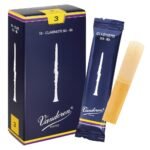
Strong customer rating and organic material provide solid value at a competitive mid-tier price point.
Price vs. rivals
Typical
CheaperTypicalPricier
Priced near the middle of the range for similar 10-packs of Bb clarinet reeds, comparable to other standard offerings while being slightly more affordable than some premium alternatives.
Ease of use
Excellent 85/100
These reeds are easy to mount and play for an average clarinetist, though beginners may need a little adjustment to strength and wetting.
Overview
This Rico Organic clarinet reeds review cuts through the hype: yes, these reeds are worth it for students and casual players who want a consistent, responsive reed without the price tag of premium brands, but they come with a trade-off in durability. The Rico Organic Bb clarinet reeds, strength 2.5, come in a 10 pack, and they’re aimed at the player who wants a natural cane reed with a modern, eco-friendly twist. They solve the problem of inconsistent quality you sometimes get with budget reeds, giving you a reliable starting point for practice and performance.
If you’ve been wondering about Rico Organic vs Vandoren clarinet reeds, the short answer is that Rico’s organic line sits below Vandoren in price and above standard Rico reeds in feel. It’s not a direct competitor to Vandoren’s top-tier Traditional or V12 lines, but it’s a solid middle ground for school band players and weekend hobbyists.
Key Features
Organic Arundo donax cane – Grown without synthetic pesticides or fertilizers. That means a more natural reed, but it also affects consistency from box to box, as organic cane varies more than conventionally farmed stuff.
Computer-cut tip profile – Each reed is milled to a precise shape, so you get fewer duds in a 10 pack. You’ll still want to break in a few to find your favorites, but the hit rate is better than generic reeds.
Strength 2.5 – This is the sweet spot for many student and intermediate players. You get enough resistance to support a controlled sound without feeling like you’re wrestling the reed. The exact stiffness can vary slightly across the pack, so expect a bit of sorting.
10-pack packaging – A paper-and-cardboard box instead of a plastic case. It’s lighter and less protective, so you’ll want a dedicated reed holder for storage. The price per reed works out to about $2.50, which is competitive for organic reeds.
Responsive articulation – The tip is designed to speak quickly, making staccato passages and fast runs easier. That’s a big help for band music with lots of sixteenth notes.
Eco-conscious packaging – The box uses recycled paper and vegetable-based inks. Nice touch if you care about waste, but it doesn’t affect how the reed plays.
Fit for You
You’re a middle school or high school clarinetist who practices daily and needs a reliable reed for concert band without spending $30 a box.
You prefer a medium-soft reed (strength 2.5) because you’ve found harder ones feel stiff or cause squeaks.
You want to try an organic cane reed but aren’t ready to invest in a premium brand like Vandoren or D’Addario’s Reserve.
You play in a wind ensemble or pep band where you need consistent response across registers, especially altissimo notes.
You run through reeds quickly and appreciate a 10-pack that doesn’t cost a full meal.
You store reeds in a sealed case and don’t mind the cardboard box—you’re not depending on the packaging for long-term protection.
Uses
Picture a high school marching band rehearsal in late August. The humidity is heavy, your embouchure is tired, and you’re about to run the fight song for the fifth time. A Rico Organic strength 2.5 gives you enough breathing room to keep the tone centered without fighting the reed. It won’t get waterlogged as fast as some boxier reeds, but it does soften noticeably after twenty minutes of playing.
In a concert band setting, you’ll find these reeds work well for lyrical passages in the lower clarion register. The attack is clean, and you can shape dynamics without the reed choking. If you’re playing a solo that hangs around middle C to G, this reed will let you focus on phrasing rather than squeak avoidance.
For jazz combo or small ensemble gigs, the Rico Organic is a passable choice for the money. The response is bright enough to cut through a horn section, but you’ll probably want to try a stronger cut (like a 3) if you’re pushing for a more cutting sound. Strength 2.5 is better suited to softer, supporting parts.
Experience
When you open the box, the first thing you notice is how the reeds are packed in individual paper sleeves inside a thin cardboard box. It’s not luxury—Vandoren’s plastic tubes feel more secure—but it keeps the reeds from knocking into each other during shipping. You’ll want to move them into a reed guard or humidity-controlled case right away, because paper sleeves don’t seal out moisture.
Breaking in a Reed Organic strength 2.5 is straightforward. Wet it for about two minutes, then play it for five minutes, rest it, and repeat over a couple of days. You’ll notice the reed matures into a slightly softer feel after three or four sessions. The surface is smooth to the touch, with no rough edges on the vamp or tip.
Durability is the biggest letdown. Expect a reed to last maybe three to four hours of good playing time before it starts to warp or lose its snap. That’s on par with standard Rico Orange Box reeds, not with the longer-lasting Vandoren or Legere synthetics. If you’re practicing two hours a day, you’ll cycle through this 10-pack in about three weeks.
Storage matters a lot here. Even with a clean mouthpiece, these reeds seem to absorb moisture faster than some competitors. A flat reed case with a small humidity pack will extend life by maybe a day or two. Don’t leave them on a music stand overnight.
A common annoyance: about one out of every six reeds in a pack feels slightly stiff or has a weak low register. That’s the nature of organic cane—no two stalks are identical. You’ll do a quick sort and set aside the duds for practice use. The remaining six or seven play quite well for the price.
Pros and Cons
Pros
Consistent cut across the pack – You waste fewer reeds than with cheap house brands; the box is usable right out of the gate.
Responsive articulation for the price – Staccato notes speak clearly, which helps when you’re learning tricky etudes.
Organic cane feels less processed – Some players prefer the natural variance over heavily machine-tuned reeds, saying it gives a warmer tone.
Good value as a student reed – At $24.99 for 10, it’s cheaper than Vandoren or Fibracell per reed, and you get a decent performance.
Lightweight, recyclable packaging – Less plastic waste is a genuine perk if you’re trying to reduce your footprint.
Cons
Short lifespan compared to premium reeds – You’ll replace these more often than Vandoren Traditions, so the cost-per-playing-hour isn’t as low as the sticker suggests.
No plastic reed case – The cardboard box isn’t meant for long-term storage; you’ll need to buy a reed holder or risk warping.
Inconsistent strength across the box – Strength 2.5 on the label doesn’t mean every reed is identical; expect to sort out one or two that play like a 2 or a 3.
Organic cane can be more sensitive to humidity – Compared to conventionally treated reeds, these swell and soften faster in wet weather, requiring more careful break-in.
Not the best for advanced players – If you’re playing principal chair in a college wind ensemble, you’ll want a reed with more projection and dynamic range than this line offers.
Advantages
The main advantage of these reeds over standard student reeds is the improved consistency. Traditional Rico Orange Box reeds often have a few unplayable reeds per 10-pack; the Organic line cuts that down to maybe one or two. You also get the “natural” story, which some players feel makes the sound less harsh. Compared to synthetic reeds, the Rico Organic gives a warmer, woodier tone that many clarinetists prefer for classical or concert music.
Better quality control than budget reeds without the jump to premium pricing.
Easier to play in soft dynamics than many reeds at the same strength, because the tip is thinner.
Organic certification is a differentiator—no other major brand offers a certified organic cane reed at this price point.
Who Should Buy
Student players (grades 6–12) – If you’re looking for best organic clarinet reeds for students, this is a top contender. It’s forgiving enough for developing embouchures and cheap enough to replace often.
Hobbyist adults – You play in a community band or for fun at home, and you don’t want to obsess over reed selection. These are reliable and affordable.
Teachers buying for a studio – A bulk pack (multiple 10-packs) works well for a class where students need a consistent, non-intimidating reed.
Players who prefer strength 2.5 – This is the most common size for a reason; if you use a 2.5, these reeds will suit you out of the box with minimal adjustment.
Skip them if you’re an advanced player who needs maximum projection and endurance for orchestras or long gigs. Look at Vandoren V12 or D’Addario Reserve instead.
Skip them if you hate breaking in reeds and want something that plays consistently from the first note—consider a synthetic reed like Legere.
FAQ
Are Rico Organic clarinet reeds worth it?
Yes, for the price and the target audience. You get a consistent, responsive reed that’s ideal for students and casual players, but you sacrifice durability and top-end performance compared to premium reeds.
What strength should I choose?
Strength 2.5 is the most versatile for intermediate players. If you’ve been using a 2 on other brands, start here. If you find 2.5 too soft, try a 3—but note that Rico’s organic reeds feel slightly softer than the same number in Vandoren.
How long does a Rico Organic reed last?
Expect about 3–5 hours of actual playing time before the tip loses its shape or the reed feels waterlogged. Proper break-in and storage in a humidity-controlled case can stretch that to 6–8 hours.
Are Rico Organic reeds better than Vandoren reeds?
Not overall, but they’re better for the money if you’re a student. Vandoren reeds have more dynamic range and last longer, while Rico Organic offers a good beginner-to-intermediate experience at half the price.
Do these reeds come in other strengths?
Yes, the Rico Organic line includes strengths 1.5 through 5 in Bb clarinet, as well as alto sax and other sizes. The 10-pack format is available across the range.
Are they truly organic?
They’re made from organically farmed Arundo donax cane, grown without synthetic chemicals, and they carry USDA organic certification. That doesn’t mean they play differently, but it does mean the raw material is more natural.
Final Verdict
If you’re a student, a hobbyist, or a teacher stocking a band room, the Rico Organic Bb clarinet reeds in strength 2.5 are a smart buy. They play consistently enough for daily practice and casual performance, and the price is hard to beat for organic cane. The catch is durability—you’ll replace them more often than you’d like, so budget for a 10-pack every month or two if you’re a heavy player.
For the player who values a natural feel and a reasonable price over long life, these reeds are a clear recommendation. Just don’t expect them to compete with Vandoren or Legere in a pro setting. Buy them, sort them, break them in, and you’ll get solid utility from every pack.
Rico Organic Bb clarinet reeds vs the Competition in 2026
This Rico Organic clarinet reeds review looks at the Rico Organic Bb clarinet reeds 10 pack as an everyday option, not a magic upgrade. At $24.99 for ten, it sits between budget student reeds and the premium cane that working clarinetists buy. It offers an organically grown, familiar-cut reed that responds quickly and doesn’t demand a long break-in. The table below lines up the main Rico Organic Bb clarinet reeds alternatives in the student-to-intermediate part of the market, with the Organic placed where its strengths and costs actually land.
Product
Price Range
Key Strength
Key Weakness
Best For
Rico Organic Bb clarinet reeds (Strength 2.5, 10 pack)
Mid ($24.99 for 10)
Organic cane, familiar response, ready after a short soak
Not the richest tone in this group; you pay for the growing method, not a bigger sound
Students and players who want a dependable everyday reed without a long break-in
Vandoren Traditional (blue box)
Mid
Thicker blank gives more weight and more projection
Takes longer to settle, and a dud or two can appear in a box
Players moving past the student sound and toward a darker core
D’Addario Reserve Classic
Mid-high
Consistent and centered, with very few weak reeds
Costs more and can feel plain if you like a bright sound
Advanced players, recital use, and anyone who needs a reliable warm reed
Légère European Signature
Premium (per reed)
Synthetic, so it lasts for months and ignores humidity
High upfront cost and a different feel under the lower lip
Outdoor gigs, marching band, travel backup
Mitchell Lurie Premium
Budget
Cheap and easy for small embouchures
Shorter lifespan and a thinner, lighter tone
Complete beginners who need to make a sound without fighting the reed
Rico Organic vs Vandoren clarinet reeds
In the Rico Organic Bb clarinet reeds vs Vandoren clarinet reeds match-up, the Vandoren asks more from you. The blue-box Traditional is the classic “step up” reed. It has a thicker blank, a fuller tone, and it can keep growing on you over a week of playing. But it also takes longer to break in, and many players end up rotating two or three at a time. The Rico Organic Bb clarinet reeds strength 2.5 is the opposite. It responds right away, the tip is even, and you don’t have to sand it or wet it for ten minutes to make it play. For a student with a concert in two days, that convenience beats extra depth. For a player chasing a darker professional sound, it likely won’t.
Rico Organic Bb clarinet reeds vs Légère European Signature
Rico Organic Bb clarinet reeds vs Légère European Signature is a less obvious comparison, but a useful one. The Légère is a synthetic reed that costs far more per reed. It also shrugs off rain, humidity, and a week of heavy use. If you march or play outdoors, that weather-proof quality matters more than any cane reed’s tone. But the Légère changes your mouthfeel, and the sound can sit a little brighter than a mature organic cane reed. Rico Organic Bb clarinet reed durability is solid for a cane product: a 2.5 will hold up for daily practice if you dry it and store it flat. It won’t match the lifespan of synthetic, but it also doesn’t ask you to relearn your embouchure.
Are Rico Organic clarinet reeds worth it?
The honest answer is yes for most practice rooms, and no for listeners who expect the organic label to sound “better.” It doesn’t. The Rico Organic clarinet reeds 10 pack costs $24.99, which is usually a couple of dollars above a standard Rico box and well below Vandoren. You’re paying for organically grown cane and the consistency that comes with a modern reed-making process, not for a completely different tone. If you already have a budget box that plays fine, this isn’t a necessity. If you want one reliable pack that works for a school band schedule, the same predictability makes it the best organic clarinet reeds for students in 2026.
Pick the Rico Organic Bb clarinet reeds if you want a mid-priced 10-pack that works on a normal student schedule, with no long break-in and no sandpaper sessions before rehearsal. Pick the Vandoren Traditional if you’re ready to work up to a richer, more projecting sound and don’t mind throwing out a few reeds along the way. Pick the Légère European Signature if your clarinet leaves the band room and heads outside. And if the goal is simply to make noise for less money, Mitchell Lurie is the budget alternative you should try first.
Ready to decide on the Rico Organic Bb clarinet reeds?
See today’s price, stock and delivery options on Amazon.