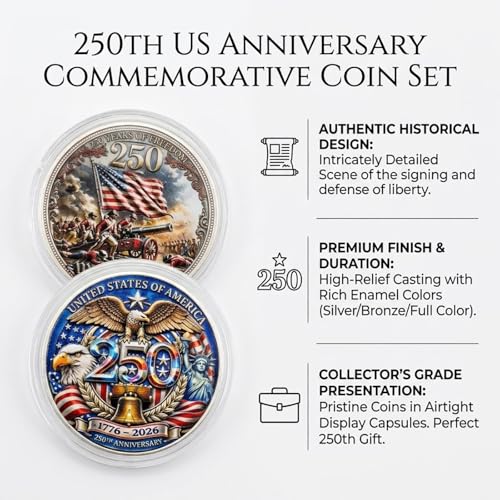
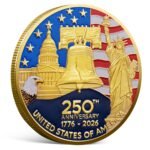
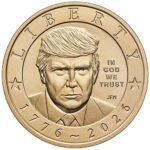
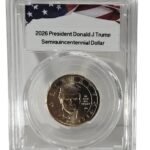
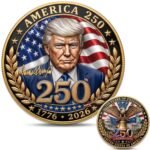
If you’re looking at an **American 250th Anniversary Coins review**, wondering if this two-pack is a legitimate commemorative piece or just a trinket, the honest answer is: it’s both, and that’s actually fine. For the price of a cup of coffee, you get a visually striking, double-sided colorized coin set that celebrates the semiquincentennial in a genuinely thoughtful way, as long as you know exactly what you’re buying—a display-worthy keepsake, not an investment-grade ingot.
Extremely low price suggests entry-level or novelty quality, appealing to casual buyers rather than serious collectors.
Price vs. rivals
Cheaper
CheaperTypicalPricier
Priced well below typical commemorative coin sets, which often cost tens of dollars or more.
Ease of use
Excellent 95/100
The coins are simple to handle and display, requiring no special skills or instruction for an average person.
Overview
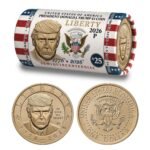
This is a 2-pack of privately minted commemorative coins marking the 250th anniversary of the United States (1776–2026). Each coin uses a 3D relief die and full-color printing on both sides. The front mixes classic 1776 imagery with the Liberty Bell, while the back ties in the Apollo 11 moon landing—a smart nod to how far the country has come.
The problem it solves is simple: finding a tangible, presentable way to mark a major historical milestone without spending a lot. It’s for anyone who wants a physical reminder of the anniversary. Think of it as a 250th anniversary coin set for history enthusiasts who want a conversation starter they can keep on a shelf or hand to a curious kid.
Key Features
3D relief commemorative coins – The images of the Liberty Bell, the eagle, and the lunar module have a raised, sculpted feel. It’s not a flat print; your thumb can actually trace the contours of the bell’s crack and the moon’s craters.
Double-sided colorized coins – Full color appears on both the front and the back. The flag is vivid red, white, and blue, and the lunar surface has a realistic dusty grey tone that doesn’t look cheap.
2-pack with a display box – You get two identical coins in a single hinged box lined with soft velvet-style padding. It gives you one to keep and one to give, or you can display both side by side.
Size and presence – They are noticeably larger than a standard quarter, with a satisfying heft. The product images show one next to a USB stick to help you visualize the scale.
Two-sided historical narrative – The front focuses on the founding (1776, 13 stars, Liberty Bell), while the reverse celebrates the space program (Apollo 11, moon, “One small step”). It tells a story without you having to explain much.
Fit for You
You enjoy coin collecting but want something modern and thematic rather than just ancient pennies or silver bullion.
You need a low-cost, meaningful gift for a history teacher, a veteran, or a Fourth of July host that isn’t a bottle of wine or another candle.
You’re decorating a shelf, a man cave, or a classroom display and want something that looks intentional and costs less than a fast-food meal.
You’re a parent looking for a tactile way to start a conversation with kids about the American Revolution or the Apollo missions.
You remember the 1976 Bicentennial and want a small, modern companion piece to that nostalgia.
Uses
Pull these out during a July 4th barbecue and you’ll instantly draw a crowd around the snack table. The blend of 1776 imagery with the Apollo 11 moon scene makes it a great prompt for telling stories—your uncle might talk about where he was during the moon landing, and your niece might actually ask who the Founding Fathers were.
Tuck one into a birthday card for a history enthusiast. It’s unusual enough that it won’t just get tossed in a drawer. At this price point, you can grab a handful of packs and use them as stocking stuffers or small thank-you gifts without feeling guilty about the cost.
Use them as a teaching aid. Hand one to a student and let them figure out why the Liberty Bell and the moon are on the same coin. It’s a conversation starter in a way that a textbook isn’t. In a classroom, it earns its keep.
Experience
Opening the package, the first thing you’ll notice is the weight. These aren’t flimsy stickers or cardboard medallions—they’ve got a solid, metallic feel. The included box keeps them from rattling around and makes a decent impression when you slide the lid off.
The colorization is done with a glossy finish. Under direct light, the details on the 3D relief really pop, specifically the crack in the Liberty Bell and the texture of the lunar surface. The mirrored background gives it a depth that looks more expensive than $2.57.
Here’s the reality check: the metal is a base alloy with a plated finish. If you hand it to a serious coin dealer, they’ll clock it immediately as a novelty token. It’s not silver, it’s not gold, and the color layer will scuff if you rub it hard against a key or drop it on concrete. For a desk display, it looks surprisingly sharp. Just don’t carry it loose in a pocket full of change.
Pros and Cons
Pros
Unbeatable price for a 2-pack – At $2.57, this is essentially disposable income for a solid decorative piece that looks intentional and well-made.
Great display quality – The mirrored finish and dual-sided colorization make it look much more expensive than it is when sitting inside the provided box.
Historical storytelling – The design connects two major American milestones (1776 and 1969) in a clever, visual way that prompts real conversation.
Ready to gift – It comes in a neat box with padding. You don’t need to wrap it—just a ribbon and you’re done.
Cons
Not official U.S. Mint currency – It’s a private commemorative medallion. If you’re after legal tender or a silver bullion coin, this is not what you want.
Finish may show wear – Because it’s colorized over a base metal, frequent handling or rubbing against hard surfaces might scuff the printed image. It’s a display piece, not a worry-free carry item.
Slightly smaller than product photos imply – It’s larger than a quarter, but the close-up shots on the listing make it look like a massive medallion. Check the comparison image with the USB stick to be sure.
Advantages
So how does this stack up in an American 250th Anniversary Coins vs other commemorative coins debate? The biggest win is the barrier to entry. Official mint commemoratives can run $60 to $100 easily. Here, you get the same basic concept—a themed, colorized, relief coin—without the sticker shock. While official coins hold value better, this wins on accessibility. You can buy a bunch and hand them out without wincing.
The 3D relief is also noticeably sharper than a lot of flat, stamped medallions in this price range. A generic patriotic token from a tourist trap often feels fuzzy. This one has crisp lines on the Liberty Bell and the astronaut’s visor. If you’re looking for the best commemorative coins for collectors on a strict budget, this pack covers that niche well.
Who Should Buy
Casual collectors who want a low-stakes addition to their shelf or desk.
History teachers looking for a visual aid to spark discussions about the Revolutionary War or the Space Race.
Event planners hunting for unique, small favors for a 250th anniversary celebration or a retirement party for a history buff.
Parents who want a cheap, durable object to explain the semiquincentennial to their kids.
Skip it if you are strictly stacking silver or gold, or if you only buy graded coins for a portfolio. Look for official U.S. Mint releases instead.
FAQ
Is the American 250th Anniversary Coins worth it?
Yes, purely as a decorative collectible and conversation piece. Your willingness to recommend it scales perfectly with the price. At $2.57 for two, the risk is nearly zero, and the display value is surprisingly high for a novelty medal.
Are these official U.S. Mint coins or legal tender?
No, these are privately minted commemorative medallions, not legal tender. They are designed as collectible keepsakes for the 250th anniversary, similar to a challenge coin or a souvenir medal, rather than spendable currency.
How big are the coins compared to a regular quarter?
Larger. The exact diameter is typical of a large commemorative medallion. The product images show one next to a quarter and a USB stick to give you a clear sense of scale. It makes a standard quarter look like a toy coin.
Will the colorized image fade or scratch?
It can if handled roughly. The color layer is durable for occasional handling, but because it is a printed surface over a metal disc, friction against a hard surface or constant rubbing can wear it down. Best to store it in the box.
What type of metal is it made of?
It is a base metal alloy with a plated finish, typical for low-cost commemorative tokens. It has a nice weight to it but does not contain precious metals like silver or gold. Consider it a decorative bronze-type medal.
Is the American 250th Anniversary Coins a good gift?
Yes, specifically for history buffs, veterans, and older relatives who remember the 1976 bicentennial. It ties the founding era to the space age in a way that prompts nostalgia and storytelling without requiring a big budget.
Final Verdict
If you go in understanding that this is a $2.57 novelty collectible and not a numismatic investment, you’ll be genuinely pleased with the American 250th Anniversary Coins. It delivers a lot of bang for the buck in terms of presentation and emotional resonance. The 3D relief and double-sided colorization are executed well above its price point.
The one thing to keep in mind: keep it in the display box to preserve the finish, and you’ve got a solid little time capsule from the semiquincentennial. It’s an easy recommendation for anyone who likes history but doesn’t want to spend real money on a commemorative coin.
250th Anniversary Coins vs the Competition in 2026
The commemorative coin market splits into two camps right now. You’ve got government-issued silver from the US Mint, which feels official but costs a fortune per ounce, and then you’ve got the novelty crowd—colorized, 3D-relief, boxed sets that sit on a shelf and look dramatic. The 2-Pack 250th Anniversary American Commemorative Coins lands squarely in that second camp, but with a twist: it’s trying to offer museum-quality visual detail at a price that barely buys lunch. That’s an interesting bet, but it’s not the only bet in town.
Product
Price Range
Key Strength
Key Weakness
Best For
American 250th Anniversary Coins (2-Pack)
Budget (under $5)
Double-sided colorized 3D relief at a shockingly low price
Not legal tender; lightweight metal feel
Display-only collectors on a tight budget
US Mint 2026 American Liberty Silver Medal
Premium ($60-$80)
Official mint product, .999 fine silver, high resale potential
No colorization; plain reverse; single medal
Serious stackers and investors
National Park Service Quarter Set (P&D)
Budget ($10-$15)
Legal tender, actual circulated US coins, historical themes
Flat relief, no color, small diameter
Everyday pocket-change collectors
Palm Beach Mint 250th Colorized Silver Round
Mid-range ($30-$45)
1 oz .999 silver with vibrant color Enamel
Single-sided color; less intricate 3D detail
Stackers who want a splash of color
250th Anniversary Coins vs the US Mint American Liberty Silver Medal
This is the loudest comparison, because one costs about $2.57 and the other is $70. The US Mint medal is real silver, struck in Philadelphia, and it holds its melt value. You can sell it later, and someone will buy it. The 250th Anniversary Coins are a zinc alloy with a printed color layer. Zero melt value. But here’s the thing—the US Mint medal doesn’t have color. It’s a plain, elegant high-relief design, but if you want a full-color Liberty bell with red and blue accents, you’re out of luck. The American 250th Anniversary Coins vs other commemorative coins argument comes down to intent: if you’re hoping your purchase appreciates financially, buy the Mint medal. If you want a conversation piece that pops under a desk lamp, the $2.57 set wins on pure visual drama.
250th Anniversary Coins vs Palm Beach Mint’s Colorized Silver Round
Palm Beach Mint tries to split the difference—real silver, but with color Enamel on one side. It’s a compromise. You get a precious metal, so it’s technically a “real” coin, but the color application is a thick, slightly glossy coating that can chip if you drop it. The 250th Anniversary Coins use a different method: the color is printed directly into the 3D relief, so it feels more integrated. The trade-off is the metal has no intrinsic worth. For a history enthusiast who keeps coins in a frame and never touches them, the 250th Anniversary Coins deliver better detail. For someone who wants the weight of silver in their hand, go with Palm Beach. Both are alternatives, but they serve different rooms in the same house.
250th Anniversary Coins vs the National Park Service Quarter Set
The NPS quarters are real currency. They circulated in vending machines. That authenticity matters to some people—they like knowing their coin passed through a cash register. But the quarters have a standard diameter of about 30 millimeters, and the design is flat, stamped metal with no color. The 250th Anniversary Coins are wider, with a raised 3D effect that makes the Independence Hall columns look like you could run a fingernail over them. The NPS set wins on authenticity and resale to a niche crowd; the 250th Anniversary Coins win on presentation and shelf impact. For the best commemorative coins for collectors who prioritize display quality over purity, the choice is obvious.
Who Should Buy—and Who Should Walk
Pick the American 250th Anniversary Coins if you’re putting together a history-themed display on a show budget, or if you’re buying a small gift for a younger collector who will love the color and relief more than the mint mark. Skip them if you want an investment-grade asset or a coin you can spend. In that case, spend your money on the US Mint silver medal—it’s boring in a display case, but it will keep its value when the next anniversary rolls around.
Ready to decide on the 250th Anniversary Coins?
See today’s price, stock and delivery options on Amazon.