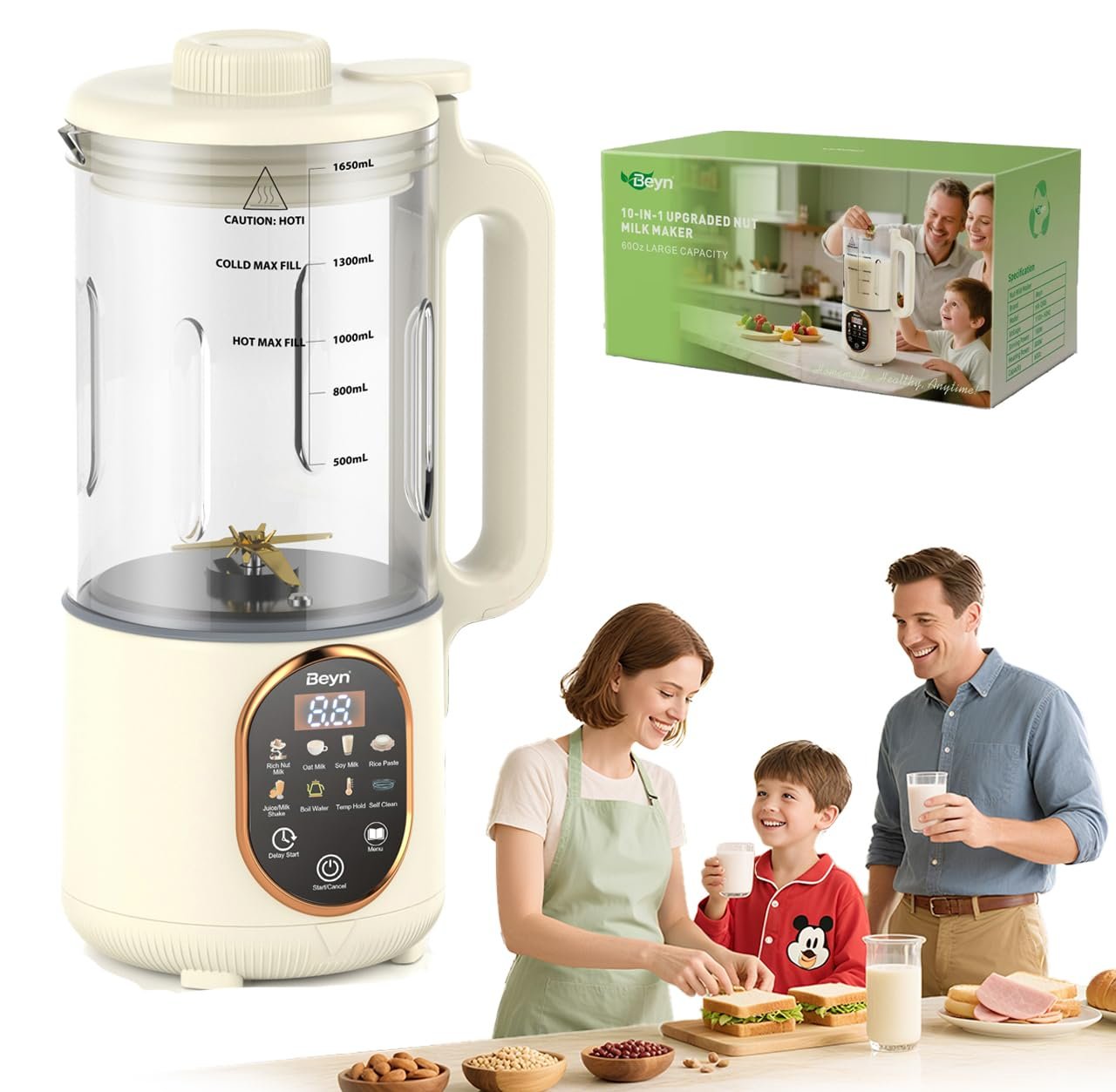
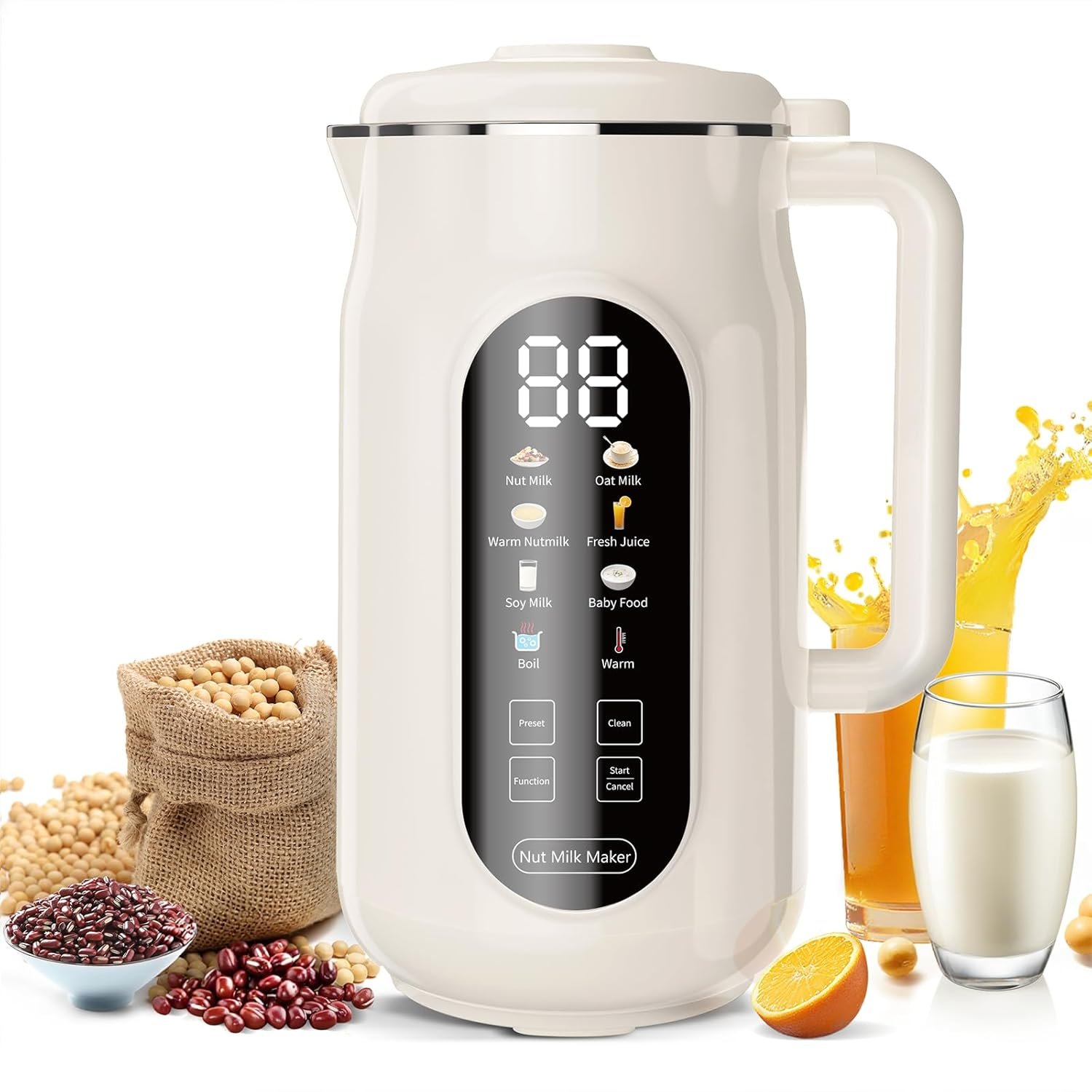
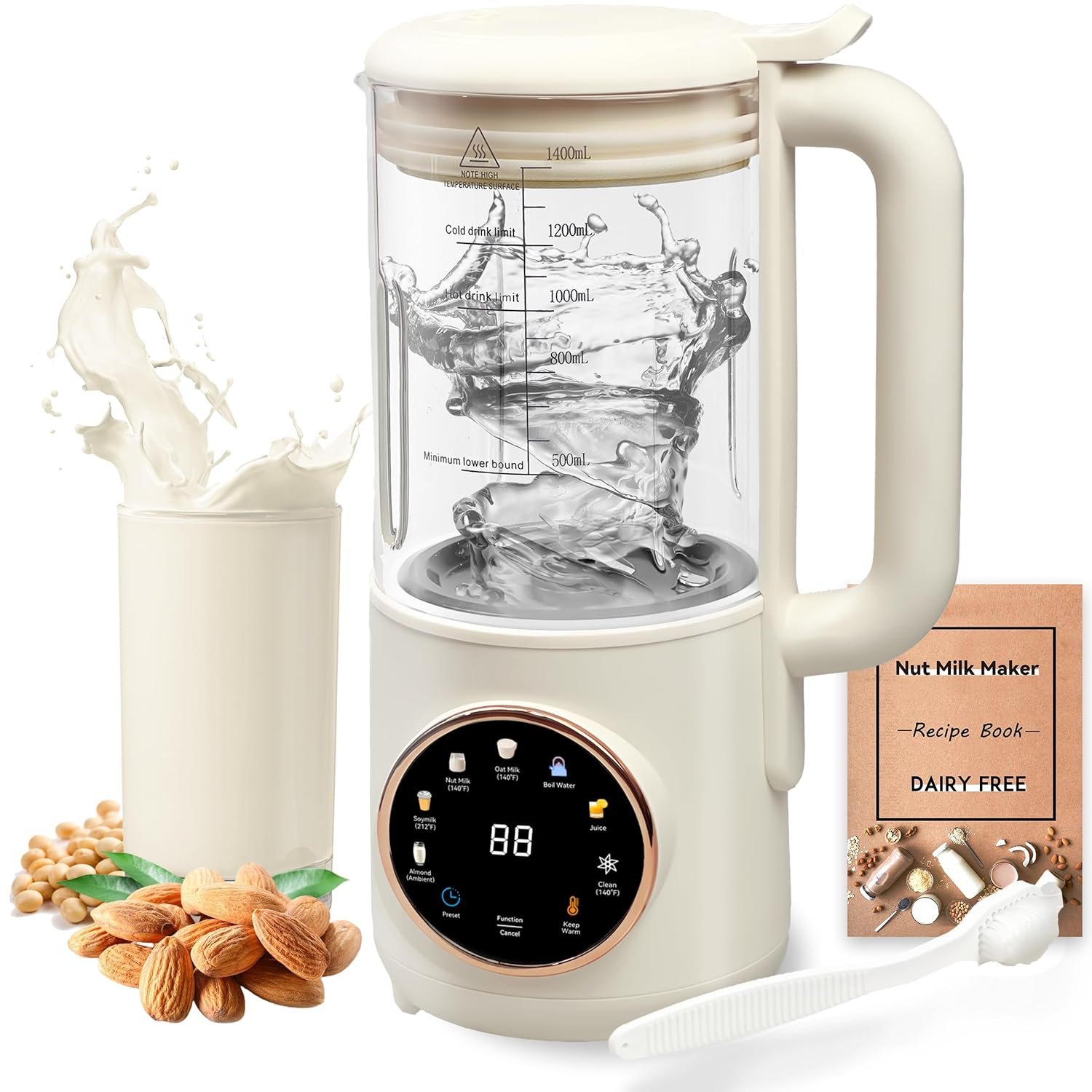
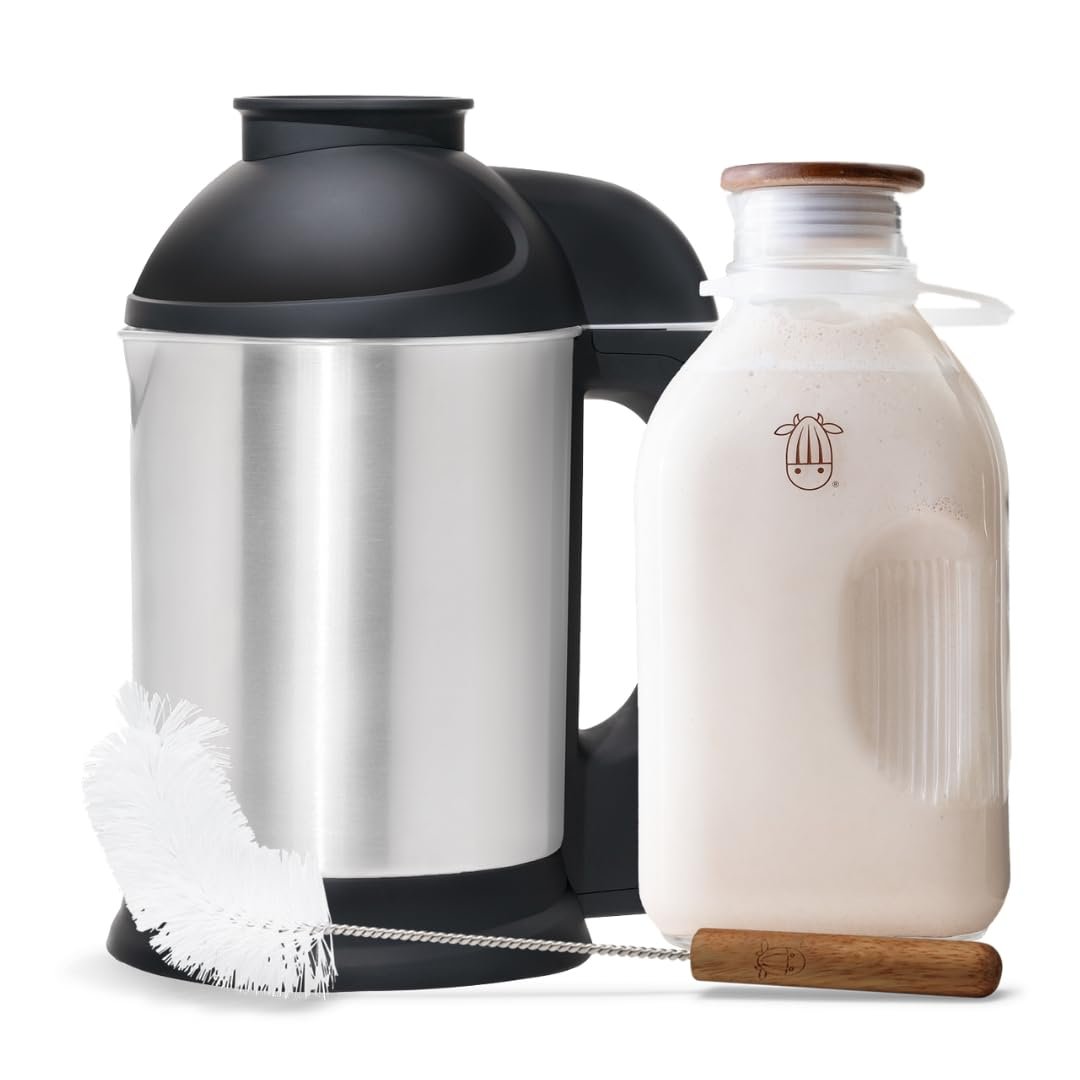
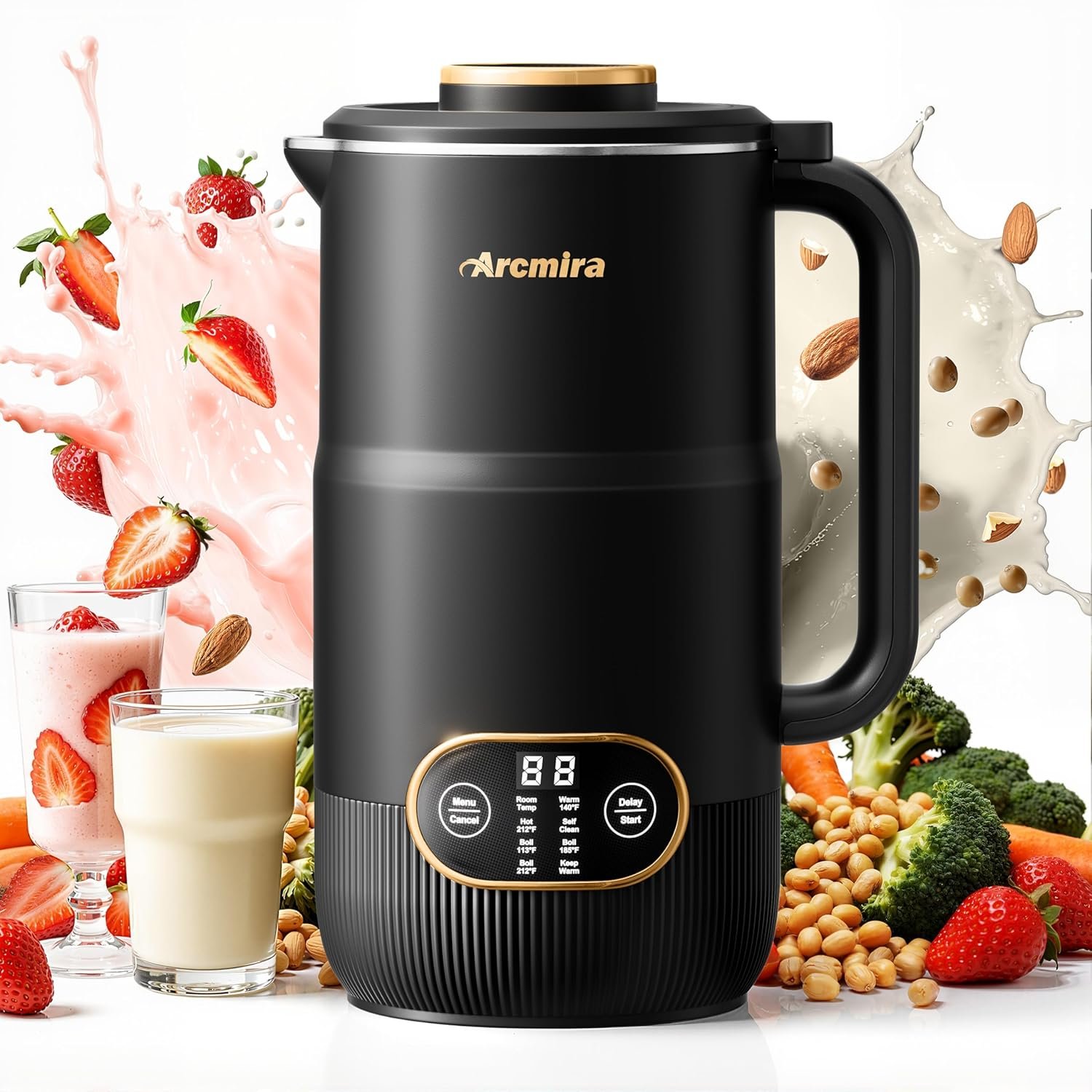
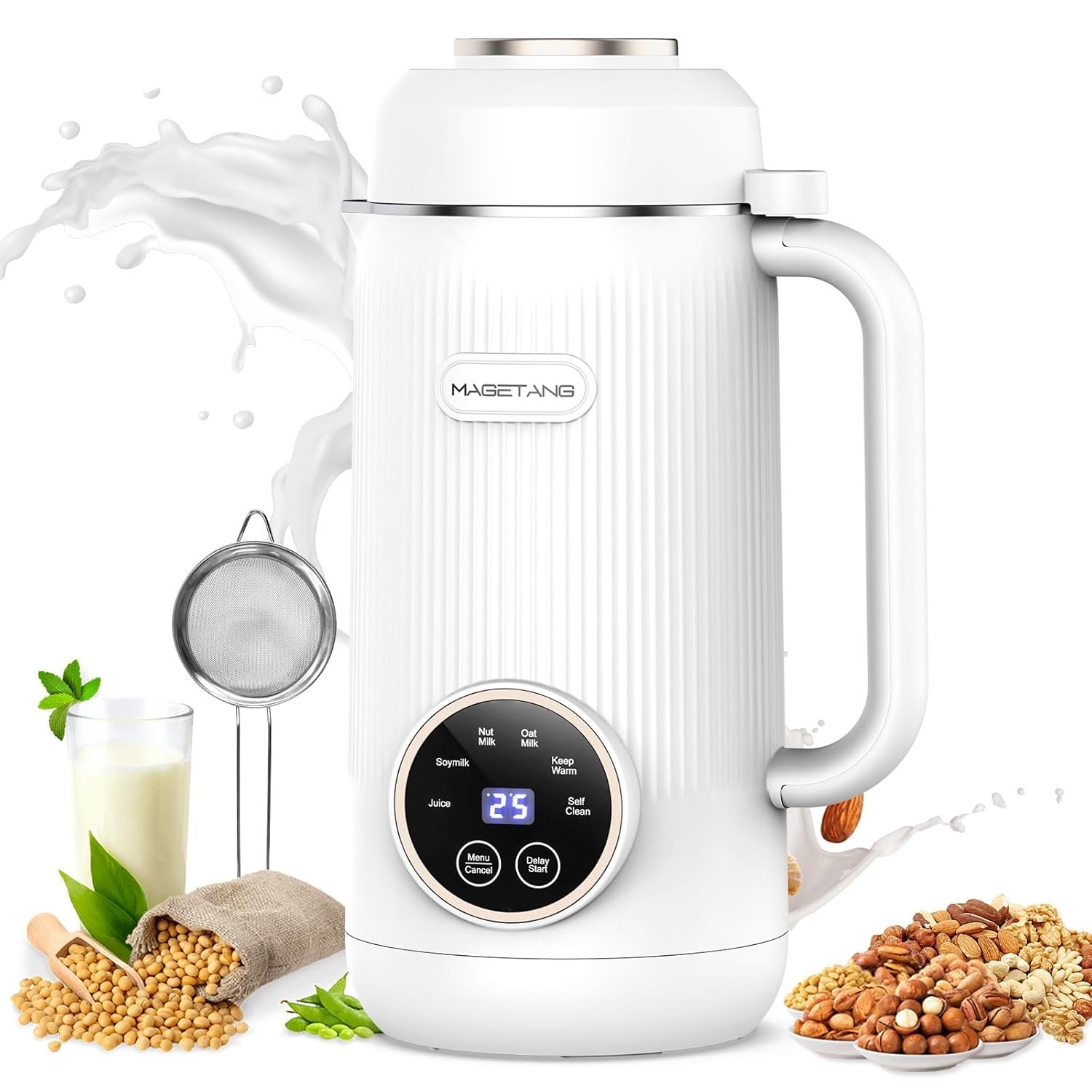
High user satisfaction, integrated blend-and-strain convenience, and barista-quality results justify a premium positioning despite its lofty price.
Price Position vs Similar
$449.00
CheaperTypicalPricier
Clearly positioned as a premium option — notably more expensive than typical consumer plant-milk makers. The all‑in‑one blend-and-strain, barista-quality claims and convenient cleaning justify a higher price for enthusiasts, but it sits well above mid-range alternatives.
Usability
Unknown
PoorFairGoodGreatExcellent
High user rating and a single-container blend-and-strain design with easy-to-clean parts make it straightforward for an average person to produce barista-quality plant milks in minutes.
Overview
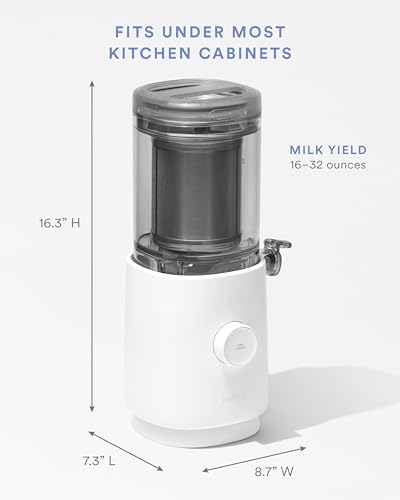
The Nama M1 Plant Milk Maker is a countertop appliance designed to turn oats, seeds, and nuts into smooth, creamy, barista-quality plant milks in minutes. It blends & strains in one container, promising a no-fuss workflow from raw ingredient to pourable milk. With an average Amazon rating of 4.7 out of 5 and a premium price tag of $449.00, this is positioned for buyers who want consistent, café-style results at home without juggling multiple tools.
Key Features & Highlights
All-in-one blending + straining: The most notable convenience is the single-container design that blends and filters inside one vessel—fewer transfers, fewer messes.
Fast, barista-style texture: Marketed to produce a smooth, creamy mouthfeel ideal for lattes and cold brews, making it appealing to coffee lovers and home baristas.
Versatile ingredient range: Built for oats, seeds, and a variety of nuts, giving you the freedom to experiment with cashew, almond, oat, hemp, and more.
Easy-to-clean focus: The design emphasizes simple cleanup—an important detail for frequent users who want quick turnaround from use to storage.
Premium positioning: Higher price and high rating suggest a feature-rich appliance aimed at serious home cooks and plant-milk enthusiasts.
A Nice Fit for You If…
You make fresh plant milk several times a week and want café-quality texture at home.
You dislike multi-step straining and want one container to do both jobs.
You enjoy experimenting with seeds, nuts, and oats to make custom milk blends.
You have counter space for a dedicated appliance and prefer convenience over the lowest price.
You want milk smooth enough to foam or steam for lattes and cappuccinos.
You prioritize easy cleaning and low post-use fuss.
You appreciate a high-rated, well-reviewed machine and are comfortable with a premium purchase.
You’re feeding a small household where fresh milk rotation fits regular appliance use.
Where It Shines — Practical Use Cases
– Morning coffee routines: Expect consistent, creamy oat or nut milk that integrates well with espresso or pour-over, eliminating last-minute runs to the store.
– Homemade yogurt or smoothie bases: The smooth texture works as a base for blended breakfasts or chilled desserts.
– Allergy- and diet-specific cooking: Make nut-free seed milks (hemp, sunflower) for allergy-conscious households.
– Entertaining: Offer guests a variety of fresh plant-milk options without juggling strainers or cheesecloth.
Experience & Feedback
In daily use, owners appreciate how the Nama M1 streamlines the typical plant-milk process. Setting it up is generally straightforward—unpack, rinse the components, and place it on a countertop where it’s easy to access. You’ll notice fewer handoffs between blender and sieve thanks to the integrated strain-and-blend design, which cuts down on drips and sticky counters.
Texture and mouthfeel are repeatedly emphasized: the machine aims for a uniform, silky finish that’s closer to store-bought barista blends than coarse homemade batches. Cleaning is a practical win—fewer parts mean fewer trapped nooks and faster rinses or short washes. Expect typical countertop appliance noise during cycles; it’s not silent, but it’s comparable to a high-speed blender rather than a slow, quiet processor.
Storage and ergonomics: the unit reads as a purpose-built kitchen tool that occupies dedicated counter or cabinet space. From images and listing details, the materials and finish look modern and durable, which helps the machine feel like a long-term kitchen companion rather than a disposable gadget.
Pros & Cons
Integrated Convenience: blends and strains in one container—major cleanup and prep savings.
Barista Texture: produces a smooth, creamy milk suitable for coffee drinks and frothing.
Ingredient Flexibility: designed for oats, seeds, and nuts—lots of recipe variation.
High Customer Rating: strong average review score (4.7/5) suggests overall satisfaction.
Easy Maintenance: simplified parts reduce cleaning time compared with multi-piece methods.
Premium Price: $449 puts it above many basic milk-making options—best for frequent users.
Countertop Footprint: requires dedicated space—may not suit tiny kitchens with no extra surface area.
Appliance Noise: produces typical blending noise—expect a noticeable hum during cycles.
Comparative Advantages
Compared with traditional approaches (blend-then-strain with a separate filter) or budget machines, the Nama M1 stands out for convenience and consistent texture. The single-container blend-and-strain workflow reduces mess and time, while its higher rating and design cues position it above DIY setups and basic juicers that can leave grit or require extensive clean-up.
Audience Fit
This machine is best for home baristas, plant-based cooks, and anyone who regularly makes oat, seed, or nut milks and values speed, texture, and easy cleanup. It’s less compelling for users who only make plant milk occasionally, those strictly budget-conscious, or kitchens with absolutely no room for an extra countertop appliance.
FAQs
What kinds of milk can the Nama M1 make?
It’s designed for oat, seed, and nut milks—think oat, almond, cashew, hemp, sunflower, and similar plant bases.
Does it strain the milk or do you need a separate filter?
The unit blends and strains in one container, removing the need for a separate sieve or cheesecloth.
Is it easy to clean?
Yes—the product emphasizes easy cleaning thanks to fewer parts and an integrated process that cuts down on transfers and drips.
How long does it take to make milk?
The listing promises barista-quality milk “in minutes,” indicating a quick cycle suitable for daily morning use.
How well reviewed is it?
Average customer rating on Amazon is 4.7 out of 5, reflecting strong buyer satisfaction.
What is the price?
The listed price is $449.00, placing it in the premium segment of home plant-milk makers.
Final Verdict
For home coffee lovers and regular plant-milk makers who prioritize texture, convenience, and a tidy kitchen experience, the Nama M1 Plant Milk Maker is a compelling, premium option. The integrated blend-and-strain system cuts a lot of the usual friction out of homemade milk production, delivering smooth, barista-ready results and easier cleanup. If you make plant milk often and want café-quality texture without frequent manual straining, this machine is worth the investment. If you only make milk once in a blue moon or are strictly budget-focused, a simpler setup will likely do.
How It Stacks Up
The Nama M1 positions itself as a premium, all-in-one plant milk maker that blends and strains in a single container for smooth, barista-style oat, seed, and nut milks. At $449 it’s toward the higher end of the category; it’s aimed at buyers who want convenience and café-quality texture without juggling a separate blender and bag.
Almond Cow (Original) — Mid-range alternative. Known for a simple, no-blend-required approach that extracts milk quickly; generally less expensive than the Nama M1. Standout for easy, hands-off batches and straightforward cleaning. Downside: fewer texture controls and less emphasis on hot/café-style froth compared with the Nama. Best if you want a quick, plug-and-play machine for cold nut and seed milks.
Soyajoy (G4 and similar models) — Mid-range, appliance-focused option. Specializes in hot soymilk/legume processing with built-in heating cycles; practical for traditional soy and rice milk makers. Standout: automatic heating and long-running programs for cooked soymilk. Downside: less tuned for chilled, barista-style oat/textured milks and typically not sold as a one-container blend+strain solution. Choose this if you primarily make hot soymilk or cooked plant beverages.
Vitamix (high-speed blenders, e.g., 5200/Ascent series) — Premium, multi-use approach. Exceptional blending power yields very smooth purees and milk when paired with a nut-milk bag or fine strainer. Standout: versatility — smoothies, soups, nut milks and more. Downside: requires manual straining and extra cleanup; not a single-container milk maker. Ideal if you want an appliance that does many kitchen tasks and don’t mind an extra step to strain.
Nutribullet / Budget High-speed Blenders — Budget option. Inexpensive and compact; can produce basic nut and oat milks when combined with a nut-milk bag. Standout: low price and small footprint. Downside: shorter motor life under heavy use, coarser texture, and manual straining required. Practical for beginners or anyone on a tight budget who is comfortable with extra prep and cleanup.
Who should buy the Nama M1: If you prioritize single-step convenience, consistently smooth, barista-quality texture, and easy cleanup in a dedicated machine, the Nama M1 is a strong choice despite its premium price. Who should consider an alternative: If cost is the main concern or you want multi-purpose kitchen equipment, a Vitamix or budget blender plus a nut-milk bag will save money and add versatility. If you mainly make hot soymilk or cooked plant drinks, a Soyajoy-style soymilk maker may suit you better. For simple, frequent cold milks with minimal fuss at a lower price, Almond Cow-style machines are a compelling mid-range option.