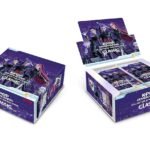
Is the USAOPOLY Flip 7 worth it? Yes, if you like your card games with a real “push your luck” edge—quick rounds, easy rules, and a price that makes it almost a no-brainer. This USAOPOLY Flip 7 review walks you through why it’s a solid pick for family game night.
Extremely low price paired with stellar user ratings makes this an exceptional value for casual gamers.
Price vs. rivals
Cheaper
CheaperTypicalPricier
Priced well below typical card games, offering exceptional value compared to similar press-your-luck strategy titles.
Ease of use
Excellent 90/100
The game's simple rules and quick gameplay make it very accessible for average players.
Overview
USAOPOLY Flip 7 is a fast-play card game where you flip cards one at a time, building a hand as you go, and decide when to stop before hitting that cursed seventh card that busts you. The core problem it solves: how to get a fun, unpredictable party game on the table in under five minutes that doesn’t require memorizing a rulebook.
It’s really for anyone who likes light strategy with a side of anxiety. Young kids? Maybe not—the reading is simple, but the risk-reward thinking clicks best around age 8 or up. Adults at a get-together? Absolutely. The box says 2–6 players, but I’d call 3–5 the sweet spot.
Key Features
Press-your-luck core mechanic – You keep drawing until you either cash out or draw a duplicate number that matches one you already hold. That tension of “one more card” is the whole game, and it works.
Simple two-step turns – Draw a card, then either stop or draw again. That’s it. New players pick it up in 30 seconds, which is rare for a game this engaging.
Special action cards – A handful of cards (Skip, Reverse, Shuffle) add chaos without complicating the rules. They keep experienced players from just counting cards.
Compact travel-friendly box – Roughly the size of a deck of cards and half the thickness. Fits in a coat pocket or the glovebox.
High player interaction – You can affect other players’ hands with certain cards, which means nobody is just watching. Even when you bust, you’re still involved.
Under $10 price point – At $7.97, it’s cheaper than a couple of craft beers. Hard to complain about a game that delivers 20-minute rounds for that.
Fit for You
You’re looking for a press your luck card game for family game night that works for ages 8–80 without a three-page tutorial.
You want a gift that doesn’t feel like a tacky stocking stuffer—small box, big personality.
You travel and need something that fits in a purse or backpack and doesn’t need a table prone to bumps.
You like games where luck and a tiny bit of strategy mix, but you hate long slogs. Flip 7 rounds wrap up in 10–15 minutes.
You’re buying for a family that already owns Flip 7 vs Skip-Bo card game? Skip-Bo is more about sequencing and patience; Flip 7 is faster, riskier, and louder at the table.
You want a game that teaches kids to manage risk without feeling like a math lesson.
Uses
Family game night after dinner. Everyone’s full and the kids are cranky? Flip 7 sets up in ten seconds. You can play three or four rounds in the time it takes to argue over Monopoly bank errors.
Tailgating or camping. Windy day? The cards are thick enough that a gust won’t send them flying across the picnic table. And the box is small enough to toss in a cooler bag.
Waiting at restaurants or coffee shops. The total game footprint is about the size of two coaster sets. No board, no tokens, just cards. You can play on a tiny table while you wait for your food.
Game night with non-gamers. Some folks freeze up at the sight of a rulebook. Hand them Flip 7, explain it in two sentences, and they’ll be comfortably losing in two minutes.
Experience
First thing you notice: the cards feel good. They’re thick enough to shuffle without bending, and the print is clear and colorful. No flimsy paper that’ll look ragged after two uses. The box, though, is a tight fit—at first you’ll struggle to get the cards back in without a little Tetris action. That’s a small annoyance that usually goes away after the first few plays as the box loosens up.
Setup is literally “open the box, deal two cards to each player, draw a starting card face-up.” You could teach the game during the first round. Turns are fast—everyone draws, groans, cheers in a quick loop. The biggest tension point: holding a hand of five different numbers and knowing one more draw could give you a sixth unique card (win) or a duplicate (bust). That moment when you have to decide? That’s where the game lives.
Downside you’ll notice after a few sessions: if you play with two players, the action cards feel too powerful. A single Shuffle card can completely reset the game, which makes the luck factor swing harder than with more players. At four or five players the chaos evens out. Also, the cards have a slight gloss that can make them slide off each other when stacked. It’s not a dealbreaker, but you’ll restack your hand a few times per round.
Storage is easy—it lives in a drawer or your bag. No batteries, no cleanup. The only real maintenance is making sure nobody bends a card when they get excited. Expect the corners to show wear after a couple dozen plays, but nothing that affects gameplay.
Pros and Cons
Pros
Learn in under a minute. No one will need to Google “Flip 7 game rules and gameplay” after the first round. That’s huge for a game you want to pull out impulsively.
Plays fast even with six players. Each round is 10–15 minutes, so everyone can cycle through multiple rounds without anyone zoning out.
Real decision-making per turn. You’re not just pulling cards mindlessly. You hold a 4, 7, and 9—do you risk drawing to try for a straight or hope for a pair to cash out with a modest score? That choice matters.
Portable and cheap. Under $8 and fits in a jacket pocket. Hard to argue with that combo for a game that provides hours of entertainment.
Good for mixed-age groups. Adults get the risk management; kids just enjoy the suspense. Everyone laughs when someone busts on a 50/50 call.
Cons
Two-player mode is unbalanced. With only two people, the special cards (especially Shuffle) swing outcomes too wildly. You’ll end up with one player feeling cheated.
Limited replay variety. After 15–20 plays, the patterns become familiar. There’s no expansion deck or variant rules in the box. You’ll need to invent house rules to keep it fresh long-term.
Box is too snug at first. You’ll curse getting the cards back in the first few times. It does relax, but that initial frustration is real.
Luck dominates over skill. If you’re a serious strategist who hates dice, this might annoy you. The press-your-luck element means anyone can win, but a less careful player can also lose just as easily.
Cards can get slippery. The glossy coating, while nice to shuffle, makes a tall stack of cards want to slide apart. You’ll restack your hand more often than you’d like.
Advantages
Compared to the most obvious competitor in the category, Flip 7 vs Skip-Bo card game is an easy contrast. Skip-Bo is about building sequential runs and managing a hand of cards over multiple rounds. It’s slower, more methodical, and better for players who like planning. Flip 7 is the opposite: fast, loud, and every turn is a tiny gamble. If your group gets bored waiting for someone to lay out a run, Flip 7 is the better pick.
Easier for non-gamers. Skip-Bo requires understanding sequencing and holding cards; Flip 7 is just “draw or stop.”
Under $10 vs $12–15 for Skip-Bo. Flip 7 is cheaper and delivers a different energy.
More portable. Skip-Bo’s box is twice the size; Flip 7 slides into a bag easily.
Better for short attention spans. If your group has restless kids or adults checking their phones, Flip 7 keeps everyone engaged.
Who Should Buy
Buy it: If you host game nights with mixed ages (8–adult) and want a quick party game that doesn’t need a deep strategy guide.
Buy it: If you’re looking for best press your luck card games for family game night that actually delivers tension without violence or complicated scoring.
Buy it: If you need a cheap, tiny gift for a coworker, neighbour, or Secret Santa with zero risk of them hating it.
Skip it: If your group loves deep strategic planning—get something like Race for the Galaxy or a good deck-building game instead.
Skip it: If you primarily play with two players. The two-player variant is okay but not nearly as good as with three or more.
Skip it: If you’re allergic to luck-based games and get frustrated when a novice beats you because of a lucky draw. Flip 7 rewards risk-taking, not long-term planning.
FAQ
Is the USAOPOLY Flip 7 worth it?
At under $8, it’s hard not to recommend it for anyone who enjoys quick card games with a press-your-luck twist. The value per hour of entertainment is exceptional—buy it, play it a dozen times, and you’ve spent less than a dollar per session.
How long does a typical game of Flip 7 last?
Each round runs about 10–15 minutes, depending on player count. With four players you’ll easily get three or four games in an hour. That’s part of the appeal—it doesn’t overstay.
What are the differences between Flip 7 and Skip-Bo?
Flip 7 is all about risk: keep drawing or stop. Skip-Bo is about building numbered sequences in order. Flip 7 is faster and more social; Skip-Bo rewards patience and card management. Pick Flip 7 for chaotic fun, Skip-Bo for a calmer challenge.
Can you offer any Flip 7 card game strategy tips?
Don’t cling to a safe hand. If you have five unique cards, you’re one draw from a winning hand—but that draw could also bust you. The real skill is reading the table: if everyone has low scores, pushing for the win is smart. If someone is close to winning, play more conservatively.
Is USAOPOLY Flip 7 a 2026 release or an older game?
The product page shows it as a 2025 release. It’s recent enough that it’s still fresh in the market, and the design feels modern. USAOPOLY card game 2026 review? Well, this is likely its first full year, so consider it a new entry in the press-your-luck category.
Does Flip 7 require a lot of table space?
No. You just need room for each player’s hand of cards (held or placed in front of them) and a central draw pile. A small coffee table or even a lap desk works fine. Ideal for cramped spaces or travel.
Final Verdict
USAOPOLY Flip 7 is a terrific little card game that does exactly what it promises: quick, tense, social fun for a remarkably low price. It’s not a deep strategy game, and it wobbles a bit with two players, but for family game night or a casual hang, it earns its keep.
The one thing to keep in mind: if your group craves strategic depth or plays mostly in pairs, look elsewhere. Otherwise, grab a copy, learn it in thirty seconds, and let the laughs—and the groans—begin. Yes, this USAOPOLY Flip 7 review says buy it.
The card game aisle is crammed with boxes promising family fun, but few deliver the kind of raw, nail-biting tension that USAOPOLY Flip 7 packs into every round. At $7.97, it undercuts nearly everything on the shelf while forcing you to make a gut-wrenching decision on every turn: flip one more card and risk losing everything, or bank your points and play it safe. That streamlined, press-your-luck core is its superpower – but it’s not the only game in town for family game night. Below I compare it against three genuine alternatives so you can decide whether Flip 7 deserves a spot in your cart or a rival does.
Product
Price Range
Key Strength
Key Weakness
Best For
USAOPOLY Flip 7
Budget (≈$8)
Pure press-your-luck tension with 2-minute rules
Can feel repetitive after several sessions; minimal long-term strategy
Quick, high-energy family rounds with kids 8+
Mattel Skip-Bo
Budget–Mid (≈$10–15)
More strategic sequencing and planning required
Setup and turns are slower; frustration when your hand stalls
Families who enjoy methodical, head-down card play
Mattel Phase 10
Budget–Mid (≈$10–15)
Varied phases keep the game fresh across multiple plays
More complex rules; games can drag past 45 minutes
Groups that like structured challenges and longer sessions
Exploding Kittens
Mid (≈$20)
Hilarious theme and player-interaction strategies
Player elimination leaves people watching; expansions cost extra
Older kids and adults who want a party atmosphere with card shenanigans
USAOPOLY Flip 7 vs Skip-Bo card game
This is the most direct comparison, because both games live in the same price bracket and target the same “grab a deck, start playing” audience. USAOPOLY Flip 7 vs Skip-Bo card game comes down to what kind of tension you want. Skip-Bo asks you to build numbered stacks from your hand and a shared draw pile – it rewards patience, hand management, and a bit of luck with the communal cards. Flip 7, on the other hand, delivers a faster, dumber, more thrilling jolt. You flip cards one by one. If you get a duplicate number, you lose everything you earned that turn. That’s it. The whole game is that moment, repeated. Skip-Bo is better for a quiet, thinky evening where you can yak between turns. Flip 7 is better for chaos, laughter, and the risk of someone screaming when they flip a second 5.
USAOPOLY Flip 7 vs Phase 10
Phase 10 has a loyal following because it offers progression – you work through ten distinct phases, each with its own pattern (two sets of three, a run of four, etc.). That structure means you’re never playing the exact same hand twice, which helps with replayability. Flip 7 doesn’t have that. Its sole mechanic is the flip-and-decide loop, and after ten games you’ll have seen every possible situation. So why pick Flip 7? Because Phase 10’s rulebook is a chore to teach. You’ll spend fifteen minutes explaining what a “run” is, and then someone will misplay a phase and get huffy. Flip 7 takes two minutes to explain, and every round lasts maybe ten minutes. If your group struggles with attention spans or you’re playing with kids who get bored reading a rulebook, Flip 7 wins. If your group loves structure and doesn’t mind the overhead, Phase 10 is the richer game.
USAOPOLY Flip 7 vs Exploding Kittens
Exploding Kittens is the pricier alternative, and it brings a different kind of pressure: you draw from a deck hoping you don’t hit a bomb. Sound familiar? It’s also press-your-luck, but layered with special cards that let you peek, steal, or defuse. That complexity can be a double-edged sword. The defuse cards create clever moments, but the game also eliminates players, leaving someone sitting out while others finish. Flip 7 keeps everyone active until the very last round – no one sits around watching. If your group is older (say, teenagers and adults) and you want the fun of sneaky card combos, Exploding Kittens justifies its higher price. But if you’re paying $20 for a family game, and your youngest is under ten, you’ll get more play and less fuss out of Flip 7 for a third of the cost.
Who should pick USAOPOLY Flip 7? If you want a cheap, loud, lightning-fast card game that can be taught in under sixty seconds and played five times in a row without anyone checking their phone, this is it. It’s perfect for family game nights where the kids are restless or for adults who want a quick warm-up before a longer game. Who should look elsewhere? If your group craves varied objectives, deeper strategy, or a longer campaign feel, skip Flip 7 and grab Mattel’s Phase 10 – it’ll give you that sense of progression. And if you primarily play with a more seasoned crowd that loves take-that moments, Exploding Kittens is the better (though more expensive) alternative.
Ready to decide on the USAOPOLY Flip 7?
See today’s price, stock and delivery options on Amazon.