If you’re looking for a Plant-Based rodent repellent review that cuts through the hype, here it is: these pouches are a solid, scent-based deterrent, but they demand realistic expectations. They aren’t a miracle cure for a full-blown infestation, but as a maintenance play or a smell-friendly alternative to poison, they absolutely earn their keep—especially in enclosed spaces like an RV or a pantry.
Priced significantly above typical repellent pouches despite mediocre reviews, indicating poor value relative to alternatives.
Price vs. rivals
Pricier
CheaperTypicalPricier
This product is priced higher than most comparable rodent repellent pouches on the market, likely due to the 12-pack count and natural positioning, but its low customer rating relative to similarly priced alternatives suggests it may not deliver strong perceived value for the premium.
Ease of use
Excellent 85/100
The pouches are easy to open and place in desired areas, requiring no special tools or preparation, though the moderate rating suggests some users may find the scent strong or results inconsistent.
Overview – A Practical Plant-Based rodent repellent review
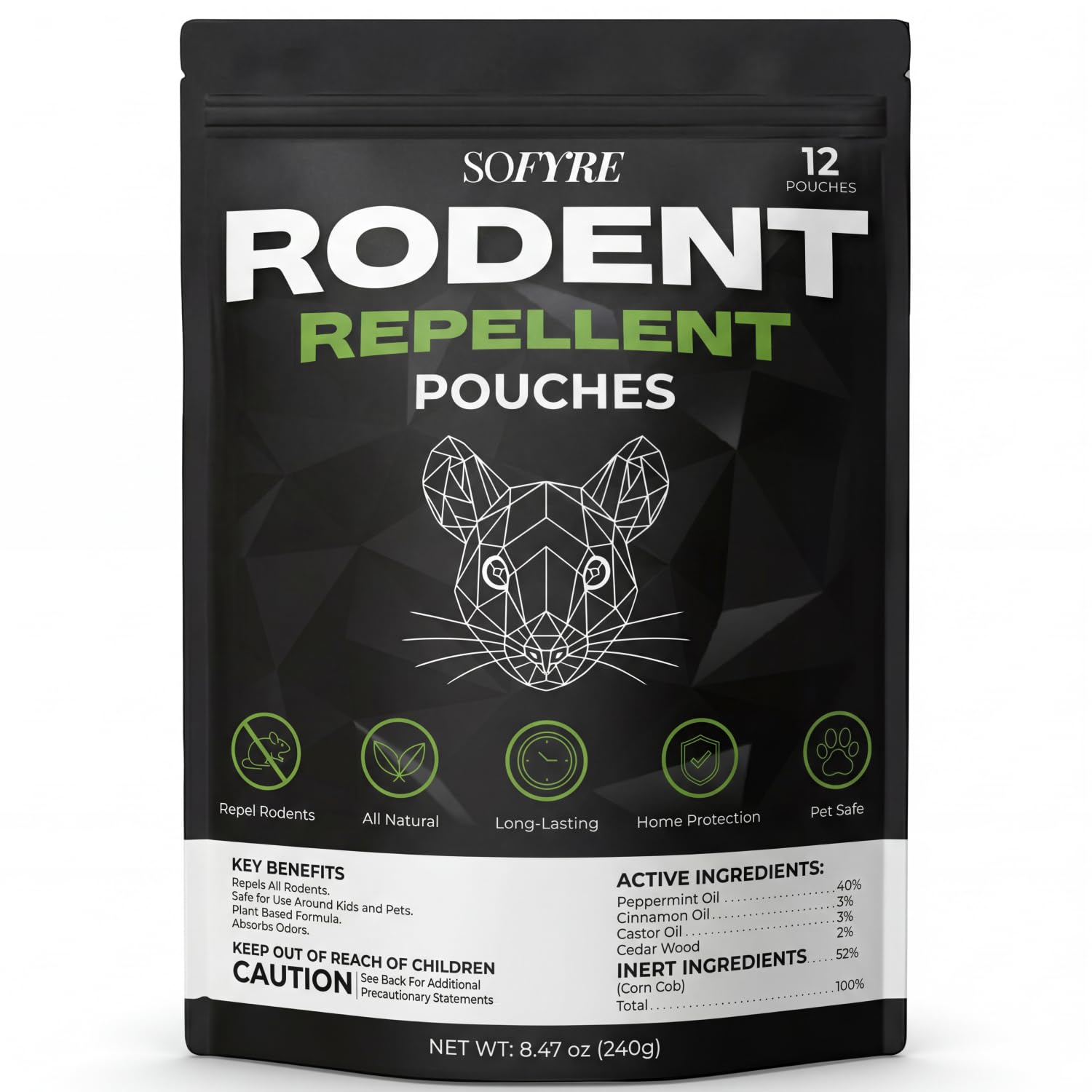
These are the Plant-Based Rodent Repellent Pouches, a 12-pack of fabric sachets stuffed with a blend of peppermint, cinnamon, and cedarwood oils. The idea is simple: rodents hate the concentrated scent, so they leave the area.
The buyer it really suits is someone who wants a poison-free, ultrasonic-free option to keep mice and rats out of specific zones. Think seasonal vehicle storage, a basement corner, or a tool shed. It’s prevention, not extermination. If you are fielding questions about is Plant-Based rodent repellent worth it, the answer usually depends on how well you manage the rest of the pest control equation.
Key Features of this Plant-Based rodent repellent
Plant-Based Scent Blend: You get a mix of peppermint, cinnamon, and cedarwood. The strong smell is the whole point—it masks rodent trails and irritates their noses without chemicals. It feels safer to have around food storage or pet areas.
Versatile Placement: The pouches sit quietly in drawers, glove boxes, engine compartments, or attic rafters. No cords, no noise, no setup beyond tearing open the sealed bag. This makes them appealing for places you rarely visit.
Weather-Resistant Packaging: The outer material holds up to humidity and temperature swings better than a paper sachet would, making them a reasonable choice for garages and basements.
12-Pack Value: At $49.99 you are getting a dozen pouches, which works out to roughly $4 per pouch. Coverage area isn’t huge per pouch, but the bulk pack lets you seal off multiple entry points around the house or vehicle.
Indoor and Outdoor Rated: You can toss one in a crawl space or a car trunk. Just don’t leave them fully exposed to direct rain, or the scent washes out faster. A covered patio or dry basement is ideal.
Fit for You – Who needs this pouch?
You keep a camper or travel trailer parked for the off-season and want a best natural mouse repellent for RV option that won’t stink up the whole cabin with poison risk.
You are tired of the tiny green pellets under your sink and want something that just smells like a Christmas candle instead.
You live in an older house where a mouse can squeeze through a dime-sized gap, and you’re playing defense across a dozen spots.
You want a peppermint rodent repellent indoor choice that doesn’t require you to remember to spray or recharge batteries every week.
You have pets and are looking for a plant-based pest control pouches alternative to traditional snap traps or poison baits in areas they can’t reach.
Uses – Where it fits best
Pop one behind the fridge before a long vacation. It’s cheap insurance against finding a nest when you get back.
Drop a pouch in the glove box of a car you don’t drive often. It keeps the interior from becoming a winter shelter for mice, and your mechanic will appreciate the pleasant peppermint scent compared to the usual rodent residue.
Scatter a few in the attic corners alongside the insulation. The cedarwood notes are actually pleasant to humans, but the rodents will steer clear of the strong scent barrier you have created.
For a dedicated peppermint rodent repellent indoor setup, put one in the pantry, one under the sink, and one in the storage closet. Rotate them every couple of months to keep the scent fresh.
Experience – The Reality of a Plant-Based rodent repellent
You’ll notice the scent immediately when you open the sealed pack. It’s strong, but not unpleasant—think peppermint tea mixed with a fresh cedar closet. The cinnamon adds a warmth that stops the mint from being too sharp.
Setup is as easy as ripping the bag open and placing them. The lack of setup is actually a huge draw. No screwing in an ultrasonic device, no mixing sprays. Just place and forget. You appreciate this most in the RV, where space and battery power matter.
The catch is the smell fades. Heavily. Owners tend to mention that the efficacy window is about 3 to 4 weeks before the scent drops below the level needed to actively repel. After that, you’re relying on residual scent, which isn’t as strong. You’ll need to replace them more often than you might expect for the price, which adds up.
The sachet material itself isn’t reusable or refillable. Once the scent is gone, the pouch is trash unless you DIY refill it. For a product positioned as plant-based pest control pouches, a reusable shell would be a nice step up, but the current design serves its purpose for the season.
Pros and Cons – The honest trade-offs
Pros
Genuinely Plant-Based: No poisons to worry about around pets or kids if they manage to dig a pouch out of a closed-off area.
No Noise: This is a major plus over the buzzy, high-frequency rodent repellent pouches vs ultrasonic debate. These are silent, which pest control devices rarely are.
Good Scent: Peppermint and cedarwood are a far cry from mothball fumes or dead-rat smell. Your garage smells like a spa for a few weeks.
Versatile Coverage: The 12-pack is overkill for a small apartment but perfect for a multi-zone property like a house with a detached garage and a camper.
Cons
Short Lifespan for the Price: At $50 for the pack, if the scent lasts a month, you are spending over a hundred bucks a season to keep one zone protected. That adds up.
Limited Range: Do not expect one pouch to cover a whole room. This is a close-proximity repellent. You need to place them where the mice are already traveling.
Not a Cure for an Infestation: If you already have mice nesting, this will not drive them out. You need to evict them first, seal the holes, and then use these as a deterrent.
Packaging Could Be Better: The sachet material isn’t reusable or refillable. Once the scent is gone, the pouch is trash unless you DIY refill it.
Advantages – How it beats the competition
Compared to ultrasonic repellents, which have mixed results and can drive your dog nuts, these pouches offer decisive peace and quiet. They don’t plug in, they don’t use electricity, and they don’t stop working when the power goes out. The rodent repellent pouches vs ultrasonic argument usually comes down to preference, but for an RV or a car, the pouch wins hands down: it doesn’t drain a battery.
Over traditional poison baits, the safety advantage is obvious. You don’t have to worry about a poisoned rodent dying in your wall and stinking. The scent is a repellent, so it keeps them out rather than inviting them in for a snack. For a best natural mouse repellent for RV or a boat, that logic is hard to beat.
Who Should Buy – The final call
Buy it if: You need a maintenance repellent for a seasonal vehicle, a basement, or a storage unit. The scent-based system is perfect for sealed-off areas you check infrequently.
Buy it if: You are looking for the best natural mouse repellent for RV that does not require power and is harmless to the wiring or interior.
Skip it if: You have a heavy, persistent mouse problem in a warm, open house. You need exclusion (steel wool, sealant) and traps first. This is a tertiary defense.
Skip it if: You want a single, set-it-and-forget-it cure. The refill cost is real, and the maintenance schedule of replacing pouches monthly is a chore many people underestimate.
FAQ – Your questions answered
Is the Rodent Repellent Pouches worth it?
For specific use cases like an RV, a car, or a sealed-off basement, yes. It is a clean, poison-free way to prevent mice from settling. For a full-blown house infestation requiring total coverage, the cost per pouch over time makes it a poor primary solution compared to exclusion and traps.
How long do the Plant-Based rodent repellent pouches last?
Expect the strong peppermint and cedarwood scent to be actively effective for about 3 to 4 weeks. After that, the smell fades enough that motivated rodents might start testing the boundaries again. The pouch will still smell faintly, but not enough to consistently stop them.
Is the best natural mouse repellent for RV actually effective here?
Yes, an RV is the perfect environment. The enclosed space contains the scent perfectly, and the lack of air circulation means a single pouch in the cabin and one in the engine bay can create a powerful barrier. It is silent and does not drain the battery like some alternatives.
Are these safe to use as a peppermint rodent repellent indoor option with pets?
They are plant-based, so the risk of poisoning is essentially zero. However, the pouches contain essential oils, which can be irritating in large quantities if a dog chews one open. Place them in areas out of reach like behind appliances or in cabinets.
How do these compare in a rodent repellent pouches vs ultrasonic matchup?
Pouches win on silence, portability, and safety. Ultrasonics win on coverage area if you have outlets everywhere. The pouches are better for cars and RVs; ultrasonics might work for a single open room in a house, but the efficacy of high-frequency sound is widely debated.
Do the cedarwood rat repellent pouches really work on rats?
Rats are bolder and smarter than mice. The scent deterrence is less effective on them in open areas. In a tight space like a crawlspace or a garbage enclosure, the strong cedar note can help. For rats in a yard, consider a dedicated outdoor trap or bait station.
Final Verdict – Is it worth it?
The Plant-Based rodent repellent review comes down to an honest trade-off. You buy them for the peace of mind that comes with a natural, clean-smelling, non-toxic barrier in sensitive spots. They earn their keep in your RV, your car, your pantry, and your basement window well.
The one thing to keep in mind is the clock is ticking the second you open that bag. Enjoy the fresh peppermint blast, mark your calendar for a month from now, and decide if the refill cost is worth the clean, silent operation. For the right buyer, it absolutely is.
Rodent Repellent Pouches vs the Best Alternatives in 2026
Rodent control comes in a few distinct flavors: instant kill, slow poison, loud noise, and scented barriers. The Plant-Based Rodent Repellent Pouches sit squarely in the “scented barrier” lane, trying to take market share from the established juggernaut Fresh Cab. It wants to be the safer, natural option for places you spend time in — like an RV or a car. But with a 3.1-star average, it has a lot to prove against competitors that are cheaper, faster, or far more proven.
Product
Price Range
Key Strength
Key Weakness
Best For
Plant-Based Rodent Repellent Pouches
Mid-High ($49.99 / 12-pack)
Safer natural oils, pleasant sweet scent (peppermint, cedar, cinnamon)
Proven high reviews, EPA exempt status, strong outdoor odor
Overpowering balsam pine smell can be cloying indoors
Cabins, sheds, long-term storage
Victor M310A Electronic Trap
Mid ($25-$40)
Instant kill, reusable, no poison or mess
Requires batteries, only catches one mouse at a time
Active home infestations
Bell + Howell Ultrasonic Repeller (6-pack)
Low ($15-$25)
Silent operation, plug-and-forget, no smells
Questionable real-world efficacy, easily blocked by furniture
Preventative plug-in, small dry rooms
Tomcat Poison Bait Blocks
Low ($5-$15)
Cheapest option, highly effective if eaten
Deadly to pets and kids, dead rodents in walls
Severe infestations with careful monitoring
Rodent Repellent Pouches vs EarthKind Fresh Cab
This is the clearest rivalry. Both use plant oils to deter critters, and Fresh Cab has owned this lane for years. Fresh Cab relies on a strong balsam fir and peppermint combo that can cut through the stale air of a dusty storage unit. The Plant-Based pouches go for a sweeter trifecta of peppermint, cinnamon, and cedarwood. If you hate the smell of pine — and plenty of people do — the Plant-Based pouches are a much gentler alternative for an indoor space. The catch is reliability. Fresh Cab has a strong, long-lasting reputation. The Plant-Based pouches’ 3.1-star rating suggests their oil load isn’t as generous or the sachet material lets the scent escape too fast for long-term seasonal use.
Rodent Repellent Pouches vs Ultrasonic Plugins
Ultrasonic repellers are perfect for people who want a set-and-forget tool without any smell. You plug them in, and the high-frequency noise supposedly drives mice nuts. In reality, a lot of dust and furniture will block the sound, and rodents can habituate to it. The Plant-Based pouches work differently: they create a physical aroma barrier. In the stationary air of a car, pantry, or RV cupboard, that scent can be very effective. The big trade-off is the scent itself. If you don’t want your car to smell like a candy shop, the silent, odor-free ultrasonic route might be your only real alternative.
Rodent Repellent Pouches vs Victor Instant Kill Traps
This is the difference between preventing a problem and solving an active one. If you have mice leaving droppings on your counter right now, the pouches will not fix that. They are a preventative smell fence. For an active problem, a Victor snap trap or electronic trap is a no-brainer. It’s a cheap, proven solution. But it means handling dead mice and resetting traps. The Plant-Based pouches are a lazy person’s prevention game. You toss them under the hood of your RV or in a closet and hope the smell makes things unappealing. If you are trying to keep a seasonal vehicle mouse-free between trips, the pouches are a much less gruesome chore than checking traps.
So, should you buy the Plant-Based Rodent Repellent Pouches? Yes, if you need a poison-free sachet for a small, enclosed space like a car, a travel trailer, or a boat — areas where poison or traps feel wrong or unsafe. The price per pouch is steep for what you get. For a cabin or a dusty basement, the EarthKind Fresh Cab pouches have a longer track record and a stronger, longer-lasting smell. For an active mouse problem in your kitchen, skip both and get a Victor trap. The Plant-Based pouches are a decent idea for a very specific job — keeping a small space smelling unappealing to mice between uses — but they are the wrong tool for a full-blown invasion.
Ready to decide on the Rodent Repellent Pouches?
See today’s price, stock and delivery options on Amazon.