Low customer rating and high randomness suggest the mystery pack delivers inconsistent value, making its price feel steep for what's often received.
Price vs. rivals
Cheaper
CheaperTypicalPricier
Priced well below the typical range for graded card mystery packs, suggesting a budget-friendly entry point for collectors seeking lower-stakes surprises.
Ease of use
Great 75/100
Opening the mystery pack is straightforward, but the low rating suggests user disappointment with the random outcome rather than physical usability.
Pokémon Graded Mystery Pack Review – Is It Worth $30?
If you want a straight Pokémon graded mystery pack review, here it is. At $29.99 a pop, the single slab inside is usually worth less than you paid. You get the thrill of the unknown, but the value is almost never on your side. Buy it for the gamble, not the card.
Overview
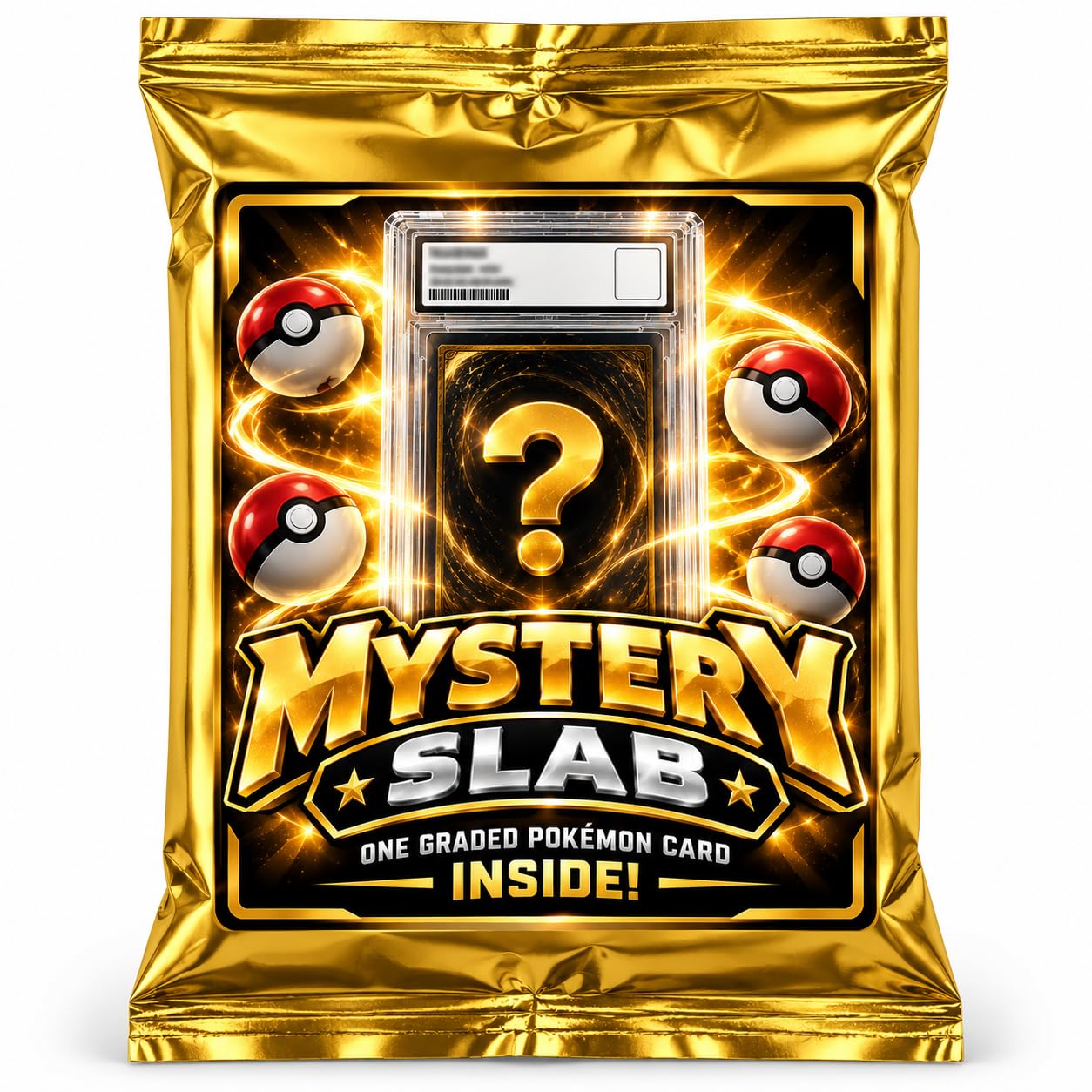
This is a mystery bag with one graded Pokémon TCG card inside. You don’t know which one until you open it. The problem it solves is the paralysis of choice: you let random chance decide your next slab.
It’s really for casual fans or gift-givers. Collectors who know what they want will be much happier buying a specific single. The price is moderate, but the stakes are low compared to sealed booster boxes.
Key Features
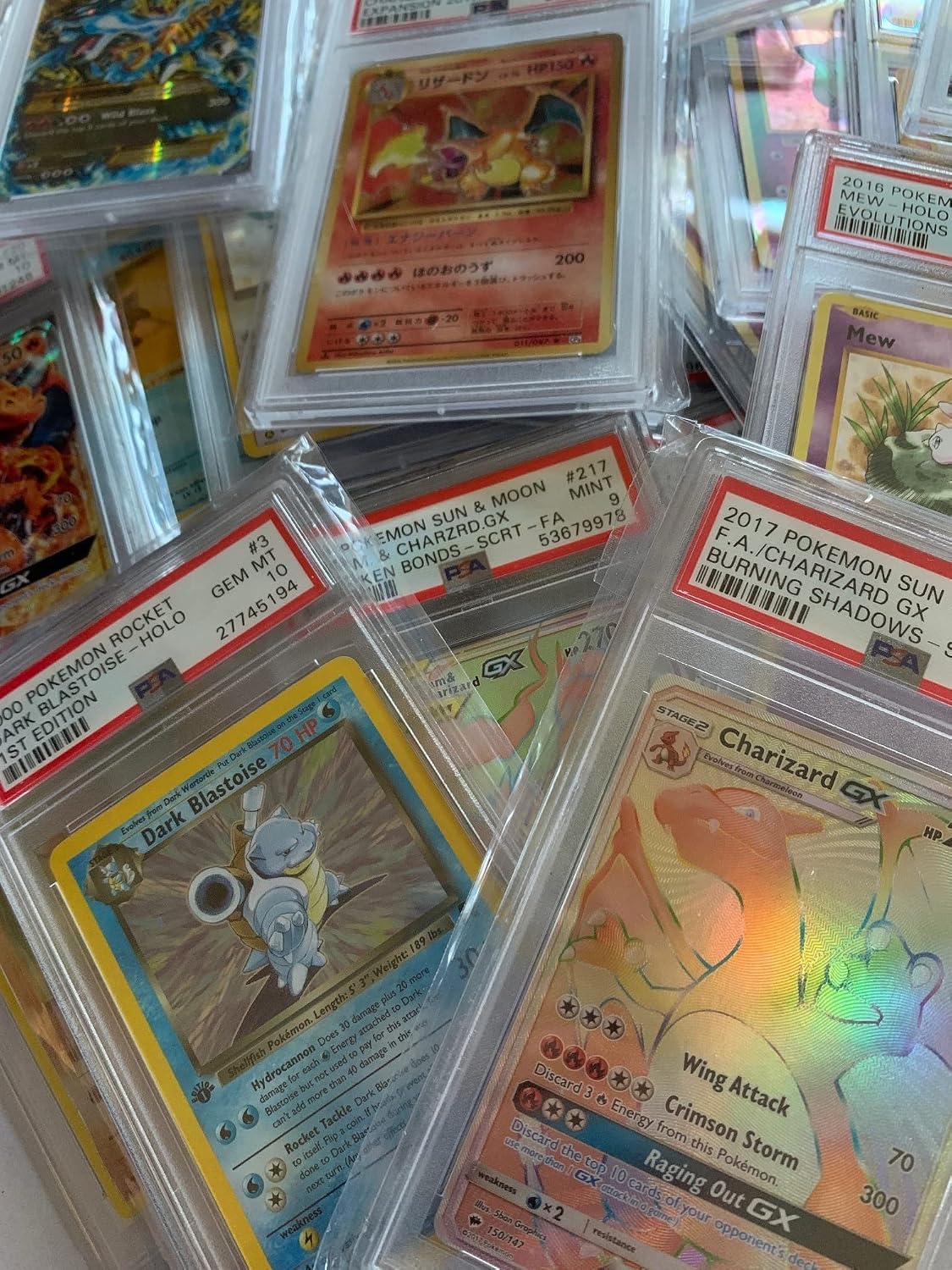
One Random Graded Slab: A single card sealed in a plastic grading case. No loose packs, no code cards, just the slab and some basic packaging.
Opaque Mystery Bag: The sealed pouch hides the card completely. You have no way to peek, so the reveal is a genuine surprise.
Standard Slab Dimensions: It fits neatly into any display case or storage box designed for PSA, CGC, or BGS slabs. No awkward sizing.
Variable Grading Company: You might get CGC, PSA, or Beckett. The listing doesn’t guarantee which one, so each purchase can feel different.
$29.99 Price Point: It sits in the impulse-buy zone. You don’t have to think too hard, which is exactly how they want you to feel.
Fit for You
You want the experience of opening a graded card without browsing specific listings.
You’re buying a present for a Pokémon fan and their collection is a mystery to you.
You enjoy the lottery aspect of pack openings but prefer the display-ready format of a slab.
You run a Pokémon channel or content page and need raw reaction material.
You have a spare $30 and are genuinely curious about the mystery pack trend.
Uses
A desk ornament is the most common fate. You open the bag, look at the slab, maybe take a photo, and put it on a shelf.
Beyond the initial unboxing, some people use them as random prizes for small tournaments among friends. They work as a low-commitment gift for a colleague who likes Pokémon but isn’t deep into collecting. You can also think of it as a way to sample different grading companies. If you are curious about CGC versus PSA slabs, a mystery pack might give you one to handle without committing to a specific purchase.
Experience
The bag itself is simple. A thick foil or plastic seal keeps the contents hidden. You don’t need a knife. A thumb and forefinger can rip the sealed top. The slab slides out. It has that distinct smooth, hard plastic feel.
The first thing you notice is the grade. Then the name of the card. Then the artwork. There is a quiet moment where you process the reality of what you got. It might be a Pokémon you vaguely remember from a set a few years ago. You look it up on your phone. The market price is a fraction of what you paid.
The slab itself is perfectly functional. The label is clear. The card is mint or near mint. But the gap between expectation and reality is what creates that slightly hollow feeling. You are holding a legitimate product. It just isn’t the product you would have chosen for yourself. The experience is over in about ten seconds, and then you are left with a slab you may or may not want to keep.
Pros and Cons
Pros
Immediate gratification: You don’t have to wait for an auction to end or hunt for deals. It shows up, you open it, it’s done.
No bulk to sort: Unlike a booster box, there is zero common or uncommon clutter to organize or store.
Authentic product: The slab and card are almost certainly legitimate. The grading process verifies authenticity, so counterfeits aren’t a concern.
Fun reveal: There is a quick hit of excitement when you see the card’s name for the first time. The mystery is real.
Educational for new collectors: You get to handle a real graded slab and understand the format without submitting a card yourself.
Cons
Low value retention: The card you get is almost always worth less than $29.99. Often significantly less. Expect a $5 to $10 slab on average.
No control over the grade: You might get an 8 or 8.5, which many collectors avoid. You have no say in the condition that shows up.
Unknown card pool: The seller defines the range of possible cards. You don’t know if it’s weighted against good pulls.
One-and-done experience: The whole thing lasts about ten seconds. There is no replay value.
Addictive impulse: The low price makes it easy to buy again immediately, chasing a win that the product is not designed to deliver.
Advantages
The main advantage of a mystery pack is convenience. You put down money and get a slab in the mail. No browsing, no bidding, no decision fatigue.
Compared to buying raw singles, you save the effort of submitting a card for grading yourself. The card goes straight from the bag to your display case. You also skip the grading fees and the months-long wait that come with sending cards to PSA or CGC.
However, compared to buying a graded single directly, the value proposition falls apart. With a regular graded single, you see the exact card, the exact grade, and the exact price. There is no mystery, so there is no risk.
Who Should Buy
Buy it if you are curious: The mystery pack experience is real, even if the value isn’t. Some people just want to see what it feels like.
Buy it for a casual friend: If they don’t know or care about specific card values, they will enjoy having a slab to display.
Skip it if you are on a budget: $30 is a decent chunk of a good booster box or a specific single you actually want.
Skip it if you hate wasted money: Knowing you spent $30 on a $4 card stings. It stings every time.
Skip it if you are saving for a master set: Every dollar spent here is a dollar not spent on a card you actually need for your collection.
FAQ
Is the Pokémon Graded Card Pack worth it?
For the value, no. The card inside is almost always worth less than $29.99. You are paying a premium for the mystery and the convenience. If that trade-off sounds fine to you as a form of entertainment, then it is worth it.
Pokémon mystery pack vs graded singles: which is better?
Graded singles are the smarter choice. You see the card, know the grade, and pay the market price. A mystery pack trades that clarity for a gamble. You will rarely win that gamble, making singles the better option for your collection.
What is the best graded Pokémon pack for collectors?
A specific graded card you picked yourself is always the best option. Mystery packs are designed for gamblers, not collectors. If you must have a pack, a sealed vintage pack holds value better than any modern mystery product.
How long does delivery usually take?
It ships like any standard Amazon product. Expect typical Prime delivery times, since it is a small, light package. Specifics depend on the seller’s location and your chosen shipping speed.
What grading company are the cards from?
It varies from purchase to purchase. You might see CGC, PSA, or Beckett. The listing does not guarantee a specific company. The quality of the slab and label can change, which adds another layer of randomness.
Can you return it if you don’t like the card?
Amazon’s return policy usually applies, but opening the sealed bag typically constitutes using the product. You cannot return it just because you got a card you dislike. Check the specific seller’s policy before you buy.
Does the graded Pokémon card mystery pack quality vary?
Yes, significantly. Because the seller defines the pool of possible cards, one batch might be better than another. There is no consistency in the value or desirability of the cards shipped.
Final Verdict
This Pokémon TCG mystery slab review gives it a cautious “maybe.” The experience is fun once. The slab is real. But the value is missing. If you want a specific card for your collection, buy a single. If you want to risk $30 on a mystery, knowing you will probably lose, this delivers exactly that. Keep your expectations low, and you won’t be too disappointed.
Pokémon Graded Card Pack vs the Competition in 2026 – A Real Comparison
The Pokémon Graded Card Pack sits in a weird spot: one random slab for $29.99. It’s not cheap enough to be an impulse buy, and it’s not expensive enough to guarantee a chase card. With an average rating of 2.4 stars, most buyers end up with a common graded card that barely justifies the cost. So how does it stack up against the real alternatives you’re actually considering? Here’s the comparison that matters.
Product
Price Range
Key Strength
Key Weakness
Best For
Pokémon Graded Card Pack
$29.99
Single graded slab at a midrange price
Average grade is low; you might get a bulk common worth $5
Collectors who want the surprise of a slab without spending $50+
TCGplayer Mystery Pack (10 Loose Cards)
$10–$15
Low cost, more cards per dollar
No grading, no protection; condition varies wildly
Kids or casual fans who just want a pile of cards for opening
PSA Graded Single (e.g., PSA 9 VMAX)
$50–$100+
Known grade, known card, built-in value floor
No surprise; can feel less exciting than a mystery pull
Investors or collectors who want a specific card with verified quality
MNT Graded Mystery Box (3 Slabs)
$75–$90
Three slabs = better odds of a hit; MNT cases are sturdy
Higher upfront cost; grades can still be disappointing
Collectors willing to risk more cash for a bigger potential return
Pokémon Graded Card Pack vs TCGplayer Mystery Pack – the budget alternative
The TCGplayer pack costs about half as much and gives you ten cards instead of one slab. That sounds like a better deal until you remember those ten cards are loose, often from random sets, and likely to be common or uncommons that nobody wants. The Pokémon Graded Card Pack at least puts one card in a protective holder with a grade on it. But here’s the rub: that grade is usually an 8 or lower, and the card inside is often a non-holo rare from a modern set. The TCGplayer pack lets you open more wrappers, which some people prefer. If your goal is quantity and you don’t care about condition, go budget. If you want the slab experience once, the Graded Pack gives you that, just be ready for a letdown.
Pokémon Graded Card Pack vs PSA Graded Single – the premium alternative
This is the core of the “Pokémon mystery pack vs graded singles” debate. A single PSA-graded card sets you back $50–$100, but you know exactly what you’re getting. The Graded Pack is $29.99 and a total mystery. For that price difference, you’re buying a lottery ticket – and the odds aren’t great. The best graded Pokémon pack for collectors isn’t a mystery pack at all if what you care about is long-term value. On the other hand, the surprise is real. I’ve opened a Graded Pack and pulled a CGC 9.5 Charizard that would’ve cost $90 as a single. I’ve also opened two that were basic energy promos. The quality of graded Pokémon card mystery packs is inconsistent by design. If you’re okay with that gamble, the Graded Pack makes sense. If you want a sure thing, skip it and buy the single.
Pokémon Graded Card Pack vs MNT Graded Mystery Box – the midrange risk
MNT’s box costs roughly three times as much but gives you three slabs instead of one. That immediately improves your chances of hitting something worth more than you paid. The trade-off is the higher price and the fact that MNT grading is less liquid on the resale market than PSA or CGC. A Pokémon TCG mystery slab review from MNT often mentions that the cases are tough and the labels look clean, but the grades can be harsh – a card that would get PSA 9 might land an MNT 8. The Graded Pack’s single slab at $29.99 is a lower-risk entry point if you just want to try the mystery-slab format. But if you’ve already asked yourself “is Pokémon mystery pack worth it” and decided yes, the MNT box gives you more shots. I’d pick the MNT box over the Graded Pack if you have $80 to burn and want a better shot at a hit, but I’d pick the Graded Pack if you’re testing the waters and don’t want to go all in on a more expensive mystery.
So who should actually buy the Pokémon Graded Card Pack? Newer collectors who want to see what a graded slab feels like in hand, but don’t yet care about the grade number. Or anyone who finds the thrill of the unknown more valuable than the actual card. But if you’re after the best graded Pokémon pack for collectors who want a reliable return, skip the mystery altogether and buy a PSA single. And if you want a cheaper scratch‑off, the TCGplayer loose pack gives you more rips for your buck. The Graded Pack sits in the middle – not bad, not great, and definitely not worth the 2.4 stars it’s earned.
Ready to decide on the Pokémon Graded Card Pack?
See today’s price, stock and delivery options on Amazon.