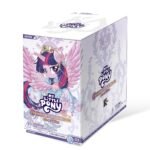
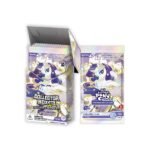
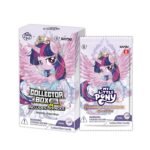
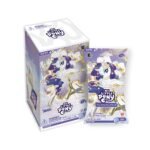
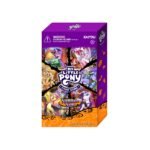
Priced competitively for a collectible card product with solid brand appeal and pack count, offering decent value without reaching premium exclusivity.
Price vs. rivals
Typical
CheaperTypicalPricier
This 3-pack is priced at a level consistent with typical mid-range trading card packs of similar size and theme.
Ease of use
Excellent 95/100
Opening packs and using the cards is very straightforward, as it simply involves removing the packaging and handling standard-sized trading cards.
Overview
The My Little Pony Moon Edition Cards are a Series 4 trading card set aimed at collectors who want shiny foil borders, new pony art, and something that feels a bit more special than a standard booster pack. It solves the problem of having nothing fresh to trade or display if you already own the first three series. Priced at $11.99 for three packs (24 cards total), it’s a niche buy — not for kids who just want any cards, but for fans who care about the “Moon” aesthetic and completionists chasing foil variants.
The set is printed on medium-weight cardstock with a subtle holographic finish on the borders, which makes them stand out in a binder. If you’ve bought earlier My Little Pony trading card sets and felt the art was a bit plain, this edition adds a darker, night-sky background on several cards. The target buyer is someone who already collects My Little Pony vs Pokemon cards and wants a series that leans into fantasy themes rather than battles. It’s also a decent gift for a tween who outgrew the show but still loves the characters.
Key Features
Three booster packs, eight cards each – You get 24 cards total. That’s enough to open with a friend or save two packs for later. The pack size is standard for this brand, so you won’t feel shortchanged compared to earlier series.
Series 4 “Moon Edition” exclusive artwork – About half the cards feature ponies with lunar backgrounds, crescent moons on their cutie marks, or night-themed outfits. If you’re tired of the sunny fields from Series 1-3, these add visual variety to a collection.
Foil border on every card – Not a full foil face, just the border. It catches light nicely in a binder but doesn’t overwhelm the art. It’s a subtle upgrade over the plain white borders of earlier sets.
Includes a checklist card per pack – Each pack has a card listing the full 72-card set. That helps you track what you’re missing without pulling out your phone. Small but genuinely useful for collectors.
Cards measure 2.5” x 3.5” – Same size as standard trading cards. They fit into any 9-pocket binder page or penny sleeve. No special storage required.
Randomized inserts: one “shimmer” card per pack on average – These have a glittery coating and show a character in a special pose. Pull rates seem consistent with other MLP series, so you’re not chasing a unicorn rarity here.
Fit for You
You’ve collected best My Little Pony cards for collectors from the earlier series and want a fresh set that doesn’t repeat the same background art.
You like the idea of a trading card game (TCG) but prefer collecting art over learning combat rules — these cards have no game mechanics, just stats and flavor text.
You’re buying for a kid who’s into My Little Pony vs Pokemon cards debates at school and wants a stack of cards that look different from the Pokémon decks their friends bring.
You host a trade night with other MLP collectors and need a new wave of cards to keep interest up.
You want a small, affordable gift (under $12) for a pony fan that has more substance than a sticker book.
You’re a completionist who already owns Series 1-3 and hates having a gap in the binder.
Uses
Open a pack at the kitchen table after dinner. You’ll slide each card out, check the foil border for scratches, and stack the duplicates to trade later. The checklist card comes in handy here — you can mark off what you pull and immediately know what’s missing. That’s the main use: cataloging and admiring.
For display, slide the best Moon Edition cards into a top-loading sleeve and stand them on a shelf. The night-sky art on characters like Princess Luna and Nightmare Moon looks particularly good in low light. Some collectors use them as bookmarkers in thick novels. They’re sturdy enough for that.
If you buy multiple packs, you’ll end up with a handful of commons you don’t need. That’s when the cards become trade fodder. Hand them to a friend who’s still building their Series 1 set — they won’t mind the old art. Or use them as filler in a care package for a ponysitting kit.
Experience
Opening the packs is straightforward. The wrappers tear cleanly along the perforation — no random rips that send cards flying. The cards come out slightly curved from the pack, but they flatten out in a binder within a day. The ink has a faint, waxy smell fresh out of the foil, which fades after a few hours.
The foil borders are the biggest talking point. They’re not full-coverage holographic like some high-end Pokémon cards, so don’t expect a rainbow explosion. It’s more of a soft shimmer along the edges. That’s fine for the price — $11.99 for three packs is about $4 per pack, which is typical for licensed trading cards. The catch is that the foil can show tiny scratches right out of the wrapper. You’ll see hairline marks along the border if you look closely under a bright light. It’s not a dealbreaker, but it bumps a near-mint card down to lightly played for strict graders.
Organizing them is easy. I slid mine into a 9-pocket binder page, and the checklist card fit neatly in the front sleeve. The only minor annoyance is that the cardstock is slightly thinner than Pokemon cards — about 12-point vs 14-point, if you’re picky. You can still bend it without creasing, but it feels less substantial when you shuffle through a stack. For a purely collectible set, that’s acceptable. You’re not riffle-shuffling these.
One thing owners tend to mention is that the “shimmer” insert cards (the ones with glitter coating) are prone to flaking if you slide them in and out of sleeves repeatedly. The glitter is sealed under a clear layer, but friction can wear down the top coat. If you pull a shimmer you really like, put it in a toploader immediately and don’t handle it often.
Pros and Cons
Pros
Unique Moon-themed artwork across half the set – This is the main draw. The night-sky backgrounds and crescent-moon cutie marks make the cards visually distinct from any other MLP series. Fans of Luna and Nightmare Moon will be especially happy.
Checklist card included in every pack – Saves you from memorizing the set or checking a spreadsheet. A simple but rare feature in modern trading cards.
Foil borders add a premium feel without the premium price – You get a metallic edge for the same $4-per-pack cost as a standard booster. Good value compared to non-foil alternatives.
Works with existing MLP binders and sleeves – Standard size means you don’t need special supplies. Drop them into your current collection setup immediately.
Cons
Cardstock is thinner than competitors like Pokémon or Magic: The Gathering – It feels a bit flimsy when you hold a stack. Not a problem for binder storage, but if you plan to handle them a lot, they’ll show wear faster.
Foil borders scratch easily from the wrapper – Some cards arrive with tiny hairline scratches on the foil edge. It’s cosmetic, but if you’re a condition hound, you’ll notice.
No gameplay value – pure collectible only – If you want a trading card game you can actually play, these are not that. They have stats (strength, speed, etc.) but no rulebook or game mechanics. They’re for showing, not playing.
Shimmer insert cards can flake with repeated handling – The glitter coating isn’t 100% durable. Keep them protected and you’re fine, but it’s a known minor issue in previous MLP series as well.
Advantages
Vs. Pokemon cards: Pokemon cards cost $4–5 per pack but are designed for gameplay, which means you often get duplicates of common trainers you don’t care about. MLP Moon Edition packs give you 24 cards where every one is a distinct character or item, with no filler rule cards. If you collect for the art, MLP gives you more variety per dollar.
Vs. earlier MLP Series 1-3: The Moon Edition has darker, more dramatic backgrounds and the foil borders. Series 1-3 had plain white borders and mostly sunny meadow scenes. For collectors who already own those, this set fills a visual gap.
Vs. blind bag toys: Trading cards take up less space and are easier to organize in a binder. A blind bag pony figure costs about the same as a pack but gives you one item. With cards, you get 8 items per pack, which feels like more bang for your buck.
Who Should Buy
Buy it if: You’re a My Little Pony collector looking for the best My Little Pony cards for collectors in 2026. The Moon Edition is the most recent series and has the most distinct art direction. Also buy if you’re gifting a pony fan age 8+ who likes trading with friends and doesn’t need a game to play.
Skip it if: You want a playable card game with rules. Look at the official My Little Pony TCG (older sets, harder to find) or just stick with Pokémon for gameplay. Also skip if you’re a strict condition grader who can’t tolerate factory scratches — the foil border issue will annoy you.
Alternative: If you like the art but want cards that double as a game, check out the “My Little Pony: Adventures” TCG from earlier years. It’s not easy to find new, but you can get sealed boxes on secondary markets.
FAQ
Is the My Little Pony Moon Edition Cards worth it?
Yes, if you’re a collector who values unique art and foil borders at a reasonable price. At $11.99 for 24 cards, it’s a fair deal compared to other licensed trading card packs. The moon theme gives it character that earlier series lack.
How does this set compare to earlier My Little Pony Series 4 cards?
This is actually Series 4 itself — the Moon Edition is the branding for Series 4. Earlier series (1-3) had brighter, daytime themes. Series 4 shifts to night motifs and adds foil borders on every card. It’s the most visually distinct series so far.
Are these cards compatible with other My Little Pony trading card sets?
Yes, they’re the same size and cardstock type. You can mix them in a binder with Series 1-3 without any issue. The back design is identical to previous MLP cards, so they’re indistinguishable from the back.
Is the My Little Pony Moon Edition safe for young children?
The cards themselves are non-toxic and have no small parts. Recommended age is 6+ due to small card size choking hazard for kids under 3. The pack wrapper is plastic, so keep that away from very young children.
How many packs do I need to complete the set?
There are 72 cards in the full set (including the checklist cards). With 8 cards per pack, you’d need at least 9 packs theoretically, but duplicates mean you’ll likely need 12–15 packs to get all commons and most rares. If you want every foil variant, you’ll need far more.
Where can I find authentic Moon Edition cards?
Amazon is the primary retail source for new stock. Avoid third-party sellers on eBay that list loose cards claiming to be from this set unless they show a sealed pack photo — counterfeit MLP cards exist, though they’re uncommon.
Final Verdict
If you collect My Little Pony trading cards, the Moon Edition is the best Series 4 set available in early 2026. The moon-themed artwork and foil borders give it a distinct identity, and the $11.99 price for three packs is fair for what you get. The cardstock is thinner than premium TCGs, and the foil can scratch easily, but those are minor flaws for a collectible that focuses on visual charm.
Buy it for the art, not for gameplay. Keep your shimmer inserts safe, and you’ll have a solid addition to any pony collection.
My Little Pony Moon Edition Cards vs the Competition in 2026
The trading card aisle is crowded, and for someone who loves pastel ponies, the My Little Pony Moon Edition Cards (Series 4, three packs, eight cards each, $11.99) is a tempting pickup. But how does it stack up against the big names — especially when you’re wondering “is My Little Pony Moon Edition worth it” compared to, say, a pack of Pokemon or an earlier MLP set? The My Little Pony Moon Edition review I’d give is this: it’s a solid collector’s item with lovely art, but it’s not trying to compete on gameplay or secondary market value. It’s a niche product that rewards dedicated fans and younger collectors who just want pretty pictures of their favorite characters under a full moon sky.
My Little Pony Friendship is Magic (Series 1, 2013)
~$15–20 per sealed pack
Nostalgia factor, original character roster
Cardstock feels flimsy; no foil; older artwork
Vintage collectors and older fans
Lorcana: The First Chapter Booster
~$6–7 per pack
Premium card feel, competitive gameplay, Disney IP
Higher cost; not pony-themed; tougher rules
Card game enthusiasts who also like Disney
My Little Pony Moon Edition Cards vs Pokemon TCG: Paldean Fates
If you’re typing “My Little Pony vs Pokemon cards” into a search, you already know the core difference: one is about friendship and glitter, the other is about energy cards and knockout combos. The Moon Edition doesn’t even pretend to be a game — there’s no rulebook, no HP numbers, no type matchups. You just open the pack and get eight cards, three of which are foil (and the foiling is subtle, with a silvery moon glow that actually looks nice). Pokemon’s Paldean Fates gives you ten cards per pack, a code for the digital game, and the chance to pull a Charizard worth real money. That’s a big swing. So who picks the Moon Edition? Someone who’d rather look at a beautifully drawn Princess Luna under a crescent moon than calculate damage. The My Little Pony Moon Edition Cards vs Pokemon comparison comes down to intention: play or display. Moon Edition is for displaying.
My Little Pony Moon Edition Cards vs My Little Pony Series 1 (2013)
For anyone hunting “best My Little Pony cards for collectors”, the older Series 1 set often pops up as an alternative. And it’s a legitimate rival — those original cards have the classic six (Twilight, Pinkie, etc.) and a certain retro charm. But hold one in your hand and you’ll notice: the cardstock is noticeably thinner, the corners get dinged easily, and the printing isn’t nearly as crisp. The Moon Edition uses a heavier stock with a smooth matte finish that doesn’t fingerprint as badly. Also, Series 1 packs are getting hard to find sealed, and sellers often ask $15–20 for a single pack that contains no guaranteed foil. So if you’re after a My Little Pony card set quality upgrade, the Moon Edition wins easily. The trade-off? You miss that vintage roster — no original Rainbow Dash in the night sky, just newer characters. Collector’s choice.
My Little Pony Moon Edition Cards vs Lorcana: The First Chapter
Lorcana is the flashy newcomer, with Disney’s deep character pool and a genuine competitive scene. A single booster costs almost 50% more than a Moon Edition pack, and you get twelve cards with multiple rarities. The production quality is superb — thick, glossy cardstock that feels expensive. So why not just buy Lorcana? Because it’s not a My Little Pony trading cards 2026 product. If your kid (or you) wants pony-specific art, Lorcana gives you Moana and Stitch, not Fluttershy and Applejack. The Moon Edition is also simpler to jump into: you open the pack, admire the art, maybe trade with a friend. No need to learn ink costs or lore counters. That matters if you’re buying for a younger child who just wants to see their favorite pony in a moonlit forest. The My Little Pony Moon Edition Cards alternatives like Lorcana offer more mechanical depth, but they demand more from the player.
So who should pick the Moon Edition? If you’re a die-hard MLP collector trying to complete Series 4, or you’re buying for a kid who loves the show and isn’t ready for a complex card game, this is the easy choice. It’s also a nice entry point for anyone put off by the high cost of vintage MLP cards. But if you want something that can be played, or you care about resale value, skip it and buy a few Pokemon Paldean Fates boosters instead — you’ll get more cards, more gameplay, and a better shot at a valuable pull. For a pure, themed collectible that’s well-printed and affordable, the Moon Edition holds its own.
Ready to decide on the My Little Pony Moon Edition Cards?
See today’s price, stock and delivery options on Amazon.